American Cuisine
Beef Stew
By Marcus Caldwell
Rate this recipe
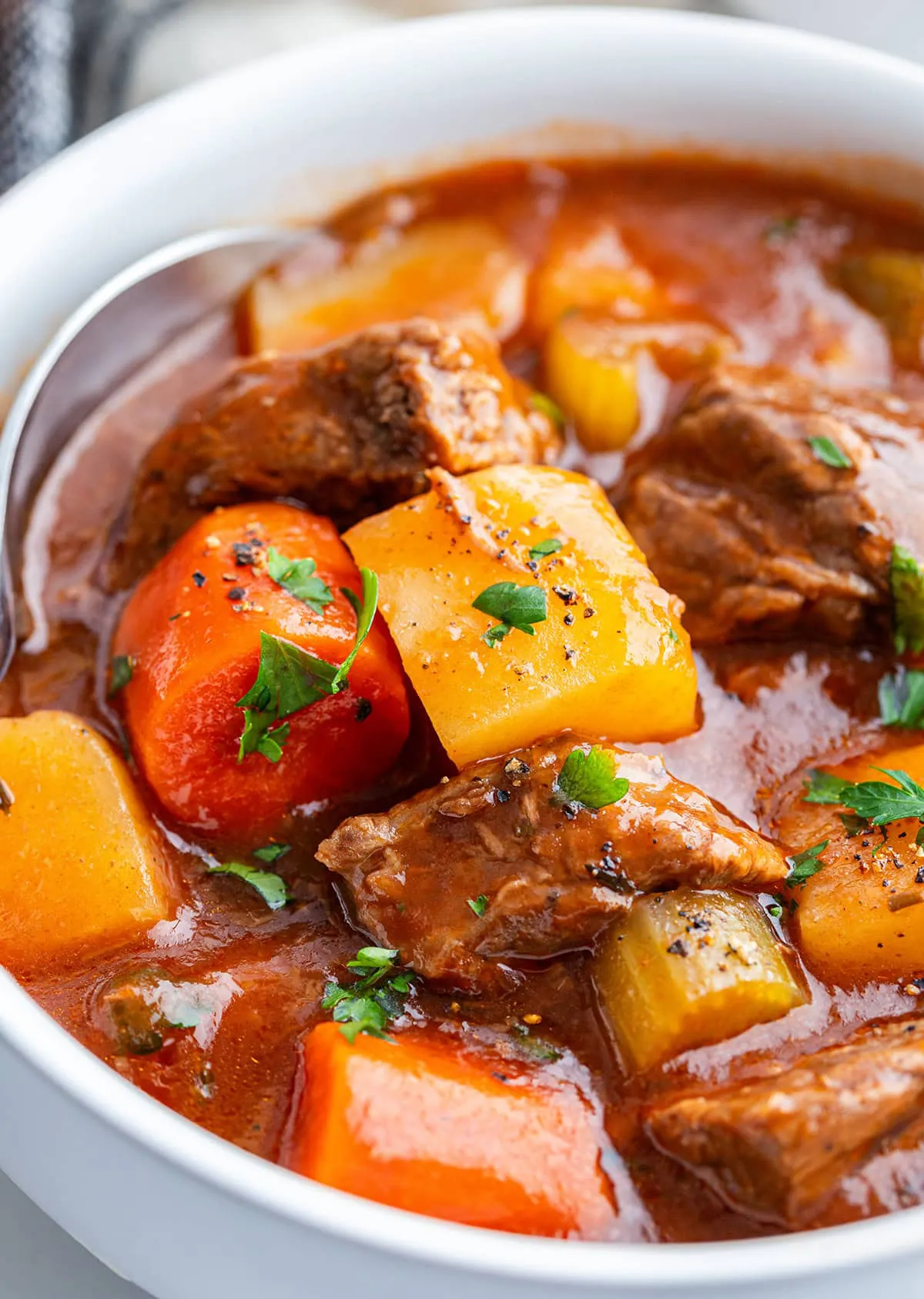
A great beef stew is really a lesson in patience and browning. I dredge the cubed stew meat in seasoned flour, which does two jobs at once: it gives the beef a crust that browns deeply, and it thickens the broth as the stew simmers so you never need a slurry at the end. The most common mistake is crowding the pot, which steams the meat gray instead of searing it brown, so I work in batches and let each piece get a real crust. After the beef comes the aromatics, a deglaze with red wine to lift every browned bit off the bottom, and then a long, gentle ninety-minute simmer before the carrots and potatoes ever go in. Adding the vegetables late keeps them tender instead of disintegrating into mush. This is cold-weather food at its most honest, the kind of pot that makes the whole house smell like Sunday.
Ingredients
Serves 6Instructions
- 1
Toss the beef cubes with flour, salt, and pepper.
- 2
Heat oil in a large pot. Brown the beef in batches and set aside.
- 3
In the same pot, sauté the onions and garlic until fragrant.
- 4
Deglaze with red wine (if using) or a little broth. Return beef to the pot.
- 5
Add the beef broth, tomato paste, bay leaves, and dried thyme. Bring to a boil, then reduce heat to low, cover, and simmer for 1.5 hours.
- 6
Stir in the carrots, potatoes, and celery. Simmer for another 30-45 minutes until vegetables and meat are tender.
- 7
Remove bay leaves before serving.
Chef's Tips
- ✦ Pat the beef completely dry and brown it in batches. A crowded pot steams the meat and you lose the deep flavor that defines a good stew.
- ✦ Deglaze with the wine or broth and scrape up every browned bit on the bottom; that fond is pure concentrated flavor.
- ✦ Simmer the beef for a full 90 minutes before adding the vegetables so the meat turns fork-tender without the carrots and potatoes overcooking.
- ✦ Let the stew rest 10 minutes off the heat before serving; the broth thickens slightly and the flavors settle.
Ingredient Substitutions
-
beef stew meat → boneless beef chuck cut into 1.5-inch cubes
Chuck is what most pre-cut stew meat already is; buying a whole roast and cubing it yourself gives more even pieces.
-
red wine → extra beef broth with a splash of balsamic vinegar
For an alcohol-free stew; the vinegar mimics the wine's acidity that balances the rich broth.
-
potatoes → parsnips, turnips, or extra carrots
Lower-starch roots for a lighter stew; add them at the same late stage as the potatoes.
-
flour → cornstarch slurry stirred in at the end
Use 2 tablespoons cornstarch in cold water for a gluten-free stew; skip the dredging step and just sear the seasoned beef.
Tags
Frequently Asked Questions
Why is my beef stew meat tough? ▼
Tough stew meat is almost always undercooked, not overcooked. Collagen in chuck needs 1.5 to 2 hours of gentle simmering to break down into gelatin. If it is chewy, it simply needs more time at a low simmer, not higher heat.
Can I make beef stew in advance? ▼
Absolutely, and it is better for it. Stew keeps 3 to 4 days refrigerated and the flavor deepens overnight. Reheat gently on the stove, adding a splash of broth if it thickened too much in the fridge.
Should I cook beef stew covered or uncovered? ▼
Cover it during the long simmer to keep the beef submerged and tender. If the broth is thinner than you like at the end, finish the last 15 minutes uncovered to let it reduce and concentrate.
What can I serve with beef stew? ▼
Crusty bread, buttered egg noodles, mashed potatoes, or a simple green salad all work well. The bread is non-negotiable in my house for sopping up the last of the broth.