Italian Cuisine
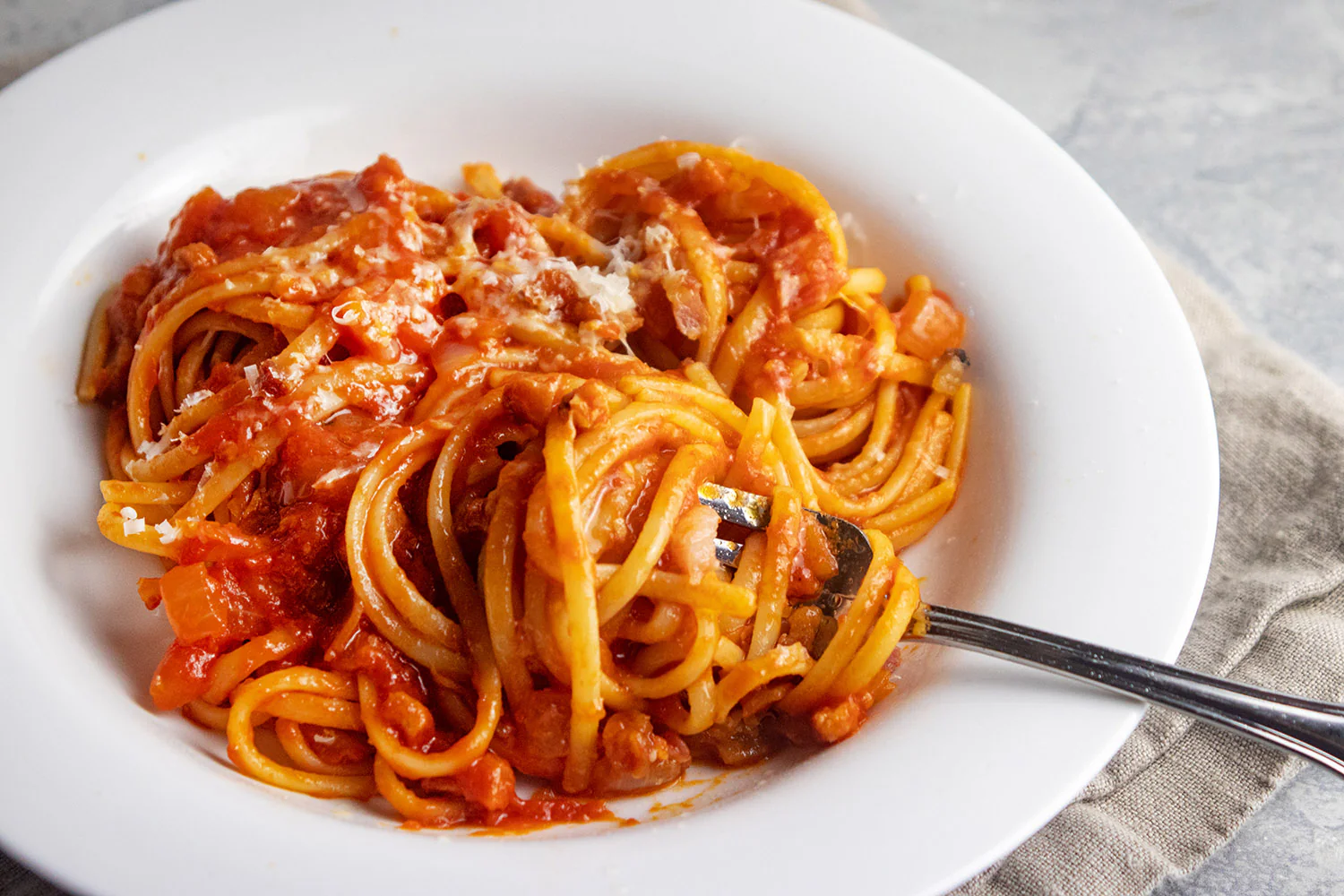
Bucatini all'Amatriciana (Tomato and Guanciale)
By Chef Giulia Marchetti, Roman cuisine specialist and culinary instructor from Lazio
Rate this recipe
Amatriciana is one of the four pillars of Roman pasta, alongside cacio e pepe, gricia, and carbonara, but its roots run to the town of Amatrice in the mountainous province of Rieti in the Lazio region. Shepherds there made a primitive ancestor called gricia from guanciale, pecorino, and pepper; when tomatoes arrived from the New World and took hold in Italian cooking, the red version, amatriciana, was born. The dish became so beloved in nearby Rome that it is now considered a defining Roman plate, traditionally served with bucatini, the thick hollow spaghetti whose center channels the rich sauce. The non-negotiables are guanciale, cured pork cheek with a deep, fatty sweetness that pancetta only approximates, and Pecorino Romano, the sharp sheep's-milk cheese grated in off the heat so it melts without clumping. This recipe renders the guanciale until crisp, builds heat with red pepper flakes, deglazes with a splash of dry white wine, and simmers San Marzano tomatoes into a glossy sauce before the pecorino finishes it. Amatrice holds an annual sagra celebrating the dish, and after the 2016 earthquake that devastated the town, restaurants worldwide put amatriciana on their menus to raise funds, a reminder that this humble plate of pork, tomato, and cheese carries real cultural weight in central Italy.
Ingredients
Serves 4Instructions
- 1
Bring a large pot of salted water to a boil for the pasta.
- 2
In a large skillet over medium heat, add the diced guanciale. Cook, stirring occasionally, until the fat has rendered and the pork is crispy, about 8-10 minutes.
- 3
Add the red pepper flakes and cook for another minute.
- 4
Pour in the white wine and deglaze the pan, scraping up any browned bits. Let it bubble for 2-3 minutes until the alcohol evaporates.
- 5
Add the whole peeled tomatoes to the pan, crushing them with your hands or the back of a spoon. Simmer the sauce for 15-20 minutes until thickened.
- 6
While the sauce simmers, cook the bucatini in the boiling water until al dente.
- 7
Drain the pasta and toss it directly into the sauce. Stir well to coat.
- 8
Remove from heat and stir in the grated Pecorino Romano cheese. Serve immediately.
Chef's Tips
- ✦ Render the guanciale slowly over medium heat until crisp and the fat has melted out, about 8 to 10 minutes; that rendered fat is the flavor base of the sauce.
- ✦ Deglaze with the white wine and scrape up the browned bits stuck to the pan, letting the alcohol bubble off for 2 to 3 minutes before the tomatoes go in.
- ✦ Crush the whole peeled tomatoes by hand for a rustic texture, exactly as the recipe directs, rather than using a smooth pre-crushed product.
- ✦ Stir in the Pecorino Romano only after removing the pan from the heat so the cheese melts into a creamy coating instead of seizing into clumps.
- ✦ Go light on added salt; the guanciale and pecorino are both salty, so taste the sauce before seasoning further.
Ingredient Substitutions
-
Guanciale → pancetta
The recipe already allows pancetta; it is leaner and milder than cured pork cheek, so the sauce loses a little of guanciale's signature richness but stays authentic-tasting.
-
Pecorino Romano → Parmigiano-Reggiano or a blend of the two
Pecorino is sharper and saltier and is the traditional choice; if it is too strong for you, cut it with Parmesan, but add either off the heat to avoid clumping.
-
bucatini → spaghetti or rigatoni
Bucatini's hollow center is classic, but spaghetti or rigatoni also hold the sauce well; cook to al dente and finish in the pan.
-
San Marzano whole peeled tomatoes → good-quality canned plum tomatoes
San Marzano are prized for sweetness and low acidity; any quality whole peeled tomato crushed by hand works, as the recipe suggests.
-
dry white wine → dry red wine or a splash of pasta water with a squeeze of lemon
Wine deglazes the rendered fat; if avoiding alcohol, use pasta water with a little acidity to lift the browned bits from the pan.
Tags
Frequently Asked Questions
What is the difference between amatriciana and carbonara? ▼
Both are Roman pasta dishes built on guanciale and Pecorino Romano, but amatriciana is a tomato-based red sauce with chili, while carbonara is a creamy egg-and-cheese sauce with no tomato. Amatriciana descends from the older, tomato-free gricia.
Can I use bacon or pancetta instead of guanciale? ▼
Pancetta is the accepted substitute and this recipe allows it, though it is leaner and milder than guanciale's cured pork cheek. Bacon will work in a pinch but adds a smoky flavor that is not traditional to the dish.
Why add the Pecorino Romano off the heat? ▼
Adding the cheese while the pan is still on high heat causes it to clump and turn stringy. Removing the pan first lets the residual warmth melt the pecorino into a smooth, creamy coating on the pasta, as the recipe directs.
What pasta is traditional for amatriciana? ▼
Bucatini, a thick hollow spaghetti, is the classic choice in Rome because its center channels the rich sauce. Spaghetti and rigatoni are common alternatives that also hold the sauce well.
Is amatriciana very spicy? ▼
It has a gentle warmth rather than strong heat. The recipe uses about half a teaspoon of red pepper flakes, which you can adjust to taste. Traditional amatriciana is mildly spicy, with the chili supporting rather than overpowering the pork and tomato.
Where does amatriciana come from? ▼
It originated in the town of Amatrice in the Lazio region's Rieti province and evolved from the shepherds' dish gricia once tomatoes were added. It became a signature plate of nearby Rome and is now considered a classic of Roman cuisine.