Italian Cuisine
Chicken Cacciatore (Hunter Style)
By Chef Antonella Bruno, Tuscan home-cooking authority and instructor who teaches rustic braises from her family farmhouse near Siena
Rate this recipe
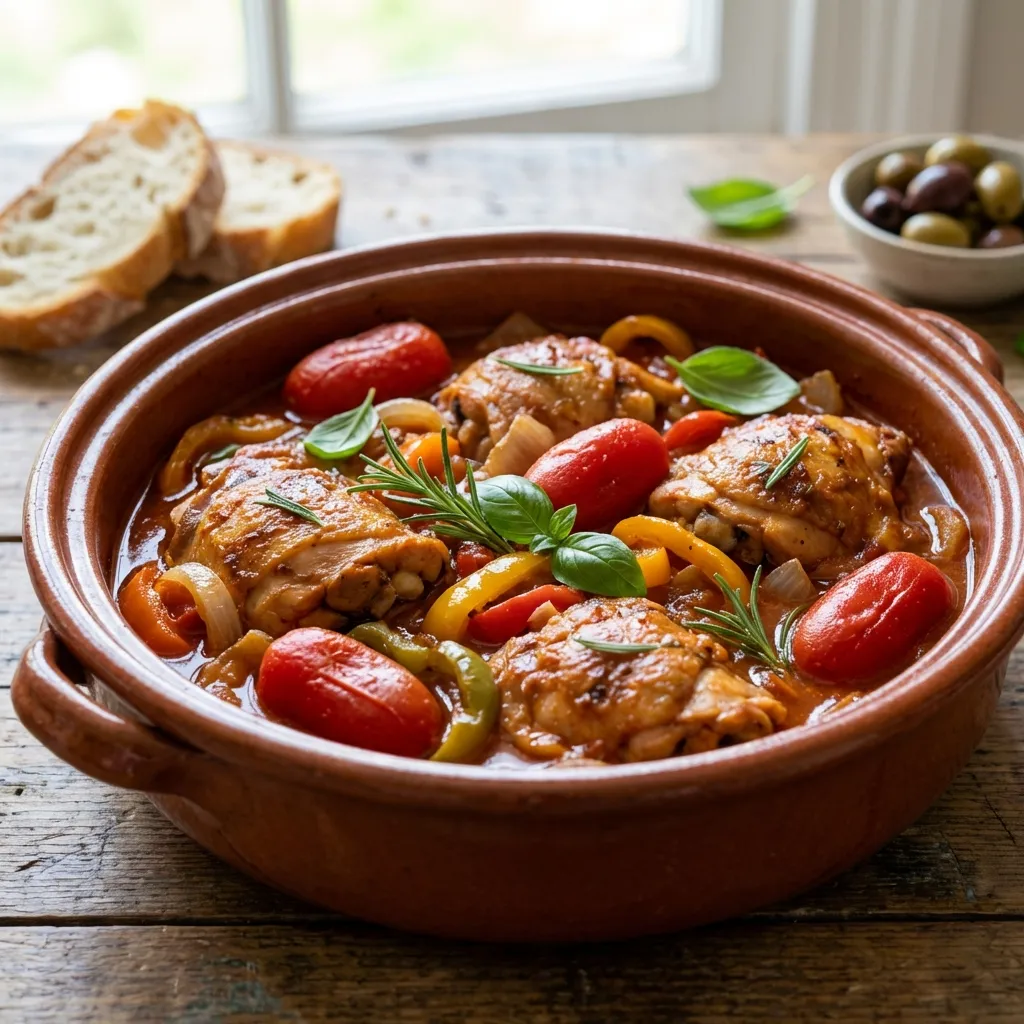
Chicken cacciatore, pollo alla cacciatora, literally means 'chicken hunter's style,' and the name tells you everything about its soul. In rural central Italy, particularly Tuscany, Umbria, and Lazio, the cacciatora was the meal a hunter's household pulled together from whatever was on hand: the bird, a few cellar vegetables, herbs from the garden, and a splash of the wine that was always nearby. There is no single authoritative recipe, which is precisely the point; it is a method more than a formula, and it varies village to village. Some cooks build their cacciatora in bianco with white wine and no tomato, the older Tuscan style, while the red, tomato-rich version common in the south and beloved by Italian-Americans is what most people picture today. This recipe sits firmly in that hearty red camp, with crushed tomatoes, peppers, onions, mushrooms, and red wine reduced into a deep, rustic sauce. Browning the bone-in, skin-on thighs first builds the fond that gives the braise its backbone, and the long, gentle simmer renders the chicken meltingly tender while the sauce concentrates. Served over polenta, rice, or with crusty bread to mop the plate, cacciatore is peasant cooking at its most satisfying, the kind of one-pot meal that tastes even better the next day.
Ingredients
Serves 4Instructions
- 1
Season the chicken thighs generously with salt and pepper.
- 2
In a large Dutch oven or skillet, heat 2 tablespoons of oil over medium-high heat. Brown the chicken thighs, skin side down first, for 5-6 minutes per side. Remove chicken and set aside.
- 3
In the same pot, add the chopped onion, sliced bell pepper, and sliced mushrooms. Sauté for 5-7 minutes until vegetables begin to soften.
- 4
Stir in the minced garlic and cook for 1 minute.
- 5
Pour in the red wine, scraping up any browned bits from the bottom.
- 6
Add the crushed tomatoes and bring to a simmer.
- 7
Return the chicken thighs to the pot, nestling them into the sauce. Reduce cold, cover, and simmer for 30-40 minutes until the chicken is tender and cooked through.
- 8
Serve hot, often with polenta, rice, or crusty bread.
Chef's Tips
- ✦ Pat the chicken thighs completely dry and season well before browning; dry skin is the key to a deep golden crust and a flavorful fond.
- ✦ Brown the thighs skin-side down first without moving them for 5 to 6 minutes so the skin renders and releases cleanly from the pan.
- ✦ Don't skip deglazing with the wine; scraping up the browned bits from the bottom dissolves the fond that gives the sauce its richness.
- ✦ Nestle the thighs skin-side up and partly above the sauce during the simmer so the skin stays slightly crisp rather than fully submerged.
- ✦ Simmer gently, covered, for 30 to 40 minutes until the chicken reaches a safe internal temperature of 165°F (74°C) at the thickest part near the bone; the meat should be fork-tender.
Ingredient Substitutions
-
bone-in, skin-on chicken thighs → bone-in chicken legs, drumsticks, or a cut-up whole chicken
Keep bone-in pieces for flavor and moisture; if using breasts, add them later in the simmer so they don't dry out.
-
crushed tomatoes → whole peeled tomatoes hand-crushed, or tomato passata
Hand-crushed San Marzano tomatoes give a more rustic texture; passata makes a smoother sauce.
-
red wine → dry white wine, or chicken broth with a splash of red wine vinegar
White wine yields the older Tuscan 'in bianco' style; broth plus vinegar keeps it alcohol-free while preserving acidity.
-
mushrooms → cremini, porcini (rehydrated), or omit entirely
Dried porcini deepen the woodsy flavor; soak them and add the strained liquid to the sauce for extra depth.
-
red bell pepper → yellow or orange bell pepper, or pitted black olives and capers
Olives and capers nudge the dish toward a southern, puttanesca-leaning cacciatora if you want more brine.
Tags
Frequently Asked Questions
Can I make chicken cacciatore ahead of time? ▼
Absolutely; cacciatore is one of those braises that improves overnight as the flavors meld. Cook it fully, cool, and refrigerate for up to three days, then reheat gently on the stovetop until the chicken is hot throughout. It also freezes well for up to three months. Make-ahead is ideal for entertaining since the dish is forgiving and reheats beautifully.
How do I know when the chicken is fully cooked? ▼
Simmer the thighs covered for 30 to 40 minutes until the meat is fork-tender and pulls easily from the bone. For food safety, the chicken must reach an internal temperature of 165°F (74°C) measured at the thickest part of the thigh, away from the bone, with an instant-read thermometer. Bone-in thighs are forgiving and stay juicy even slightly past that point.
Can I scale this recipe for a larger group? ▼
Yes. This recipe serves four and doubles well; use a larger Dutch oven or two pots so the chicken browns in a single layer rather than steaming. Keep the simmer gentle and check that all pieces reach 165°F (74°C). The sauce quantity scales proportionally, but you may need a few extra minutes of simmering to reduce a larger volume.
What can I use instead of red wine? ▼
Dry white wine makes a lighter, more traditional Tuscan 'in bianco' cacciatore. For an alcohol-free version, use chicken broth with a tablespoon of red wine vinegar or a squeeze of lemon to replace the wine's acidity. The deglazing step still works with any of these; the goal is to lift the browned bits and add brightness to the sauce.
How should I store and reheat leftovers? ▼
Cool the cacciatore, then store it in an airtight container in the refrigerator for up to three days or freeze for up to three months. Reheat gently on the stovetop over low heat, adding a splash of broth or water if the sauce has thickened too much, until the chicken is heated through to 165°F (74°C). The flavor deepens with time, making leftovers especially good.
What should I serve with chicken cacciatore? ▼
Cacciatore is built for soaking up its rich sauce, so serve it over creamy polenta, rice, mashed potatoes, or wide pasta such as pappardelle. Crusty Italian bread is essential for mopping the plate. Round out the meal with a simple green salad or sautéed greens, and pour the same red wine you cooked with.