Italian Cuisine
Focaccia with Rosemary and Sea Salt
By Giulia Moretti, Ligurian-trained baker and author of 'Pane & Pazienza'
Rate this recipe
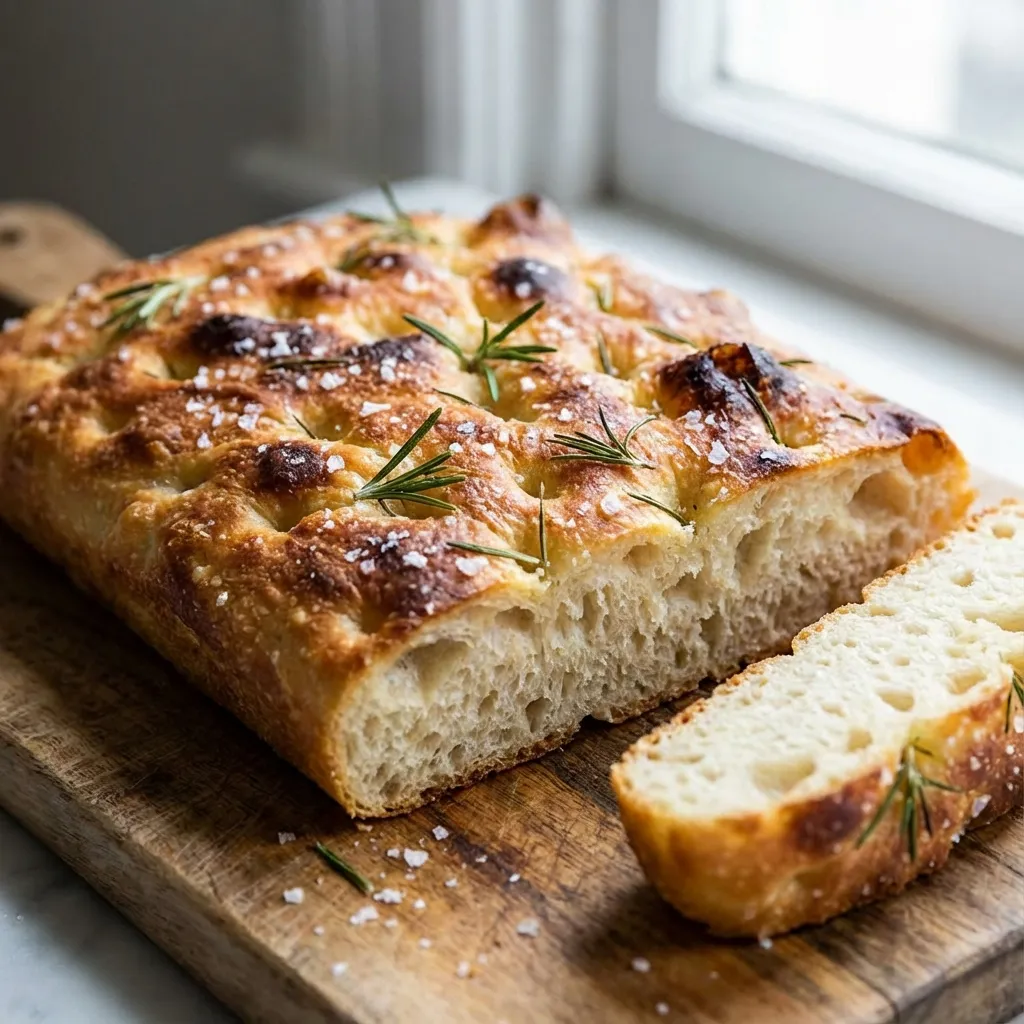
Focaccia is the daily bread of Liguria, the slim coastal region curling around Genoa where the Mediterranean meets the Apennines. Walk into any Genoese forno before nine in the morning and you will smell it: olive oil pooling in deep finger-dimples, coarse salt catching the light, the crumb still warm enough to fog the paper bag. Locals call the classic version focaccia genovese, and it is eaten at every hour, dunked in morning cappuccino without a hint of irony, torn open for a lunchtime sandwich, or simply eaten plain on the walk home. This rosemary-and-sea-salt version leans on the herb that grows wild on the Ligurian hillsides, its piney resin a natural partner to good olive oil. What separates a true focaccia from ordinary flatbread is generosity with the oil and patience with the rise: the dough is wet, slack, and unhurried, and the dimples are not decoration but reservoirs that trap oil and brine so each bite has both crisp edges and a tender, open crumb. Liguria built its identity on olive oil from the terraced groves of the Riviera, and focaccia is that oil made into bread. Treat the oil as an ingredient, not a coating, and you are baking something genuinely Genoese.
Ingredients
Serves 12Instructions
- 1
In a small bowl, combine warm water (110°F / 45°C), sugar, and yeast. Let stand for 5-10 minutes until foamy.
- 2
In a large bowl, mix bread flour and salt. Add the yeast mixture and 2 tablespoons of olive oil. Stir until a shaggy dough forms.
- 3
Turn dough onto a floured surface and knead for 8-10 minutes until smooth and elastic (or use a stand mixer with dough hook).
- 4
Place dough in an oiled bowl, cover with a damp cloth or plastic wrap. Let rise in a warm place for 1 to 1.5 hours, or until doubled in size.
- 5
Generously oil a 9x13 inch baking pan. Transfer the dough to the pan and stretch it to fit the corners. If it springs back, let it rest for 10 minutes and stretch again. Cover and let rise for another 45-60 minutes.
- 6
Preheat oven to 425°F (220°C).
- 7
Use your fingertips to create deep dimples all over the surface of the dough. Drizzle with remaining olive oil. Sprinkle with fresh rosemary leaves and flaky sea salt.
- 8
Bake for 20-25 minutes until golden brown and crisp. Remove from pan and cool on a wire rack.
Chef's Tips
- ✦ Keep the dough wet and slack rather than tight; a higher-hydration dough is what gives focaccia its open, bubbly crumb, so resist the urge to add extra flour while kneading.
- ✦ Dimple with confidence using oiled fingertips, pressing all the way down to the pan so the indentations hold pools of oil and salt during baking.
- ✦ Pour a generous brine-like drizzle of olive oil over the surface before baking; the oil fries the bottom crust crisp and golden in the pan, which is the hallmark of true focaccia.
- ✦ If the dough springs back when you stretch it into the pan, walk away for 10 minutes to let the gluten relax, then stretch again rather than fighting it.
- ✦ Add the rosemary just before baking and press it lightly into the dimples so it doesn't scorch; for a softer top, tent loosely with foil for the last few minutes.
Ingredient Substitutions
-
bread flour → Italian Tipo 00 flour, or all-purpose flour
Tipo 00 gives the airiest, most authentic crumb; all-purpose works but yields a slightly less chewy texture and a touch less rise.
-
active dry yeast → instant yeast (same 7 g) or 21 g fresh cake yeast
Instant yeast can be mixed straight into the flour without the proofing step; fresh yeast is the traditional Ligurian choice and crumbles directly into the warm water.
-
fresh rosemary → fresh sage, thyme, or thin-sliced cherry tomatoes
Sage and thyme keep the herbal profile; for focaccia genovese purists, skip herbs entirely and finish only with oil and salt.
-
flaky sea salt → kosher salt or coarse Maldon
Use a coarse, crunchy salt for the finishing sprinkle so the crystals stay distinct on top; avoid fine table salt, which dissolves and over-salts.
-
extra virgin olive oil → a robust unfiltered Ligurian or Tuscan EVOO
The oil is the dominant flavor, so use the best you have; do not substitute a neutral oil or the focaccia loses its character.
Tags
Frequently Asked Questions
What is the difference between focaccia and pizza dough? ▼
Focaccia dough is wetter and enriched with far more olive oil, both inside the dough and on top, giving it a softer, oilier, thicker crumb. Pizza dough is leaner and stretched thin, while focaccia is left thick and dimpled to trap oil and salt.
Why is my focaccia dense instead of airy? ▼
Dense focaccia usually means under-proofing or too much flour. Let the dough rise until visibly doubled (1 to 1.5 hours), give it the second 45 to 60 minute rise in the pan, and keep the dough wet and slack rather than stiff so the gas can expand the crumb.
Can I make focaccia dough ahead of time? ▼
Yes. After the first rise, cover the dough and refrigerate it overnight; the slow cold fermentation deepens the flavor. Bring it to room temperature, then stretch it into the oiled pan and do the final rise before dimpling and baking.
Is this focaccia recipe vegan? ▼
Yes. The dough contains only flour, water, yeast, sugar, salt, and olive oil, with rosemary and flaky salt on top, so it is both vegan and dairy-free as written.
How do I store and reheat leftover focaccia? ▼
Keep it loosely wrapped at room temperature for up to two days, or freeze slices for up to a month. Refresh in a 350°F (175°C) oven for 5 to 7 minutes to bring back the crisp crust; avoid the microwave, which makes it chewy.
How much olive oil should I really use? ▼
Be generous. Two tablespoons go into the dough, the pan is coated, and the remaining oil from the quarter cup is drizzled over the dimpled top before baking. The oil is a defining ingredient of Ligurian focaccia, not just a non-stick measure, so don't skimp.