Italian Cuisine
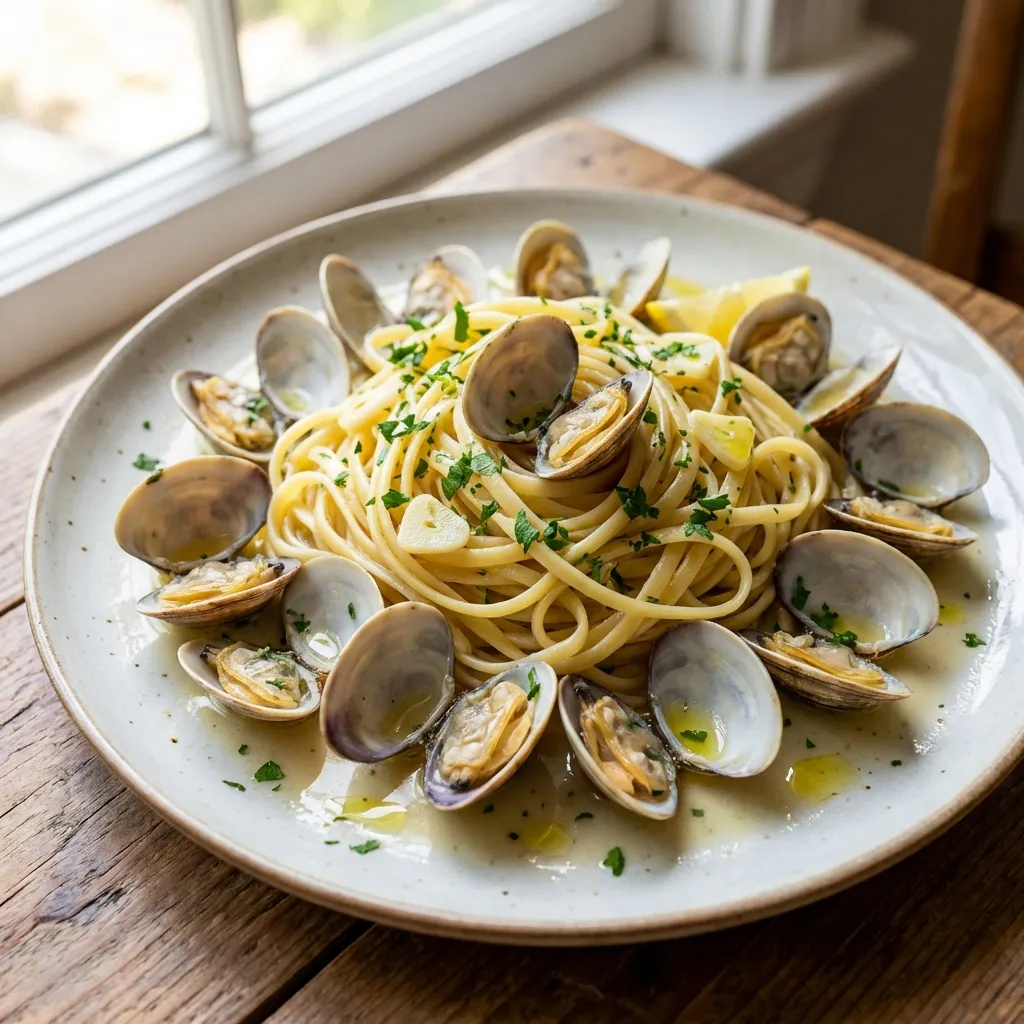
Linguine with Clam Sauce (White)
By Marco Tagliaferri, Chef and Culinary Instructor specializing in Neapolitan and coastal Italian cooking
Rate this recipe
Linguine alle vongole in bianco is the quiet pride of the Italian coast, from the Amalfi shoreline down to the bays around Naples where vongole veraci are pulled from the sand each morning. The dish belongs to the cucina povera tradition of the Mezzogiorno, where fishermen's families made a feast from little more than fresh clams, garlic, a glug of wine, and the pasta in the cupboard. There are two camps: in rosso, with tomato, and in bianco, the white version honored here, which lets the briny clam liquor speak for itself. The genius is that the clams release their own seawater as they steam open, and that liquid becomes the sauce. No cream, no cheese, no butter is needed or wanted; Italians consider Parmesan on a seafood pasta a small heresy. This recipe stays faithful to that ethos, building flavor with extra virgin olive oil, sliced garlic gently warmed until fragrant rather than browned, a splash of dry white wine, and a finish of fresh parsley. The technique of finishing the linguine in the pan with a little reserved pasta water and the clam juices is what gives the dish its glossy, emulsified coating. It is fast, honest, sophisticated food, the kind a Neapolitan nonna would make on a Sunday and a Roman trattoria would charge a fortune for.
Ingredients
Serves 4Instructions
- 1
Bring a large pot of salted water to a boil. Rinse the clams thoroughly in cold water to remove any sand.
- 2
In a large skillet or sauté pan, heat the olive oil over medium heat. Add the minced garlic and red pepper flakes and cook for 1-2 minutes until garlic is fragrant but not browned.
- 3
Add the clams and white wine to the skillet. Cover immediately and cook for 5-7 minutes over medium-high heat, shaking the pan occasionally, until the clams open. Discard any clams that do not open.
- 4
While the clams are cooking, add the linguine to the boiling water and cook until al dente, about 2 minutes less than the package instructions.
- 5
Drain the pasta, reserving 1/2 cup of the cooking water.
- 6
Transfer the pasta directly into the skillet with the clams. Toss everything together, adding a splash of the reserved pasta water if the sauce needs to be loosed. Cook for 1-2 more minutes allowing the pasta to absorb the juices.
- 7
Remove from heat, stir in the fresh parsley, and serve immediately.
Chef's Tips
- ✦ Purge the clams before cooking: soak them 20 to 30 minutes in cold salted water so they spit out sand, then scrub the shells. Gritty sauce is the most common failure with vongole.
- ✦ Warm the sliced garlic in the oil over medium heat only until it is fragrant and pale gold; if it browns it turns bitter and overwhelms the delicate clams.
- ✦ Cover the pan the moment the clams and wine go in. The trapped steam pops the shells open quickly and captures the precious clam liquor that becomes your sauce.
- ✦ Discard any clam that stays shut after cooking, and discard any that are cracked or open and won't close when tapped raw before cooking, for food safety.
- ✦ Pull the linguine a full 2 minutes shy of al dente and finish it in the pan with the clam juices and a splash of pasta water, tossing hard so the starch emulsifies the oil into a silky coating. Never rinse the pasta.
Ingredient Substitutions
-
littleneck clams → Manila clams or cockles
Manila clams are closest to Italian vongole veraci and sweeter; cockles work too. Keep the total weight near 3 lbs so you get enough clam liquor for the sauce.
-
linguine → spaghetti or spaghetti alla chitarra
The recipe already names spaghetti as an option. Long, thin strands hold the thin clam sauce best; avoid short shapes that pool the liquid at the bottom of the bowl.
-
dry white wine → clam juice or seafood stock plus a squeeze of lemon
For an alcohol-free version use 1/2 cup bottled clam juice and brighten with lemon. You lose a little aromatic lift but keep the briny backbone.
-
fresh parsley → fresh basil or a mix of parsley and chives
Flat-leaf parsley is traditional, but basil nods to the Amalfi coast. Add tender herbs off the heat so they stay green and fragrant.
-
red pepper flakes → a fresh sliced peperoncino or a pinch of Calabrian chili paste
Optional heat. Fresh chili gives a cleaner burn; Calabrian chili adds a fruity, slightly smoky depth common in Southern Italian cooking.
Tags
Frequently Asked Questions
What does 'in bianco' mean for linguine alle vongole? ▼
'In bianco' means the white version, made without tomatoes. The sauce is built from clam liquor, olive oil, garlic, and white wine, letting the briny sweetness of the clams shine. The alternative, 'in rosso,' adds tomatoes.
Should I add Parmesan cheese to clam pasta? ▼
No. In Italian tradition, hard cheese is not served on seafood pasta because it masks the delicate flavor of the clams. This recipe relies on clam liquor, olive oil, and parsley instead, and tastes more authentic without cheese.
How do I keep the sauce from being gritty? ▼
Sand is the usual culprit. Soak the clams in cold salted water for 20 to 30 minutes so they expel grit, then scrub the shells well. When you transfer cooked clams, leave behind any sandy liquid at the very bottom of the pan.
Which clams should I use? ▼
Littleneck clams are specified here and are widely available, but Manila clams or cockles are even closer to the Italian vongole veraci. Use about 3 pounds in the shell for four servings so you have plenty of clam liquor for the sauce.
Can I make this without wine? ▼
Yes. Replace the 1/2 cup of dry white wine with bottled clam juice or seafood stock and finish with a squeeze of fresh lemon. The wine adds aromatic lift, but the clams provide the main savory backbone.
Why are some clams thrown away? ▼
Any clam that does not open during cooking should be discarded, as it may not be safe to eat. Likewise, discard any raw clam that is cracked or that stays open and won't close when tapped before cooking.