Italian Cuisine
Minestrone Soup (Classic Vegetable Soup)
By Sofia Conti, Italian home cook and author of 'La Cucina Povera'
Rate this recipe
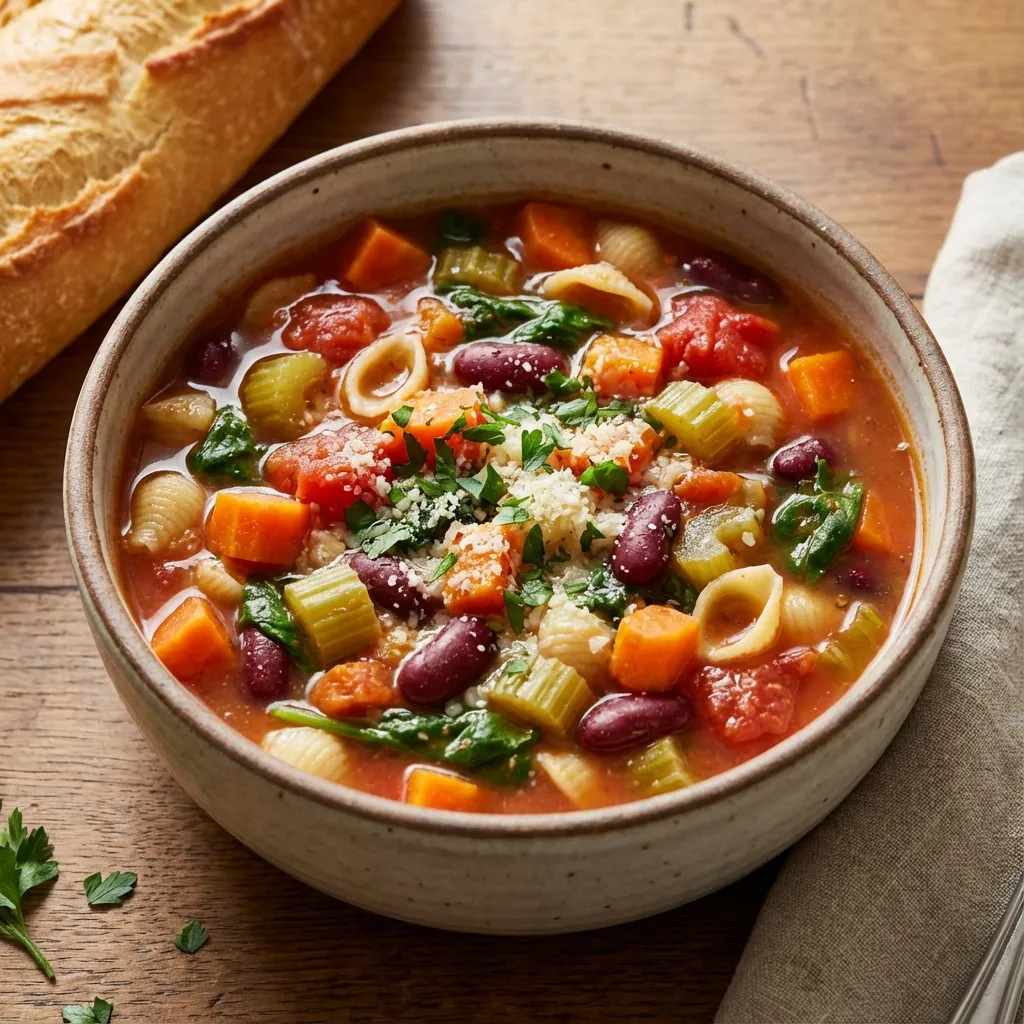
Minestrone is the soul of cucina povera, the resourceful 'cooking of the poor' that runs through every region of Italy. The name itself, a hearty augmentative of minestra (soup), simply means 'big soup,' and that is exactly what it has always been: whatever vegetables the garden, the season, and the pantry offered, stretched with beans and a handful of pasta into a filling, nourishing meal. There is no single canonical recipe, and that is the point. A Milanese minestrone might lean on rice and pancetta, a Genoese one finishes with a spoon of fragrant pesto, a Tuscan ribollita reboils the leftovers with stale bread. What unites them is a philosophy older than any cookbook: waste nothing, build flavor from humble aromatics, and let beans and pasta turn a pot of vegetables into a one-bowl supper. This version keeps to that egalitarian spirit with a soffritto of onion, carrot, and celery, sweet tomatoes, kidney beans for heartiness, and small pasta cooked right in the broth. Generations of Italian cooks made minestrone to feed a family through lean winters and to use up the last of the harvest, and its enduring appeal is that it is endlessly adaptable, deeply comforting, and almost impossibly economical. Use what is freshest, and the soup will always taste like home.
Ingredients
Serves 6Instructions
- 1
Dice the onion and carrots, and slice the celery.
- 2
In a large pot, heat the olive oil over medium heat (350°F / 175°C). Add the onion, carrots, celery, and minced garlic. Sauté for 5-7 minutes until the onions are translucent and vegetables are soft.
- 3
Add the diced tomatoes (with juices) to the pot and stir for 1 minute.
- 4
Pour in the vegetable broth and bring the mixture to a boil. Add the kidney beans.
- 5
Reduce heat to a simmer (low heat). Add the broccoli florets and ditalini pasta. Cook for 10-12 minutes until the pasta is al dente and broccoli is tender.
- 6
Season with salt and pepper to taste. Serve hot, optionally topped with grated Parmesan cheese.
Chef's Tips
- ✦ Build a proper soffritto: cook the onion, carrot, and celery gently until soft and sweet before adding liquid; this slow foundation is what gives minestrone its depth despite humble ingredients.
- ✦ Add pasta only in the last 10 to 12 minutes and cook just to al dente; pasta left to sit in the broth turns mushy and soaks up all the liquid.
- ✦ For meal-prep, cook the pasta separately and add it to each bowl, so leftovers don't end up with bloated, broth-logged pasta.
- ✦ Toss in quick-cooking greens like spinach or chopped kale near the end and hardier vegetables earlier, layering them by cooking time so nothing overcooks.
- ✦ A drizzle of good olive oil, a swirl of pesto, or a grating of Parmesan at the table lifts the whole bowl; remember that Parmesan makes it non-vegan, so leave it off for a plant-based meal.
Ingredient Substitutions
-
kidney beans → cannellini beans, borlotti beans, or chickpeas
Cannellini and borlotti are the most traditional Italian choices; any cooked bean works, so use what you have on hand.
-
ditalini pasta → small shells, elbow macaroni, broken spaghetti, or rice
Any small pasta works; for a gluten-free soup use a gluten-free small pasta or rice and adjust the cooking time.
-
broccoli → zucchini, green beans, spinach, kale, or savoy cabbage
Minestrone is meant to flex with the season; leafy greens like kale or spinach are especially traditional and can be stirred in near the end.
-
vegetable broth → water with a Parmesan rind simmered in, or chicken broth for non-vegetarians
A Parmesan rind adds deep savory body to a water-based broth; note that a Parmesan rind makes the soup no longer vegan, and chicken broth makes it neither vegan nor vegetarian.
-
diced tomatoes → passata, crushed tomatoes, or 2 tablespoons tomato paste plus water
Any tomato form works for the base; crushed or whole tomatoes give a slightly richer texture than diced.
Tags
Frequently Asked Questions
Is minestrone soup vegan and vegetarian? ▼
As written this recipe is both vegan and vegetarian: it uses olive oil, vegetables, beans, pasta, and vegetable broth. Keep it vegan by using true vegetable (not chicken) broth and skipping the optional Parmesan topping, which contains dairy and animal rennet.
Why does my minestrone pasta get mushy? ▼
Pasta keeps absorbing liquid as the soup sits, so it overcooks in leftovers. Add the pasta only in the last 10 to 12 minutes and cook it just to al dente, or cook it separately and add it to each bowl when serving to keep it firm.
What vegetables can I use in minestrone? ▼
Almost anything seasonal. Minestrone is traditionally a clean-out-the-fridge soup, so beyond the carrot, celery, onion, and broccoli here you can add zucchini, green beans, potatoes, spinach, kale, cabbage, or peas. Add hardy vegetables early and tender greens near the end.
Can I make minestrone ahead and freeze it? ▼
Yes. Minestrone keeps in the fridge for up to four days and freezes well for up to three months. For best results, freeze the soup without the pasta and add freshly cooked pasta when reheating, since pasta turns soft and starchy after freezing.
How do I make minestrone heartier or more filling? ▼
Add extra beans, stir in cooked rice or more pasta, or include diced potatoes. A Parmesan rind simmered in the broth adds savory depth (though it is no longer vegan), and a slice of crusty bread on the side turns it into a complete meal.
What is the difference between minestrone and ribollita? ▼
Both are Tuscan-rooted cucina povera soups, but ribollita (meaning 'reboiled') is thickened with stale bread and traditionally made by reboiling leftover minestrone. Minestrone is a brothier vegetable-and-bean soup with pasta or rice, while ribollita is denser and almost stew-like.