Italian Cuisine
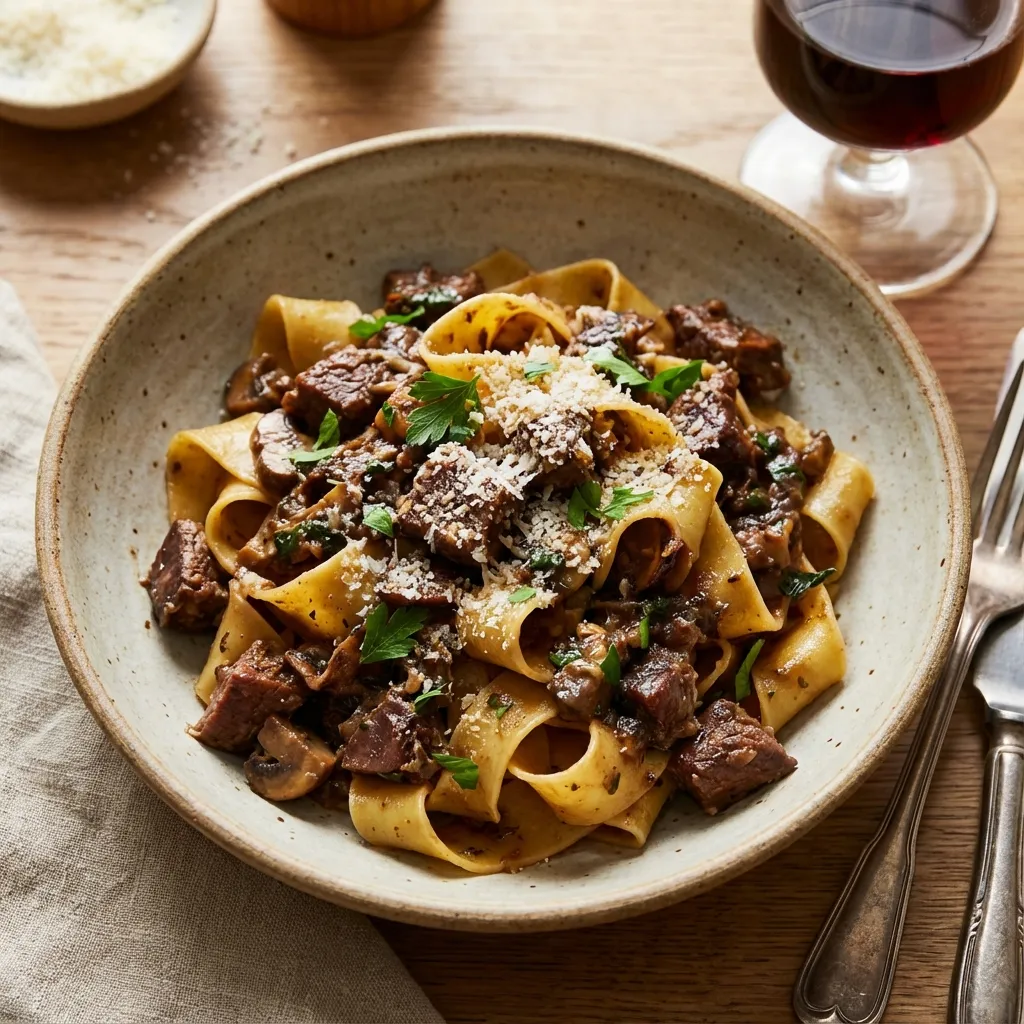
Pappardelle with Wild Boar Ragout
By Elena Ricci, Tuscan home cook and food writer from Siena
Rate this recipe
Pappardelle al cinghiale, pappardelle with wild boar ragu, is one of Tuscany's defining dishes, born of the boar (cinghiale) that roam the oak and chestnut woods of the Maremma, the Chianti hills, and the slopes around Siena and Arezzo. Wild boar has shaped Tuscan country cooking for centuries; hunting season in autumn fills village trattorie with rich, dark ragus, and the animal turns up everywhere from cured salami to slow-braised stews. Boar meat is lean, dense, and intensely flavored, almost gamey, so Tuscan cooks tame it with time: a long, gentle braise in red wine, traditionally a local Chianti or Morellino, that softens the muscle and mellows its wildness into something deep and savory. The wide ribbons of pappardelle are not incidental; their broad surface is built to carry a chunky, meaty sauce, and fresh egg pappardelle is the regional pasta of choice for exactly this kind of robust ragu. This is cucina rustica at its best, the food of hunters and farmers who let the fire and the clock do the work. In Tuscany the dish is a Sunday and festa centerpiece, the kind of slow cooking that perfumes a whole house and tastes of the woods it came from. Be patient with the braise and let the boar fall apart; that surrender is the whole point.
Ingredients
Serves 6Instructions
- 1
Pat the cubed wild boar dry with paper towels. Season generously with salt and pepper.
- 2
Heat 2 tablespoons of olive oil in a heavy-bottomed pot or Dutch oven over high heat (400°F / 200°C). Brown the boar meat in batches until seared on all sides. Remove meat and set aside.
- 3
Lower the heat to medium (350°F / 175°C). Add the remaining olive oil, chopped onions, carrots, and celery. Sauté for 8-10 minutes until softened and slightly caramelized.
- 4
Stir in the minced garlic and cook for 1 minute until fragrant. Pour in the red wine to deglaze the pot, scraping up any browned bits from the bottom.
- 5
Return the wild boar to the pot. Add the tomato puree and the sprig of rosemary. Bring to a boil.
- 6
Reduce heat to low, cover, and simmer gently for 2.5 to 3 hours, or until the meat is very tender and falls apart effortlessly.
- 7
Cook the pappardelle pasta in boiling salted water according to package instructions until al dente. Drain.
- 8
Toss the pasta with the hot ragout. Serve immediately, topped with grated Parmesan cheese.
Chef's Tips
- ✦ Pat the boar very dry and sear it hard in batches without crowding the pot; a deep brown crust builds the savory foundation of the whole ragu, and steaming the meat instead of searing it loses that depth.
- ✦ For an even gamier, more traditional result, marinate the cubed boar overnight in red wine with the rosemary and a bay leaf before browning; it tenderizes the lean meat and softens its wildness.
- ✦ Cook the soffritto until it is genuinely soft and lightly caramelized before the liquids go in; rushing this base leaves the sauce flat.
- ✦ Keep the braise at a bare, lazy simmer for the full 2.5 to 3 hours; boar is lean and tough and only becomes meltingly tender with low, slow heat. It is done when the meat shreds with a fork.
- ✦ Toss the cooked pappardelle with the ragu in the pot and a splash of starchy pasta water so the sauce coats every ribbon, then finish with cheese off the heat.
Ingredient Substitutions
-
wild boar shoulder → pork shoulder, or a blend of pork shoulder and beef chuck
Pork shoulder is the closest widely available stand-in; adding some beef chuck deepens the flavor toward the gaminess of true cinghiale.
-
pappardelle → tagliatelle, fettuccine, or fresh egg lasagna sheets cut into wide ribbons
Any wide, flat egg pasta works; the broad surface is what carries this chunky ragu, so avoid thin or small shapes.
-
hearty red wine (Chianti) → Sangiovese, Montepulciano, or any dry full-bodied red
A robust Tuscan red is traditional; choose a wine you would drink, since its character concentrates over the long braise.
-
tomato puree/passata → crushed San Marzano tomatoes or canned whole tomatoes, hand-crushed
Passata gives a smooth sauce; crushed tomatoes add a more rustic texture that suits this country-style ragu.
-
Parmesan cheese → Pecorino Toscano or Grana Padano
Pecorino Toscano is the regional cheese and adds a sharper, saltier note; for a dairy-free version, finish with toasted breadcrumbs instead.
Tags
Frequently Asked Questions
What does wild boar taste like and how is it different from pork? ▼
Wild boar is leaner, darker, and more intensely flavored than farmed pork, with a distinct gamey, slightly nutty character from its wild diet. Because it is lean and firm, it benefits from a long, slow braise to become tender, which is exactly how this Tuscan ragu treats it.
How do I know the wild boar is cooked safely? ▼
Wild boar, like pork, should reach a safe internal temperature of 160°F (71°C), and as game it is best braised well beyond that. Here the meat simmers gently for 2.5 to 3 hours until it falls apart effortlessly, which puts it safely past temperature and makes it fork-tender.
Can I make this ragu in a slow cooker? ▼
Yes. Sear the boar and saute the vegetables on the stove first, then deglaze with the wine and transfer everything to the slow cooker. Cook on low for 7 to 8 hours until the meat shreds. The stovetop searing step is essential for flavor, so don't skip it.
Where can I buy wild boar, and what if I can't find it? ▼
Look at specialty butchers, game suppliers, and online meat purveyors, especially in autumn. If it is unavailable, substitute pork shoulder, or a mix of pork shoulder and beef chuck, for a close approximation of the rich, gamey ragu.
Why pappardelle instead of another pasta? ▼
Pappardelle's wide, flat ribbons are made to carry chunky, meaty sauces like this one, which is why they are the traditional pairing for wild boar ragu in Tuscany. Fresh egg pappardelle holds onto the sauce far better than thin or small pasta shapes.
Can I make wild boar ragu ahead of time? ▼
Absolutely, and it tastes even better the next day. Make the ragu up to three days ahead and refrigerate, or freeze for up to three months. Reheat gently with a splash of water or broth, and cook the pappardelle fresh just before serving.