Italian Cuisine
Pasta alla Norma (Eggplant and Ricotta Salata)
By Chef Salvatore Russo, Sicilian chef and regional cuisine historian from Catania
Rate this recipe
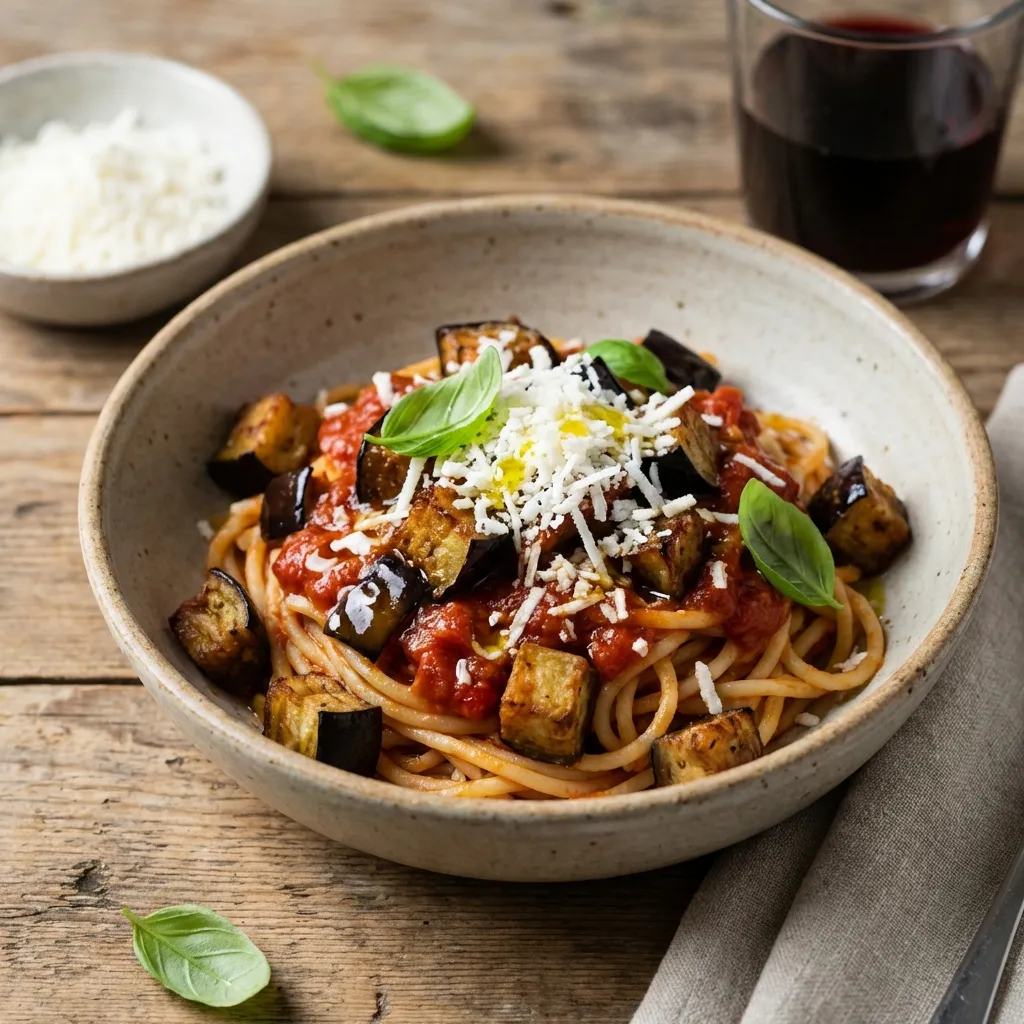
Pasta alla Norma is the pride of Catania, the Sicilian city sitting in the shadow of Mount Etna, and it tastes of the island's sun-drenched fields: glossy eggplant, ripe tomatoes, fragrant basil, and salty aged ricotta. The dish is a celebration of la cucina siciliana, where Arab, Greek, and Mediterranean influences layered over centuries gave the island its love of eggplant in particular. Legend holds that the dish was named after Norma, the celebrated opera by Catania's own composer Vincenzo Bellini; a delighted diner is said to have exclaimed that the pasta was a true 'Norma,' meaning a masterpiece worthy of the opera. Whatever the truth, the name stuck, and the dish became a Sicilian icon. The defining elements are fried eggplant and ricotta salata, the firm, salted, aged version of ricotta that is grated over the top rather than the soft fresh kind. This recipe salts and drains the eggplant first to draw out moisture and bitterness, fries it golden in olive oil, then folds it into a simple garlic-and-tomato sauce before tossing with rigatoni or penne. Finished with generous grated ricotta salata and torn fresh basil, it is hearty, vegetarian, and unmistakably Sicilian, a plate that carries the warmth of Etna's volcanic soil and the lyricism of Bellini's music in every forkful.
Ingredients
Serves 4Instructions
- 1
Place the cubed eggplant in a colander and sprinkle generously with salt. Let it sit for 30 minutes to draw out moisture and bitterness. Rinse and pat dry with paper towels.
- 2
In a large skillet, heat enough olive oil to coat the bottom (about 1/4 inch deep) over medium-high heat. Fry the eggplant in batches until golden brown, about 5-6 minutes per batch. Transfer to a paper towel-lined plate to drain.
- 3
Discard most of the oil from the skillet, leaving about 2 tablespoons. Add the minced garlic and sauté for 1 minute until fragrant.
- 4
Add the canned tomatoes (crushing them with your hands or a spoon) and their juice. Simmer the sauce for 15-20 minutes until thickened. Season with salt and pepper to taste.
- 5
Meanwhile, cook the pasta in a large pot of boiling salted water until al dente.
- 6
Add the fried eggplant to the tomato sauce and stir to combine. Gently stir in the cooked pasta.
- 7
Serve hot, topped with generous amounts of grated Ricotta Salata and fresh basil leaves.
Chef's Tips
- ✦ Salt the cubed eggplant and let it drain for the full 30 minutes, then rinse and pat dry; this draws out bitterness and excess water so it fries crisp instead of soggy.
- ✦ Fry the eggplant in batches in oil that is properly hot, as the recipe directs, so the pieces brown rather than steam and turn greasy.
- ✦ Drain the fried eggplant on paper towels to shed excess oil before folding it into the sauce, keeping the finished dish from feeling heavy.
- ✦ Pour off most of the frying oil before sauteing the garlic, leaving about two tablespoons, so the sauce has flavor without being slick.
- ✦ Grate the ricotta salata generously over each plate at the end rather than stirring it in; this keeps its salty, crumbly character as a finishing layer.
Ingredient Substitutions
-
ricotta salata → aged pecorino or a mild feta
Ricotta salata is firm, salty, and grated on top; pecorino mimics the saltiness while crumbled feta gives a similar tang if you cannot find it.
-
rigatoni or penne → maccheroni or casarecce
Short, ridged shapes that grip the chunky eggplant sauce are ideal; cook to al dente as the recipe directs.
-
eggplant → zucchini
Zucchini is a lighter swap but lacks eggplant's meaty texture; it needs less salting and frying time since it holds less moisture.
-
olive oil for frying → a neutral high-heat oil like sunflower or grapeseed
Eggplant drinks up oil, so a neutral oil keeps costs down for frying; finish with a drizzle of olive oil for the traditional flavor.
-
whole peeled tomatoes → crushed tomatoes or passata
Whole peeled tomatoes crushed by hand give a rustic sauce; passata is smoother and quicker if you prefer less texture.
Tags
Frequently Asked Questions
Why is it called Pasta alla Norma? ▼
The dish is widely believed to be named after Norma, the opera by Catania-born composer Vincenzo Bellini. The story goes that a diner praised the pasta as a true masterpiece, a real 'Norma,' and the name became attached to this Sicilian classic.
What is ricotta salata and can I substitute it? ▼
Ricotta salata is a firm, salted, aged ricotta that is grated or shaved over the finished dish, quite different from soft fresh ricotta. If you cannot find it, aged pecorino or a mild feta gives a similar salty, crumbly finish.
Do I have to salt the eggplant first? ▼
It is strongly recommended. Salting and draining for 30 minutes pulls out moisture and bitterness so the eggplant fries up golden and crisp rather than soggy and oily, which is why this recipe starts with that step.
How do I keep the eggplant from soaking up too much oil? ▼
Salt and dry it thoroughly first, fry in oil that is genuinely hot, and work in batches so the pan stays hot. Draining the fried pieces on paper towels also removes excess oil before they go into the sauce.
Is Pasta alla Norma vegetarian? ▼
Yes, it is a vegetarian dish made from eggplant, tomato, pasta, basil, and ricotta salata. Note that traditional ricotta salata may use animal rennet, so strict vegetarians should look for a cheese labeled vegetarian. It is not vegan or gluten-free as written.
Can I make it ahead or use a different pasta? ▼
The eggplant and sauce can be made ahead and gently reheated, then tossed with freshly cooked pasta. Short ridged shapes like rigatoni, penne, or casarecce work best because they grip the chunky eggplant sauce.