Italian Cuisine
Pizza Rustica (Easter Pie)
By Maria DeLuca, Italian-American home cook and food historian specializing in Southern Italian holiday traditions
Rate this recipe
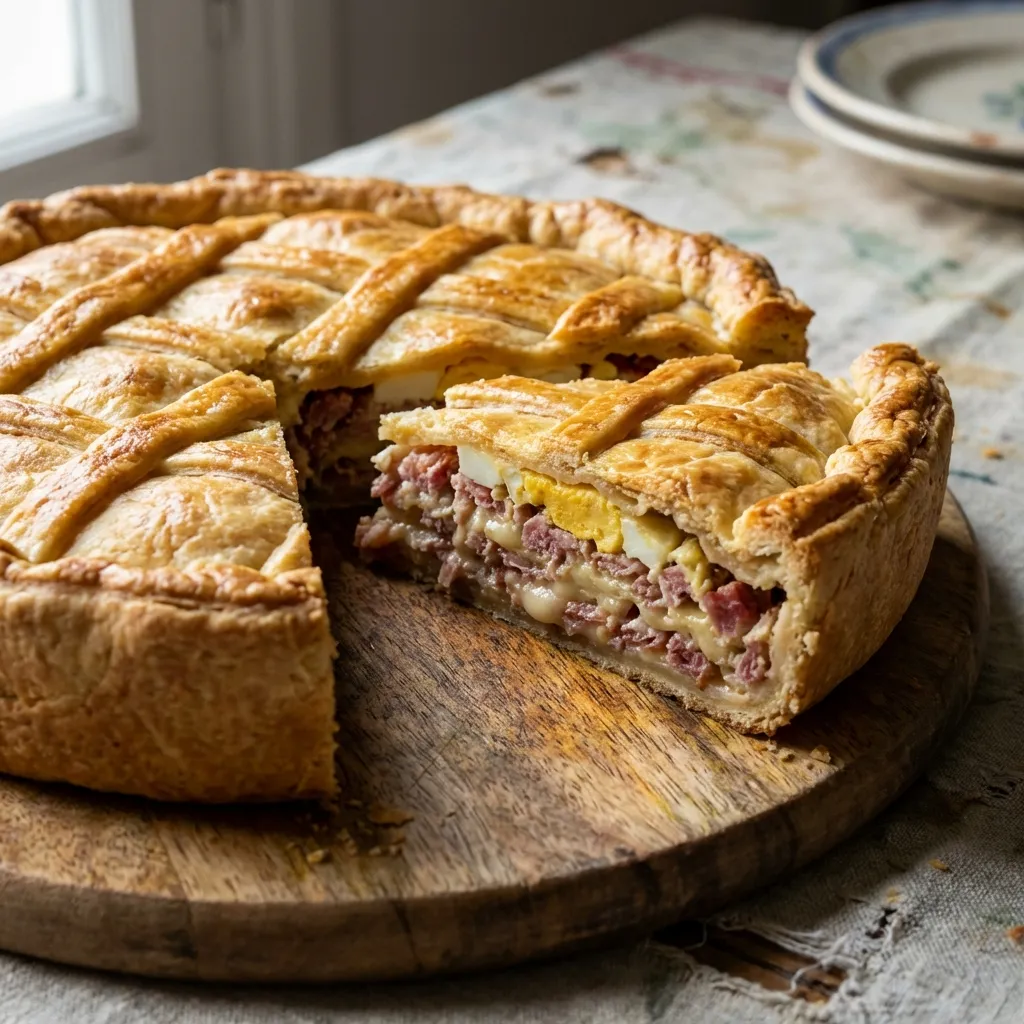
Pizza Rustica is not a pizza at all in the way most Americans imagine it. In the Campania and Calabria regions of Southern Italy, and across the Italian-American kitchens that carried the tradition to the United States, it is a dense, double-crusted savory pie baked for Easter to break the long, lean fast of Lent. After forty days without meat, eggs, and cheese, families celebrated the Resurrection with a pie that crams all three into a single golden crust: ricotta for richness, cubed mozzarella for stretch, sharp grated Parmesan for depth, and diced salami and ham for the cured-meat abundance that signaled the feast had truly begun. This recipe stays faithful to that template, binding the filling with four beaten eggs and brightening it with fresh parsley and plenty of black pepper. Every Italian-American family guards a slightly different version, sometimes called pizza chiena or pizzagaina in dialect, and the recipe is traditionally assembled on Good Friday or Holy Saturday so the flavors settle overnight. It is almost always served at room temperature, sliced into thick wedges and eaten throughout Easter weekend, a portable celebration of springtime and the end of sacrifice that tastes as much of memory as of meat and cheese.
Ingredients
Serves 8Instructions
- 1
Preheat oven to 375°F (190°C).
- 2
In a large bowl, combine the ricotta, cubed mozzarella, diced salami, diced ham, and grated Parmesan cheese.
- 3
Add the beaten eggs, chopped parsley, and plenty of black pepper. Mix thoroughly until well combined.
- 4
Line a deep pie dish (or springform pan) with one of the pie crusts.
- 5
Pour the cheese and meat mixture into the crust, spreading it evenly.
- 6
Cover with the second pie crust. Seal the edges by crimping them together. Cut a few slits in the top crust to allow steam to escape.
- 7
Bake for 50-60 minutes, or until the crust is golden brown and the filling is set (a knife inserted into the center should come out clean).
- 8
Let the pie cool completely on a wire rack before slicting. It is often served at room temperature.
Chef's Tips
- ✦ Cube the mozzarella rather than shredding it so the filling holds distinct, melty pockets instead of turning into one uniform mass.
- ✦ Beat the eggs thoroughly before folding them in; they are the binder that lets the pie slice into clean wedges rather than crumbling.
- ✦ Cut several steam vents in the top crust as directed, otherwise trapped moisture from the cheeses can make the crust soggy or buckle.
- ✦ Let the pie cool completely on a wire rack before slicing, ideally several hours; cutting warm releases the filling and ruins the structure.
- ✦ Bake until a knife inserted in the center comes out clean and the crust is deep golden; the egg-set filling, not the crust color alone, signals doneness.
Ingredient Substitutions
-
salami → soppressata or capicola
Both are traditional in many regional versions; dice to the same size so the cured-meat flavor stays evenly distributed through the filling.
-
cooked ham or prosciutto → mortadella or pancetta
Mortadella keeps the mild, sweet profile; if you use pancetta, render it first since this recipe adds the meats raw into the cheese mix.
-
ricotta cheese → well-drained whole-milk ricotta or basket cheese
Drain in a sieve for 30 minutes if watery, otherwise the filling can stay loose and the pie will not set cleanly when sliced.
-
mozzarella, cubed → provolone or low-moisture scamorza, cubed
Provolone adds a sharper, more traditional Southern Italian note; keep it cubed rather than shredded so you get pockets of melt.
-
prepared pie crusts → homemade pasta frolla rustica (savory short-crust)
A from-scratch lard or butter pastry is the classic vessel; a deep-dish store crust works but use two for a sturdy top and bottom.
Tags
Frequently Asked Questions
What is Pizza Rustica and why is it called a pizza? ▼
Pizza Rustica is a double-crusted Italian Easter pie filled with ricotta, mozzarella, Parmesan, salami, ham, and eggs. The word pizza here means 'pie' in the older Southern Italian sense, not a flatbread; it is also known as pizza chiena or pizzagaina.
Why is Pizza Rustica traditionally eaten at Easter? ▼
It breaks the Lenten fast. After forty days of abstaining from meat, eggs, and dairy, families celebrated Easter with a pie packed with all three rich ingredients, symbolizing abundance and the end of sacrifice.
Can I make Pizza Rustica ahead of time? ▼
Yes, and it is better for it. Bake it a day ahead, cool completely, and refrigerate. The flavors meld overnight, and it is traditionally served at room temperature, making it ideal for Easter entertaining.
How do I keep the filling from being watery? ▼
Use well-drained whole-milk ricotta and, if it looks wet, let it sit in a fine sieve for about 30 minutes first. Cubing rather than shredding the mozzarella and cutting steam vents in the top crust also help excess moisture escape.
Is this recipe vegetarian or gluten-free? ▼
No. It contains salami and ham, so it is not vegetarian, and the pie crust contains wheat, so it is not gluten-free. It also includes dairy and eggs, making it unsuitable for dairy-free or egg-free diets.
How should I store and serve leftovers? ▼
Wrap slices and refrigerate for up to four days. Serve at room temperature or gently warmed; many families enjoy it cold straight from the fridge throughout Easter weekend.