Italian Cuisine
Risotto alla Milanese (Saffron Risotto)
By Giulia Bernardi, Lombard-trained Chef and risotto specialist from Milan
Rate this recipe
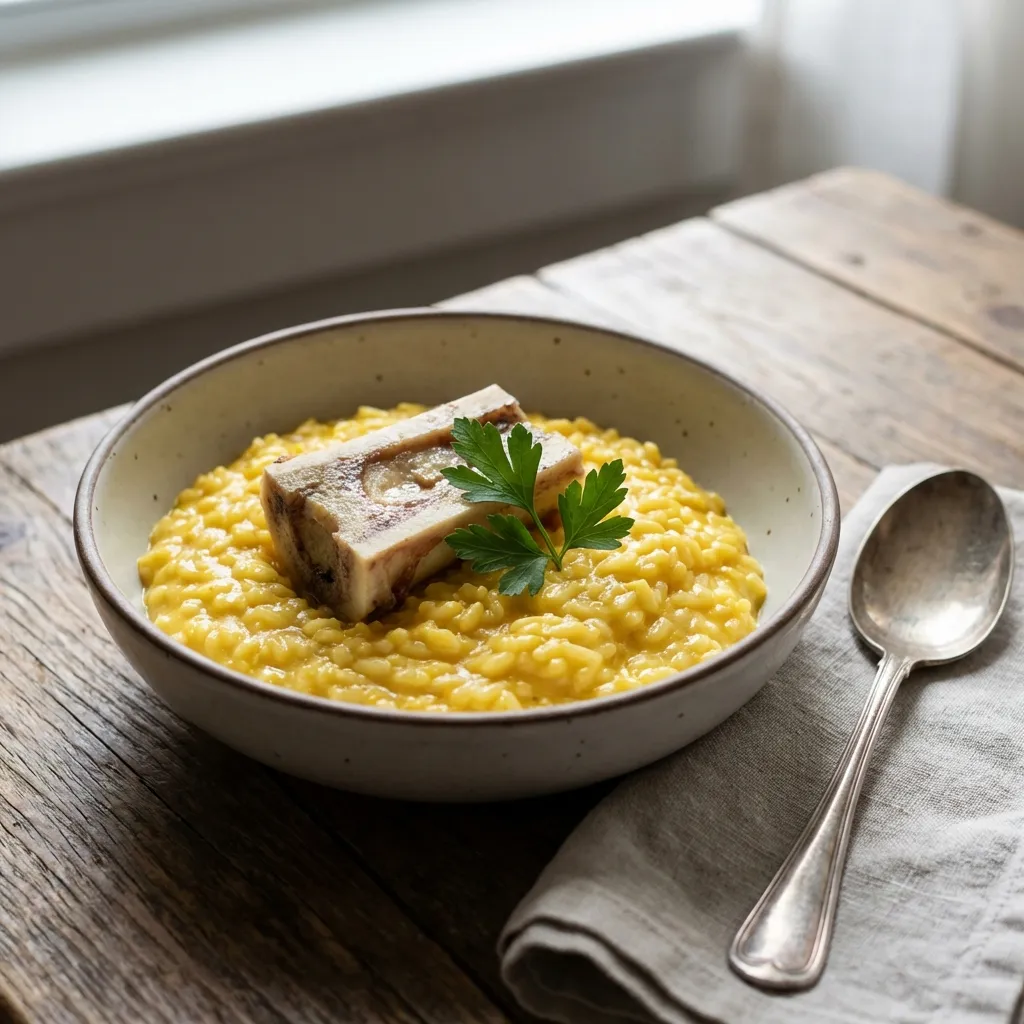
Risotto alla Milanese is the golden heart of Lombardy and the single dish most associated with Milan. Legend ties its luminous saffron color to the city's own cathedral: a 16th-century glassmaker nicknamed Zafferano, apprenticed to the Duomo's stained-glass masters, was teased that he would put saffron in everything, so as a joke he tinted a wedding risotto yellow, and the city fell in love. Whatever the truth, saffron has defined the dish for centuries. This is a risotto built on the northern Italian pantry: short-grain Arborio or Carnaroli rice from the Po Valley paddies, a soffritto begun in butter rather than the olive oil of the south, and, traditionally, a knob of beef marrow that enriches the base, kept optional here. Crucially, it is a risotto bianco turned gold, with no tomato or heavy garnish to distract from the saffron's floral, honeyed perfume. The method is the method of all great risotto: toast the rice to seal the grains, deglaze with white wine, then coax in hot broth one ladle at a time, stirring to draw out the starch that makes the dish creamy without cream. The saffron, bloomed in warm broth, is stirred in partway through so the color blooms evenly. The final mantecatura, beating in cold butter and Parmigiano off the heat, gives the signature all'onda texture, loose enough to ripple like a wave. In Milan it is the classic partner to ossobuco, the marrow-rich veal shank, a pairing as traditional as the city itself.
Ingredients
Serves 4Instructions
- 1
Pour the broth into a saucepan and bring it to a simmer. Keep it hot over low heat throughout the cooking process. Place the saffron threads in a small bowl and cover with a ladleful of the hot broth to steep.
- 2
In a heavy-bottomed pot or Dutch oven, melt 2 tablespoons of butter (and beef marrow if using) over medium heat. Add the chopped onion and sauté gently for 3-4 minutes until soft and translucent but not browned.
- 3
Add the rice to the pot and toast it for 1-2 minutes, stirring constantly, until the grains are coated and slightly translucent at the edges.
- 4
Pour in the white wine and stir until fully absorbed, about 2 minutes.
- 5
Begin adding the hot broth, one ladle at a time, stirring frequently. Wait until each ladle of liquid is almost absorbed before adding the next. This process takes about 18-20 minutes.
- 6
About halfway through cooking, add the saffron-infused broth to the pot. The rice will turn a beautiful golden yellow.
- 7
When the rice is tender but still has a slight bite ('al dente') and the mixture is creamy, remove the pot from the heat.
- 8
Stir in the remaining 2 tablespoons of butter and the grated Parmesan cheese. Cover the pot and let it rest for 2 minutes before serving.
Chef's Tips
- ✦ Bloom the saffron in a ladle of hot broth for several minutes before adding it; this draws out both the color and the floral aroma far better than dropping the threads straight into the rice.
- ✦ Toast the rice for a full 1 to 2 minutes until the grains turn pearly and slightly translucent at the edges. This step seals the starch and is what keeps the risotto from turning to mush.
- ✦ Keep the broth at a gentle simmer the whole time and add it one ladle at a time, waiting until each is nearly absorbed. Adding cold broth or flooding the pan stops the cooking and dulls the texture.
- ✦ Stir frequently but not frantically; the friction is what releases the starch that makes risotto creamy without any cream. Taste near the end for that al dente bite at the center of the grain.
- ✦ Finish off the heat with cold butter and Parmesan, beating vigorously for the mantecatura, then rest covered for 2 minutes. The risotto should be all'onda, loose enough to ripple like a wave when you shake the pan.
Ingredient Substitutions
-
Arborio rice → Carnaroli or Vialone Nano rice
The recipe already names Carnaroli, often called the king of risotto rice for its resistance to overcooking. Vialone Nano cooks faster and gives a looser, more all'onda result. Avoid long-grain rice, which will not release the right starch.
-
chicken broth → homemade beef broth or vegetable broth
Beef broth (the recipe's traditional alternative) gives a deeper, more authentically Milanese base. Vegetable broth keeps it lighter and makes the dish vegetarian. Keep it hot so it never shocks the cooking rice.
-
beef marrow → an extra tablespoon of butter
Marrow is the classic enrichment but hard to source; an extra tablespoon of butter in the soffritto approximates its richness. It is already optional in this recipe.
-
dry white wine → dry vermouth or a splash of broth with lemon
Vermouth adds an aromatic, herbal note. For an alcohol-free risotto, deglaze with a ladle of hot broth and a small squeeze of lemon to mimic the wine's acidity.
-
Parmesan cheese → Grana Padano
Grana Padano is the everyday Lombard hard cheese and slightly milder and less expensive than Parmigiano-Reggiano. Always grate it fresh and beat it in off the heat to avoid clumping.
Tags
Frequently Asked Questions
Why is Risotto alla Milanese yellow? ▼
The color comes from saffron threads, which give the dish its signature golden hue and floral aroma. Saffron has been linked to Milan since at least the 16th century and is the defining ingredient of this Lombard classic.
What is the best rice for this risotto? ▼
Use a starchy short-grain Italian rice. Arborio is the most common, Carnaroli (named in the recipe) is prized for holding its bite, and Vialone Nano gives a looser texture. These varieties release the starch that makes risotto creamy.
Can I make Risotto alla Milanese vegetarian? ▼
Yes. Skip the optional beef marrow and use vegetable broth in place of chicken or beef broth. The butter, Parmesan, saffron, wine, and rice already carry the flavor, so the dish stays rich and authentic.
What does mantecatura mean? ▼
Mantecatura is the final step where you beat cold butter and grated Parmesan into the risotto off the heat. It emulsifies the fat and starch into a glossy, creamy finish and gives the risotto its signature all'onda, or wave-like, looseness.
What is traditionally served with Risotto alla Milanese? ▼
In Milan it is the classic accompaniment to ossobuco, braised veal shank rich with marrow. It is also served on its own as a primo, and leftovers are pressed and pan-fried into the crisp Milanese specialty riso al salto.
Do I really have to stir constantly? ▼
You should stir frequently, though not literally without stopping. The friction releases the rice's starch, which is what creates the creamy texture without cream. Stirring also keeps the rice from sticking and helps each ladle of broth absorb evenly.