Scottish Cuisine
Shortbread Cookies
By Fiona MacLeod, Scottish baker and pastry instructor with 18 years teaching traditional shortbread in Edinburgh
Rate this recipe
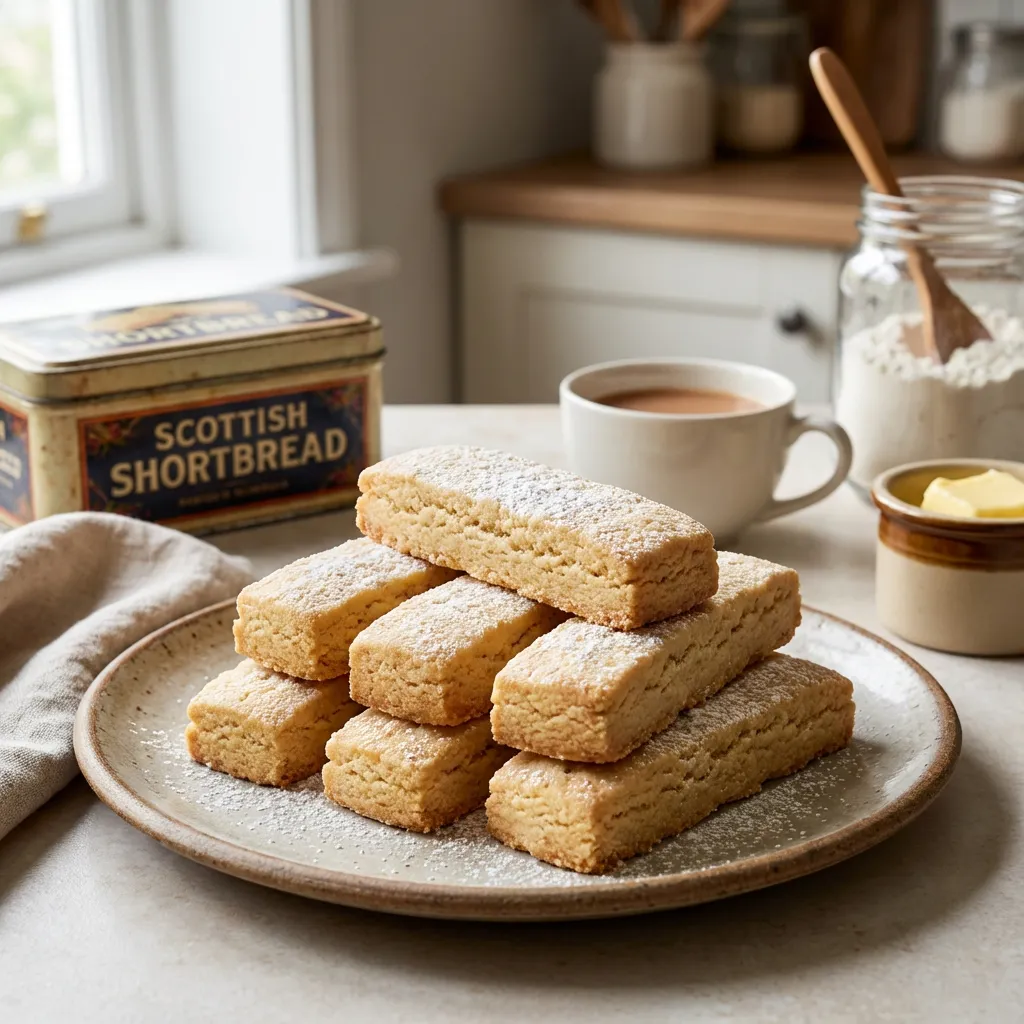
Scottish shortbread is one of the most disciplined recipes in the British baking canon, precisely because it asks for so little. Just three ingredients: butter, sugar, and flour, in the classic 1-2-3 ratio of one part sugar, two parts butter, and three parts flour by weight that bakers have repeated for centuries. Its origins trace to medieval Scotland, where leftover bread dough was dried in low ovens into a hard, twice-baked biscuit called a rusk. As butter gradually replaced yeast, the result became the rich, crumbly shortbread we know today. By the 16th century it had earned a place of honor at the Scottish court, where Mary, Queen of Scots is often credited with popularizing the petticoat-tail wedges still cut today. Shortbread became inseparable from Scottish celebration, served at Hogmanay (New Year's Eve), weddings, and Christmas, often pressed into carved wooden molds bearing thistles and Celtic knots. The name has nothing to do with size; "short" refers to the high fat content that shortens, or tenderizes, the gluten strands, giving shortbread its signature sandy, melt-in-the-mouth crumb. This version keeps faith with tradition: no leavening, no eggs, no vanilla, just good butter at room temperature creamed with sugar, then bound with flour and pressed into a pan. The magic is in restraint, in stopping the moment the dough comes together and letting the butter do the work.
Ingredients
Serves 24Instructions
- 1
Preheat oven to 325°F (165°C).
- 2
Cream butter and sugar until fluffy.
- 3
Mix in flour until combined.
- 4
Press dough into an ungreased 9-inch square baking pan. Prick with a fork.
- 5
Bake for 20 minutes (325°F / 165°C) until light brown.
- 6
Cut into bars while warm.
Chef's Tips
- ✦ Keep the butter at cool room temperature, soft enough to cream but not greasy or melting; overly warm butter makes the cookies spread and lose their crisp edges.
- ✦ Stop mixing the moment the flour disappears. Overworking develops gluten and turns tender shortbread tough and chewy.
- ✦ Prick the dough all over with a fork before baking; the holes (called docking) let steam escape so the shortbread bakes flat and evenly without bubbling.
- ✦ Bake low and slow until just pale gold at the edges; shortbread should never brown deeply, or the delicate buttery flavor turns bitter.
- ✦ Score the bars while the shortbread is still warm but cut them only after it has fully cooled, or the soft, fragile crumb will crumble apart.
Ingredient Substitutions
-
unsalted butter → salted butter (omit any added pinch of salt)
Traditional Scottish shortbread often uses salted butter; if you do, skip any extra salt. Always use real butter, never margarine or spread, because the flavor and crumb depend entirely on it.
-
sugar → superfine (caster) sugar
Caster sugar dissolves more evenly into the butter and gives a finer, more delicate crumb than granulated. For a rustic finish, swap a tablespoon of the sugar for demerara to sprinkle on top.
-
all-purpose flour → 3 parts all-purpose flour to 1 part rice flour or cornstarch
Replacing a quarter of the flour with rice flour or cornstarch adds the classic sandy, shorter texture prized in Scottish shortbread.
-
all-purpose flour → 1:1 gluten-free all-purpose blend
Use a blend that contains xanthan gum. The dough will be slightly more fragile, so press firmly and handle gently while warm.
-
sugar → powdered (confectioners') sugar
Powdered sugar yields an even more tender, fine-grained shortbread because it carries a little cornstarch; reduce by about 2 tablespoons since it is sweeter by volume.
Tags
Frequently Asked Questions
Can I make shortbread dough ahead of time? ▼
Yes. Press the dough into the pan, cover, and refrigerate up to 2 days before baking, or freeze the unbaked pressed dough up to 1 month. Bake from chilled, adding 2 to 3 minutes to the time. Chilling also sharpens the edges and reduces spreading.
How do I know when shortbread is done? ▼
Look for pale gold edges and a matte, set surface; the center should feel firm, not wet. It will still seem slightly soft when warm but firms up as it cools. Avoid any deep browning, which signals the butter is overcooking and the flavor will turn bitter.
Can I double the recipe? ▼
Yes, simply double all three ingredients, keeping the 1-2-3 ratio. Use a 9x13-inch pan instead of a 9-inch square and expect to add about 5 to 10 minutes of baking time. Check for pale gold edges rather than relying solely on the clock.
How can I make this shortbread gluten-free? ▼
Swap the all-purpose flour for a 1:1 gluten-free baking blend that contains xanthan gum. The texture stays beautifully short and tender. The dough is a touch more delicate, so press it firmly into the pan and let it cool completely before cutting.
How should I store shortbread? ▼
Store cooled shortbread in an airtight container at room temperature for up to 1 week; the low moisture content keeps it fresh far longer than most cookies. For longer storage, freeze the baked, cooled bars in a sealed container for up to 3 months.
Can I reheat or refresh shortbread? ▼
Shortbread is best at room temperature and does not need reheating, but if it has softened you can crisp it in a 300°F (150°C) oven for 3 to 5 minutes, then cool. Thaw frozen shortbread at room temperature, or warm briefly in a low oven to restore the crisp snap.