Italian Cuisine
Shrimp Scampi Linguine
By Lucia Ferraro
Rate this recipe
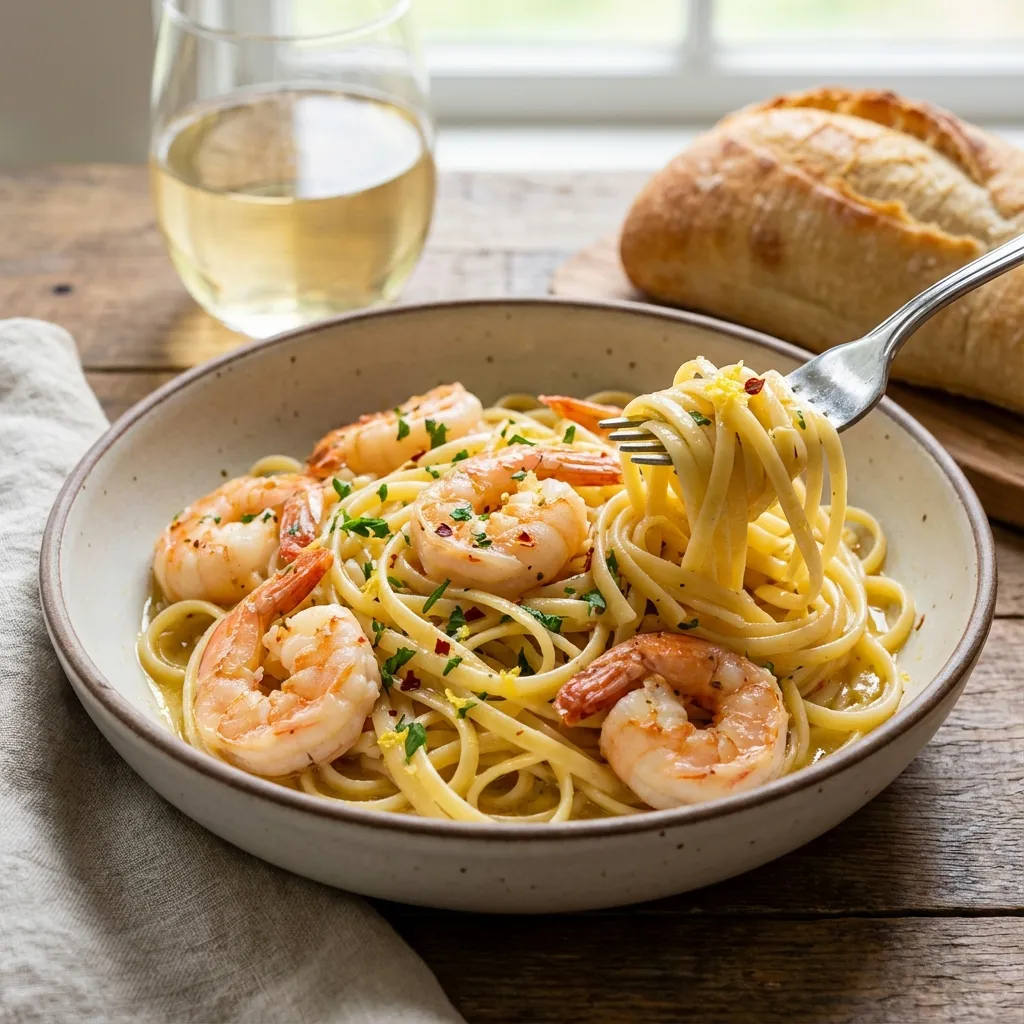
Scampi is one of those wonderful transatlantic mix-ups. In Italy, scampi are langoustines, the small lobster-like crustaceans cooked simply in garlic, butter, and wine. When Italian immigrants arrived in America and couldn't reliably find langoustines, they reached for shrimp instead and kept the name. The result, shrimp scampi, became an Italian-American restaurant icon, and tossing it with linguine turned it into a complete, weeknight-friendly meal. What makes this version sing is its speed and its balance: bright lemon and a whisper of red pepper flakes cut through the richness of the butter, while a splash of dry white wine deglazes the pan and pulls every bit of toasted garlic into the sauce. The whole thing comes together in about 20 minutes, which is exactly long enough to boil the linguine. The key is treating the shrimp with respect; they need only two to three minutes to turn pink and opaque, and pulling them early keeps them sweet and snappy instead of rubbery. It is elegant enough for company yet fast enough for a Tuesday.
Ingredients
Serves 4Instructions
- 1
Bring a large pot of salted water to a boil.
- 2
Cook the linguine in the boiling water according to package instructions until al dente.
- 3
While the pasta cooks, heat olive oil and 2 tablespoons of butter in a large skillet over medium-high heat (375°F / 190°C).
- 4
Add the shrimp, garlic, and red pepper flakes. Sauté for 2-3 minutes until the shrimp are pink and opaque. Be careful not to overcook. Remove shrimp from the pan and set aside.
- 5
Pour the white wine and lemon juice into the same skillet. Simmer for 2 minutes to reduce the liquid by half, scraping up any browned bits.
- 6
Stir in the remaining 2 tablespoons of butter until melted to create a silky sauce.
- 7
Return the shrimp to the pan and add the cooked linguine and chopped parsley. Toss everything together until well coated.
- 8
Serve immediately, garnished with lemon zest if desired.
Chef's Tips
- ✦ Cook the shrimp just until pink and opaque, about 2 to 3 minutes, then pull them out; they finish warming when tossed back in and overcooked shrimp turn rubbery.
- ✦ Salt your pasta water generously; it is the only chance to season the linguine from within.
- ✦ Reduce the wine and lemon by half before adding the final butter so the sauce concentrates and the raw alcohol cooks off.
- ✦ Add the cold butter off direct high heat and swirl it in so it emulsifies into a glossy sauce instead of breaking into greasy pools.
- ✦ Reserve a half cup of starchy pasta water and add a splash when tossing; it helps the sauce cling to every strand.
- ✦ Zest the lemon before you juice it and save the zest for the finish, where it adds a fresh aromatic lift the cooked juice can't.
Ingredient Substitutions
-
linguine → spaghetti, fettuccine, or angel hair
Any long pasta works; angel hair clings to the light sauce beautifully but cooks faster, so watch the timing.
-
shrimp → sea scallops or langoustines
Scallops sear in 2 to 3 minutes per side; langoustines are the traditional Italian scampi if you can find them.
-
white wine → chicken or seafood stock with a squeeze of lemon
Use an equal amount of stock plus a teaspoon of lemon or a splash of white wine vinegar to keep the bright acidity without alcohol.
-
butter → additional olive oil or a plant-based butter
For dairy-free, finish with good olive oil or vegan butter; you lose a little silkiness but gain a cleaner flavor.
-
fresh parsley → fresh basil or chives
Stir in at the very end so the herbs stay vivid; basil leans sweeter, chives add a gentle onion note.
-
red pepper flakes → a pinch of Calabrian chili paste or black pepper
Calabrian chili adds fruity heat; skip entirely for a mild, kid-friendly version.
Tags
Frequently Asked Questions
What is the safe internal temperature for cooked shrimp? ▼
Shrimp are safely cooked at an internal temperature of 145F (63C). Visually, they should be pink, opaque, and curled into a loose C shape; a tight O shape means they're overcooked. This takes only 2 to 3 minutes over medium-high heat.
Can I make shrimp scampi without wine? ▼
Yes. Substitute an equal amount of chicken or seafood stock and add an extra teaspoon of lemon juice or a splash of white wine vinegar to replace the brightness and acidity the wine provides.
Can I use frozen shrimp? ▼
Absolutely. Thaw them fully first by running under cold water, then pat them very dry with paper towels. Excess water makes the shrimp steam rather than sear and dilutes the sauce.
How do I store and reheat leftovers? ▼
Refrigerate in an airtight container for up to 2 days. Reheat gently in a skillet over low heat with a splash of water or stock; avoid the microwave, which easily overcooks the shrimp into rubber.
Can I make this dish dairy-free? ▼
Yes. Replace the butter with additional olive oil or a plant-based butter. The sauce will be a touch less silky but still bright and flavorful from the garlic, lemon, and wine.
How do I scale this recipe up? ▼
It serves 4. To double it, sear the shrimp in two batches so the pan stays hot and they brown rather than steam, then build the sauce in one large skillet and toss the pasta in batches if needed.
Why is my sauce greasy instead of silky? ▼
The butter broke from too much heat. Lower the flame, add the butter off the boil, and swirl constantly; a splash of starchy pasta water also helps the sauce emulsify into a glossy coating.