Italian Cuisine
Spaghetti Bolognese
By Marco Bianchi, Bologna-born chef and culinary instructor
Rate this recipe
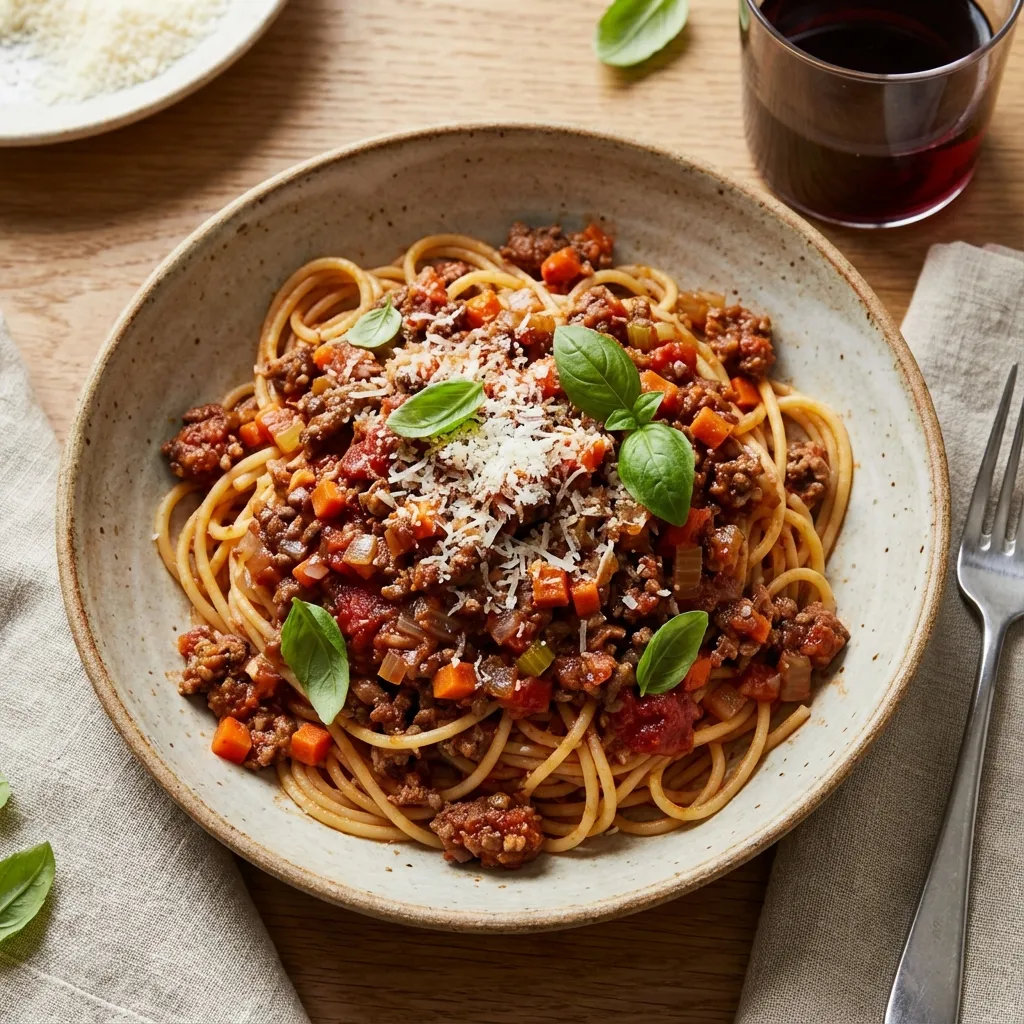
True ragu comes from Bologna, the gastronomic capital of Emilia-Romagna, a region whose flat fertile plains and pork-curing traditions gave Italy some of its richest cooking. In Bologna the sauce is called ragu alla bolognese, and the locals will tell you, often with a smile and a raised eyebrow, that it is traditionally served not over spaghetti but over fresh egg tagliatelle, whose porous ribbons cling to the meat. The 'spaghetti bolognese' beloved around the world is largely a foreign adaptation, but the soul of the sauce is unmistakably Emilian: a soffritto of onion, carrot, and celery cooked slowly, meat browned for depth, a splash of wine, tomato used as seasoning rather than the main event, and a long, gentle simmer. The optional milk in this recipe is no accident; the official recipe lodged with the Bologna Chamber of Commerce includes it, where it tenderizes the meat and rounds the sauce's acidity into something almost velvety. Emilia-Romagna is the land of Parmigiano-Reggiano, balsamic vinegar, and Bolognese mortadella, a region that prizes patience and richness over speed. The lesson its cooks pass down is simple: a ragu is not browned mince in jarred sauce but a slow transformation, and the longer it simmers, the more it tastes of home.
Ingredients
Serves 6Instructions
- 1
Heat the olive oil in a large pot or Dutch oven over medium heat (350°F / 175°C). Add the chopped onion, carrots, and celery.
- 2
Sauté the vegetables for about 10 minutes until they are soft and the onions are translucent. Add the minced garlic and cook for another minute.
- 3
Add the ground beef to the pot. Increase heat to medium-high (375°F / 190°C) and cook, breaking up the meat with a wooden spoon, until browned.
- 4
Pour in the red wine and scrape the bottom of the pot to release any browned bits. Cook for 2 minutes or until the wine has mostly evaporated.
- 5
Stir in the tomato puree. Season with salt and pepper. Reduce heat to low, cover partially, and simmer for at least 1.5 to 2 hours. If using milk, stir it in during the last 45 minutes of cooking for a creamier sauce.
- 6
Check the sauce occasionally and add a splash of water or broth if it becomes too thick.
- 7
Cook the spaghetti in a large pot of boiling salted water until al dente. Drain.
- 8
Serve the Bolognese sauce over a bed of hot spaghetti.
Chef's Tips
- ✦ Chop the soffritto (onion, carrot, celery) very finely and cook it slowly until soft and sweet before the meat goes in; this aromatic base is the backbone of the whole sauce.
- ✦ Brown the beef properly over medium-high heat until it develops color rather than just turning gray; those caramelized bits are pure flavor and worth the extra few minutes.
- ✦ Add the milk during the last 45 minutes as the recipe directs; it sounds unusual but it is the authentic Bolognese touch that tenderizes the meat and rounds out the acidity.
- ✦ Simmer low and slow for the full 1.5 to 2 hours; a fast Bolognese tastes thin, while a long, gentle simmer concentrates and marries the flavors. Add a splash of water if it tightens too much.
- ✦ Toss the drained pasta directly into the sauce off the heat for a minute so it absorbs the ragu, rather than plating naked spaghetti and spooning sauce on top.
Ingredient Substitutions
-
ground beef → a mix of ground beef and ground pork, or ground veal
Traditional Bolognese uses a beef-and-pork blend for deeper flavor and a softer texture; pork adds richness while beef brings body.
-
spaghetti → fresh tagliatelle, pappardelle, or rigatoni
In Bologna the sauce is served over wide egg tagliatelle, which holds the meaty sauce far better than thin spaghetti; tube shapes like rigatoni also catch the ragu well.
-
red wine → dry white wine, or beef broth
White wine is also traditional in Bologna and gives a lighter result; if avoiding alcohol, deglaze with broth for similar depth.
-
tomato puree → passata, crushed San Marzano tomatoes, or a few tablespoons of tomato paste loosened with broth
Authentic ragu uses tomato as a background note, not a base, so a smaller amount of concentrated tomato is more traditional than a fully tomatoey sauce.
-
whole milk → whole-fat dairy is best, but unsweetened oat or soy milk works for dairy-free
The milk tenderizes the meat and softens acidity; it is optional but classic, and a plant milk gives a similar mellowing effect without the dairy.
Tags
Frequently Asked Questions
Is spaghetti the traditional pasta for Bolognese? ▼
Not in Bologna. The classic pairing in Emilia-Romagna is fresh egg tagliatelle, whose wide, porous ribbons hold the meat sauce. 'Spaghetti bolognese' is an internationally popular adaptation, and while delicious, locals consider tagliatelle the authentic match.
Why does the recipe add milk to the sauce? ▼
Milk is part of the official Bolognese recipe registered in Bologna. Stirred in toward the end of cooking, it tenderizes the meat and softens the acidity of the wine and tomato, giving the ragu a rounder, creamier finish. It is optional but traditional.
How do I know the ground beef is safely cooked? ▼
Ground beef should reach an internal temperature of 160°F (71°C) to be safe. In this recipe the beef is browned and then simmered gently for 1.5 to 2 hours, which takes it well past that point; a long simmer ensures it is both safe and tender.
Can I make Bolognese ahead or freeze it? ▼
Yes, and it improves overnight as the flavors meld. Cool the sauce, refrigerate for up to three days, or freeze for up to three months. Reheat gently with a splash of water or broth, and cook fresh pasta when ready to serve.
How long should Bolognese simmer? ▼
At least 1.5 to 2 hours over low heat. The long, gentle cooking breaks down the meat and aromatics and concentrates the sauce. A quick 30-minute version will taste comparatively thin; patience is what makes a great ragu.
Can I leave out the wine? ▼
Yes. The red wine deglazes the pot and adds depth, but you can replace it with beef broth or simply a splash of water plus a small spoon of tomato paste. The sauce will be slightly less complex but still rich and satisfying.