Italian Cuisine
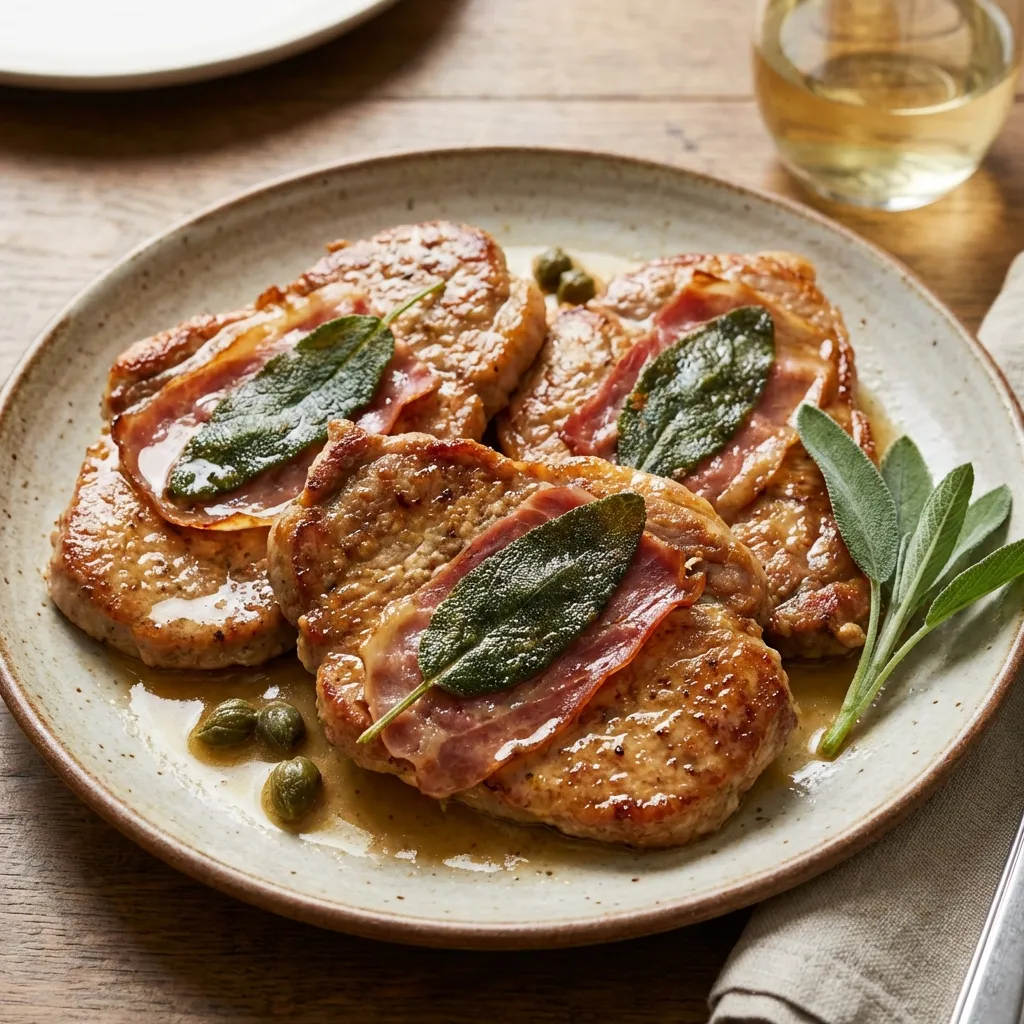
Veal Saltimbocca with Sage and Prosciutto
By Lorenzo Conti, Roman Chef and instructor of Lazio regional cuisine
Rate this recipe
Saltimbocca alla Romana, whose name means 'jumps in the mouth,' is one of the great fast dishes of Rome and the Lazio region, a staple of the city's classic trattorie alongside cacio e pepe and carbonara. The phrase captures both the speed of the cooking and the way the flavors leap to life: the sweetness of thin veal, the salty depth of prosciutto, and the resinous perfume of fresh sage, all bound together and finished in a glossy pan sauce. Though it has cousins in Brescia and even Switzerland, the Roman version is the canonical one, and it is defined by restraint. There are only a few components and each must be impeccable. The classic technique lays a slice of prosciutto, ideally prosciutto di Parma or San Daniele, and a sage leaf directly onto a pounded veal cutlet, secured with a toothpick so nothing slips during cooking. The cutlet is lightly dredged in flour on the veal side, then cooked quickly in butter and a little olive oil until just golden, so the lean veal stays tender rather than tough. A splash of dry white wine deglazes the fond and is mounted with cold butter into a silky sauce poured over the top. Romans debate whether the meat should be left flat (saltimbocca aperto) or folded over the prosciutto, but all agree it should reach the table immediately, while the sage is still singing and the sauce still glossy. It is elegant food that takes barely fifteen minutes, the kind of dish that proves Italian cooking is about the quality of a few ingredients, not the length of a recipe.
Ingredients
Serves 4Instructions
- 1
Place the veal cutlets on a cutting board. If they are not thin enough, pound them gently to about 1/4 inch thickness. Season lightly with pepper; go easy on salt as the prosciutto is salty.
- 2
Top each veal cutlet with a slice of prosciutto and one or two sage leaves. Secure the sage and prosciutto to the veal by weaving a toothpick through them.
- 3
Put the flour on a plate. Dredge the veal cutlets in the flour, shaking off any excess. Dredge only the plain veal side, or very lightly on the prosciutto side.
- 4
In a large skillet, heat 2 tablespoons of butter and 2 tablespoons of olive oil over medium-high heat until the butter bubbles and foams.
- 5
Add the veal cutlets to the pan, prosciutto side down first if you want it crisp, or veal side down. Cook for about 2-3 minutes on each side until golden brown and cooked through.
- 6
Transfer the cooked veal to a warm platter. Remove the toothpicks.
- 7
Deglaze the pan with the white wine, scraping up any browned bits from the bottom. Simmer for 2-3 minutes until reduced by half.
- 8
Stir in the remaining 2 tablespoons of butter to create a glossy sauce. Pour the sauce over the veal and serve immediately.
Chef's Tips
- ✦ Pound the veal evenly to about 1/4 inch between two sheets of plastic wrap. Thin, uniform cutlets cook in 2 to 3 minutes a side and stay tender; thick spots turn rubbery.
- ✦ Go easy on the salt. The prosciutto is already quite salty, so season the veal mostly with pepper and taste the finished sauce before adding any more salt.
- ✦ Dredge only the bare veal side (or very lightly on the prosciutto side) so the ham crisps and the sauce stays clean, exactly as the recipe directs.
- ✦ Cook the veal until just done, golden on both sides and no longer pink inside; an internal temperature of 145°F (63°C) with a 3-minute rest is the USDA-safe doneness for veal. Overcooking is the fastest way to ruin a delicate cutlet.
- ✦ Remove the toothpicks before saucing, deglaze with the wine to lift the browned fond, then swirl in the cold butter off direct high heat so the sauce emulsifies into a glossy finish instead of breaking.
Ingredient Substitutions
-
veal cutlets → thin chicken or turkey cutlets, or pork loin scallopine
Pounded chicken breast (pollo alla Romana style) or turkey is the most common swap. Pork loin is closer in texture. Whatever you use, pound it to about 1/4 inch so it cooks fast and stays tender.
-
prosciutto di Parma → San Daniele prosciutto or speck
San Daniele is sweeter; speck adds a light smokiness. Use a dry-cured, thinly sliced ham. Avoid cooked deli ham, which lacks the salty cured depth that defines the dish.
-
fresh sage → no true substitute; in a pinch, a small amount of fresh thyme
Sage is the soul of saltimbocca and dried sage will not give the same fragrance. If you truly cannot find it, a little fresh thyme changes the dish but keeps it herbaceous.
-
all-purpose flour → rice flour or gluten-free all-purpose flour
A light dredge gives the veal a thin golden crust and helps thicken the sauce. Rice flour or a 1:1 gluten-free blend keeps the dish gluten-free without changing the result much.
-
dry white wine → dry Marsala or chicken broth with a squeeze of lemon
Dry Marsala adds a nutty richness. For an alcohol-free sauce, deglaze with chicken broth and brighten with lemon to replace the wine's acidity.
Tags
Frequently Asked Questions
What does saltimbocca mean? ▼
Saltimbocca translates from Italian as 'jumps in the mouth,' a nod to how vividly the flavors of veal, salty prosciutto, and fragrant sage come together. The full name, saltimbocca alla Romana, marks it as a specialty of Rome.
What internal temperature should veal be cooked to? ▼
Cook veal cutlets until they are no longer pink and reach an internal temperature of 145°F (63°C), followed by a 3-minute rest, which is the USDA-recommended safe minimum. Because the cutlets are pounded thin, this usually takes only 2 to 3 minutes per side.
Can I make saltimbocca without veal? ▼
Yes. Thinly pounded chicken or turkey breast is the most popular substitute, and pork loin scallopine works well too. Keep the cutlets about 1/4 inch thick and cook poultry to 165°F (74°C) for safety.
Why is the veal dredged in flour? ▼
A light dusting of flour on the veal side gives a thin golden crust, helps the cutlet brown, and thickens the pan sauce slightly when you deglaze with wine. Dredge lightly and shake off the excess so the coating stays delicate.
Do I need toothpicks to hold it together? ▼
Toothpicks keep the sage and prosciutto pinned to the veal while it cooks so nothing slips in the pan. Just remember to remove them after cooking, before you pour over the sauce and serve.
What should I serve with veal saltimbocca? ▼
Romans often pair it with simple sides like sauteed spinach, roasted potatoes, or a crisp green salad. The buttery wine pan sauce is delicious spooned over the meat and a starch to soak it up.