Italian Cuisine
Zabaglione (Custard)
By Chef Pietro Rinaldi, Piedmont-born culinary instructor and author of a study on the historic dessert kitchens of Turin
Rate this recipe
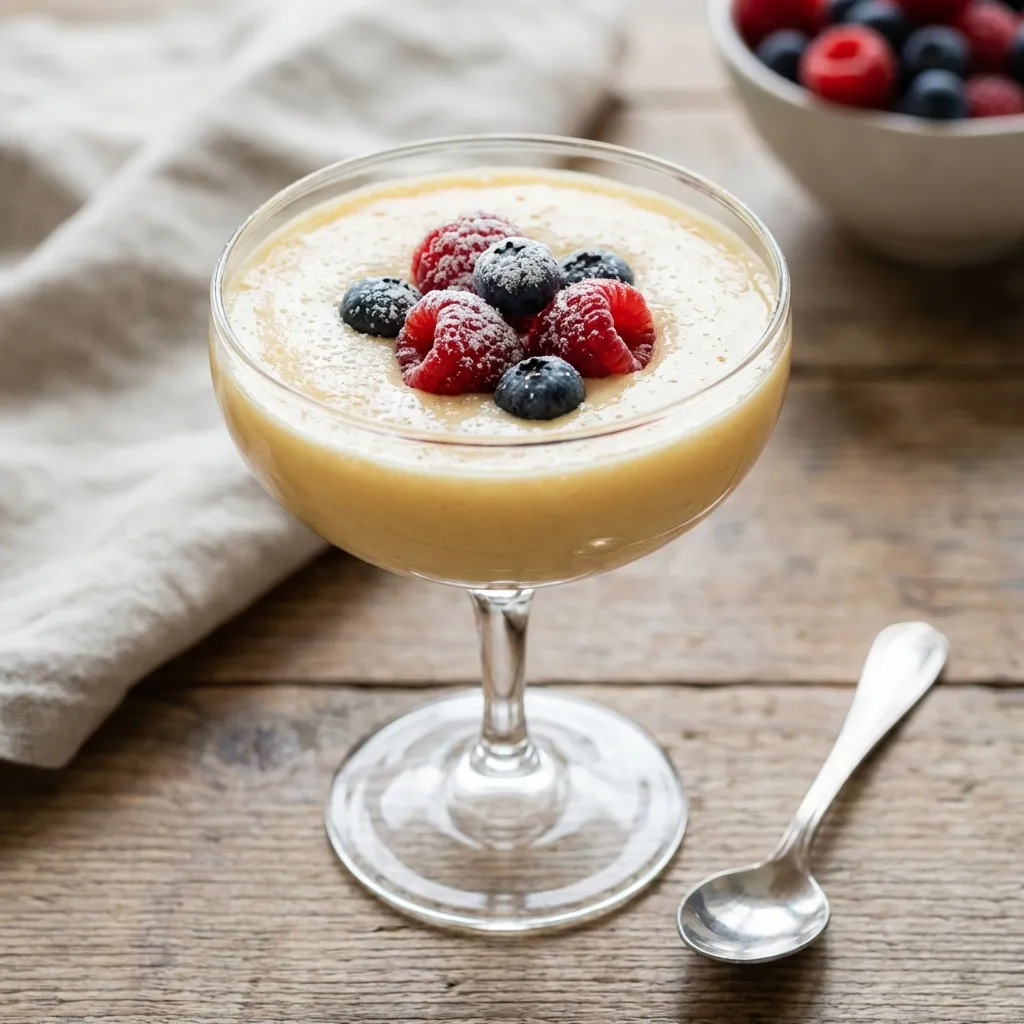
Zabaglione (zabaione in standard Italian, sabayon to the French) is one of Italy's oldest and most beloved warm custards, and Piedmont claims it as its own. Turinese legend credits a 16th-century friar, San Pasquale Baylon, or alternatively a court cook who improvised it from egg yolks, sugar, and fortified wine for the House of Savoy. The defining ingredient is Marsala, the amber fortified wine of Sicily, though Piedmontese cooks often reach for their local Moscato d'Asti instead, giving the custard a lighter, floral lift. What makes zabaglione remarkable is that it contains no flour, butter, or cream, only yolks, sugar, and wine transformed by heat and relentless whisking into a billowing, mousse-like foam. The technique is everything: the bowl rests over, never in, simmering water so the gentle heat cooks the yolks without scrambling them, while constant whisking incorporates air until the mixture triples in volume. Reaching 160°F both sets the custard and makes the eggs safe to eat. Served warm and spooned over fresh berries, or chilled and folded into cream for a semifreddo, zabaglione is the kind of dessert that feels at once rustic and aristocratic, a few humble ingredients elevated entirely by the cook's wrist and patience.
Ingredients
Serves 4Instructions
- 1
Prepare a double boiler: Fill a medium pot with about 1-2 inches of water and bring to a simmer.
- 2
In a heatproof bowl that fits over the pot without touching the water, whisk together the egg yolks and sugar until pale and frothy.
- 3
Place the bowl over the simmering water. Gradually whisk in the Marsala wine.
- 4
Continue whisking constantly and vigorously for about 6-10 minutes. The mixture will triple in volume, become pale yellow, thick, and foamy, and reach a temperature of 160°F (71°C).
- 5
Remove the bowl from the heat. Zabaglione can be served warm immediately, or chilled.
- 6
Serve in glasses or bowls over fresh berries.
Chef's Tips
- ✦ Whisk the yolks and sugar until pale and ribbony before adding heat; this dissolves the sugar and builds the foundation for the foam.
- ✦ Make sure the bowl sits above the water, not touching it, so the custard cooks with gentle steam heat and never scrambles.
- ✦ Whisk constantly and vigorously, reaching into the corners of the bowl, to fold in maximum air and prevent the yolks from setting on the sides.
- ✦ Use an instant-read thermometer and pull the custard at 160°F (71°C); this is both the safe-egg temperature and the point of perfect thickness.
- ✦ If the mixture ever looks like it's about to scramble, lift the bowl off the heat and whisk hard for a few seconds to cool it before returning it.
Ingredient Substitutions
-
sweet Marsala wine → Moscato d'Asti, sweet sherry, Madeira, or Vin Santo
Moscato is the Piedmontese choice for a lighter, floral custard; any sweet fortified wine keeps the classic profile.
-
sweet Marsala wine → white grape juice plus a teaspoon of lemon juice (non-alcoholic)
For an alcohol-free version, use sweet white grape juice; the texture stays similar though the flavor is milder.
-
granulated sugar → superfine (caster) sugar or honey
Superfine sugar dissolves faster into the yolks; honey adds depth but use slightly less to keep balance.
-
egg yolks → pasteurized egg yolks
Use pasteurized yolks if serving anyone vulnerable to raw-egg risk; whisk to the same pale, frothy stage.
-
mixed berries → sliced peaches, figs, roasted stone fruit, or amaretti cookies
Any ripe fruit works; in Piedmont it's often served with crisp ladyfingers or amaretti for dipping.
Tags
Frequently Asked Questions
Can I make zabaglione ahead of time? ▼
Traditional warm zabaglione is meant to be served immediately, as the foam deflates as it cools. However, you can make a cold version: after whisking off the heat, set the bowl over ice and continue whisking until cooled, then fold in a little whipped cream to stabilize it. This chilled style holds in the refrigerator for a few hours and even makes a fine semifreddo if frozen.
How do I know when zabaglione is done? ▼
It's ready when it has tripled in volume and become pale, thick, and foamy, holding a soft ribbon when the whisk is lifted, typically after 6 to 10 minutes of constant whisking. For certainty and food safety, cook until an instant-read thermometer registers 160°F (71°C), which sets the egg yolks. Stop there; overheating will scramble the custard.
Can I scale this recipe up for more guests? ▼
Yes, zabaglione scales by the yolk: the classic ratio is one egg yolk, one tablespoon of sugar, and one tablespoon of Marsala per serving. This recipe serves four with four yolks. When making a large batch, use a wide bowl so the whisk can reach everything, and expect the whisking time to lengthen as volume grows.
What can I use instead of Marsala wine? ▼
Moscato d'Asti is the elegant Piedmontese alternative; sweet sherry, Madeira, or Vin Santo also work beautifully. For a non-alcoholic custard, substitute sweet white grape juice with a squeeze of lemon to mimic the wine's acidity. Each option shifts the flavor slightly but preserves the airy texture.
How should I store leftover zabaglione? ▼
Warm zabaglione doesn't store well, but a chilled, cream-stabilized version keeps covered in the refrigerator for up to two days; it may separate slightly, so whisk gently before serving. You can also freeze the cold version into a semifreddo. Plain warm zabaglione is best enjoyed fresh and is not suitable for reheating, which would curdle the eggs.
What do you serve with zabaglione? ▼
It's classically spooned warm over fresh berries such as strawberries and raspberries, but it's equally good over sliced peaches, figs, or roasted stone fruit. Serve it with crisp ladyfingers, amaretti, or biscotti for dipping, or layer it with sponge cake and fruit for a quick trifle. A glass of the same Marsala or Moscato alongside is a perfect pairing.