American Cuisine
Clam Chowder (New England Style)
By Cordelia Vance
Rate this recipe
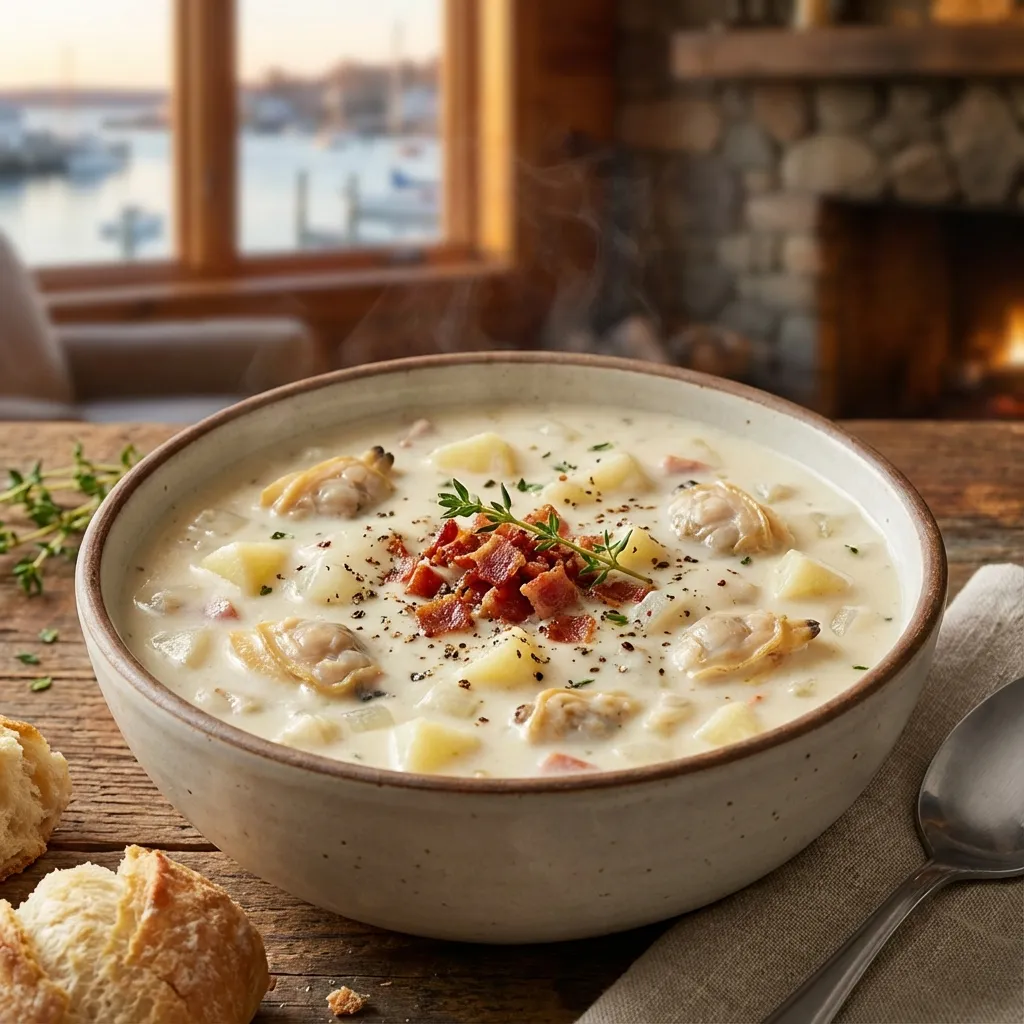
New England clam chowder is the white, cream-bound chowder that launched a regional rivalry, defined as much by what it leaves out as what it contains. Coastal cooks from Maine to Massachusetts have simmered clams with salt pork, potatoes, and milk since the eighteenth century, and the dish became so tied to identity that in 1939 a Maine legislator famously introduced a bill to make adding tomatoes to chowder illegal, a jab at the red Manhattan style. This version honors the creamy original: bacon rendered for smoky depth, its fat used to soften onion and celery, a flour roux for body, and bottled and reserved clam juice doing the heavy lifting on flavor before potatoes simmer to tenderness. The cream and clams go in last and gently. Clams are essentially pre-cooked when canned and turn rubbery if boiled, while heavy cream can break into a grainy curdle over high heat, so the final stretch is all about restraint, warming through rather than bubbling hard. Reserve that briny canned-clam liquid; it carries the ocean flavor that makes the difference between a good chowder and a memorable one. Crisp bacon scattered on top at the table keeps its crunch.
Ingredients
Serves 6Instructions
- 1
In a Dutch oven or large pot, cook chopped bacon over medium heat until crisp. Remove bacon with a slotted spoon; keep fat in the pot. Cook the bacon until crisp and to a safe internal temperature of at least 145°F (63°C).
- 2
Add onion and celery to the bacon fat. Sauté for 5-7 minutes until tender.
- 3
Stir in flour and thyme; cook for 1 minute to remove raw flour taste.
- 4
Gradually whisk in bottled clam juice and the juice reserved from the canned clams. Bring to a simmer.
- 5
Add the diced potatoes. Cover and simmer for 15-20 minutes until potatoes are tender.
- 6
Stir in the heavy cream and chopped clams. Heat through gently—do not boil vigorously or the cream may curdle.
- 7
Season with salt and pepper to taste. Mix in the crispy bacon right before serving.
Chef's Tips
- ✦ Reserve every drop of the canned clam liquid and add it with the bottled clam juice; that briny liquor is the backbone of the flavor.
- ✦ Cook the flour in the bacon fat for a full minute before adding liquid so the chowder doesn't taste of raw flour.
- ✦ Add the clams and cream only at the very end and keep the heat gentle; boiling toughens the clams and can curdle the cream.
- ✦ Cut the potatoes into even half-inch cubes so they cook through at the same rate, in about 15 to 20 minutes.
- ✦ For a thicker chowder, mash a few of the cooked potato cubes against the side of the pot before adding the cream.
- ✦ Stir the crisp bacon in just before serving, or sprinkle it on top, so it stays crunchy instead of going soft in the broth.
Ingredient Substitutions
-
canned chopped clams → fresh steamed clams or frozen clam meat
Steam fresh clams, chop the meat, and strain and reserve the liquor to replace some clam juice.
-
heavy cream → half-and-half or whole milk plus a cornstarch slurry
Lighter but more likely to curdle, so keep the heat gentle and don't let it boil.
-
bacon → salt pork or smoked turkey bacon
Salt pork is the traditional choice; turkey bacon needs a little oil since it renders less fat.
-
russet potatoes → Yukon Gold potatoes
Yukon Golds hold their shape and add buttery richness; russets break down more for a thicker chowder.
-
all-purpose flour → cornstarch slurry or gluten-free flour
Skip the roux and thicken at the end with a cornstarch slurry for a gluten-free chowder.
-
dried thyme → fresh thyme or a pinch of Old Bay
Use about three times as much fresh thyme; Old Bay adds a classic seafood-seasoning note.
Tags
Frequently Asked Questions
Why did my chowder curdle? ▼
The cream was boiled. Heavy cream can break into a grainy texture over high heat, so add it at the end and keep the chowder at a bare simmer, just warming through, never a hard boil.
Can I use fresh clams instead of canned? ▼
Yes. Steam fresh clams until they open, discard any that stay shut, chop the meat, and strain and reserve the cooking liquor to use in place of some of the bottled clam juice.
How do I handle clams safely? ▼
If using fresh clams, keep them cold, scrub them, and discard any that are cracked or won't close when tapped raw, or that don't open after cooking. Canned clams are already cooked; just heat the finished chowder through to a steaming 165F (74C).
How long does clam chowder keep, and can I freeze it? ▼
Refrigerate within two hours and keep up to three days. Cream-based chowder can separate when frozen; if you must freeze it, do so before adding the cream and stir cream in when reheating.
How do I reheat it without curdling? ▼
Warm it gently over low heat, stirring often, until steaming, about 165F (74C). Avoid a rolling boil, which can split the cream and toughen the clams.
What allergens are in this chowder? ▼
It contains shellfish (clams), milk (heavy cream), and wheat (flour roux). Bacon and bottled clam juice can carry sulfites or other additives, so check labels if that's a concern.
How can I make it thicker or thinner? ▼
For a thicker chowder, mash some cooked potatoes into the broth or simmer a bit longer; to thin it, stir in extra clam juice, broth, or milk until it reaches the consistency you like.