American Cuisine
Classic Eggs Benedict
By Theodore Nakamura
Rate this recipe
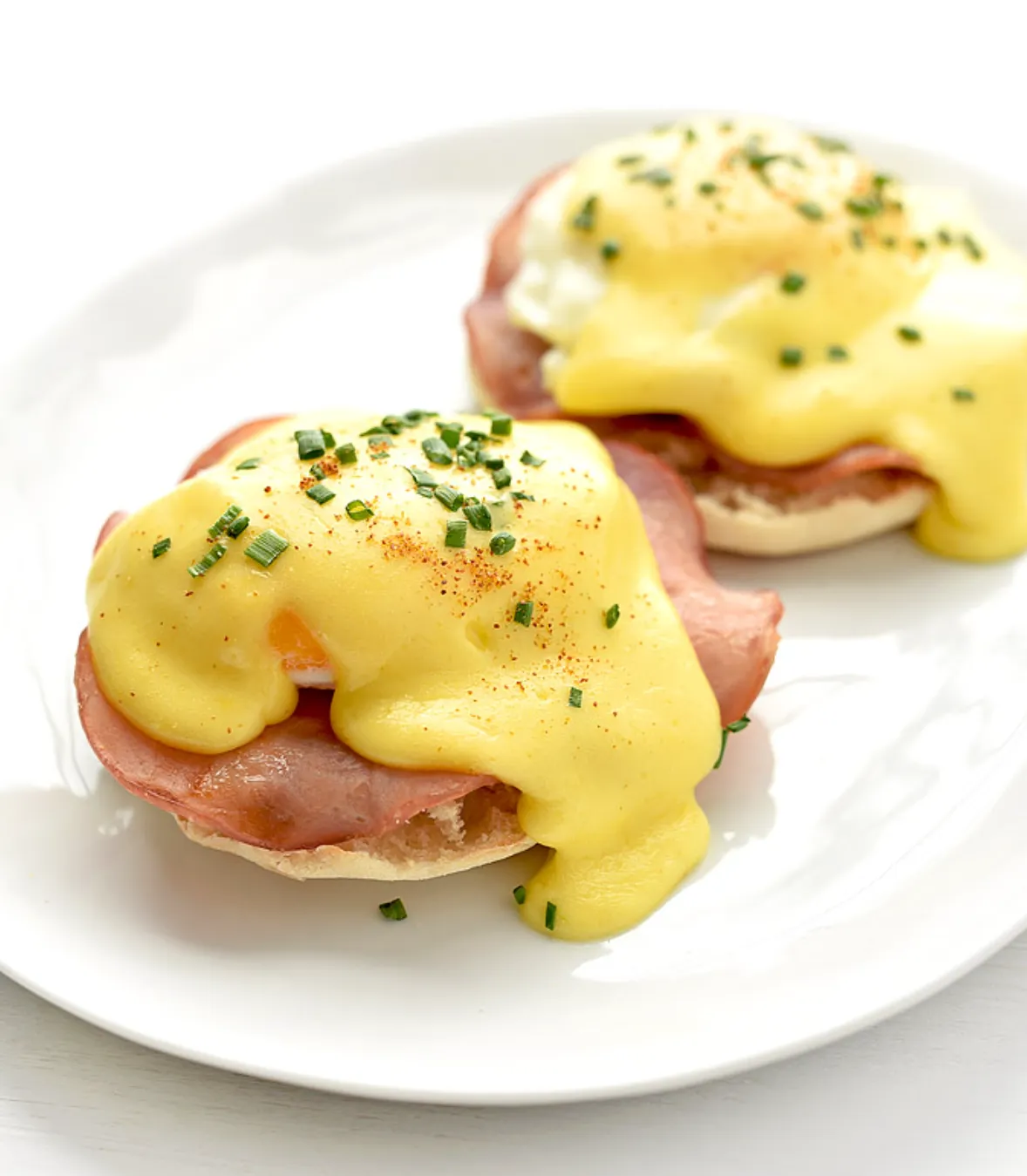
Few dishes carry as much brunch mystique as eggs Benedict, and few have a murkier origin story. Competing legends place its invention at New York's Delmonico's in the 1860s and at the Waldorf Hotel in the 1890s, where a hungover stockbroker named Lemuel Benedict supposedly requested poached eggs, bacon, and hollandaise on toast. Whatever the truth, the dish became a fixture of the American luxury breakfast: a toasted English muffin, a round of Canadian bacon, a trembling poached egg, and a blanket of warm hollandaise. The magic and the challenge both live in that sauce. Hollandaise is a warm emulsion of egg yolk and butter, held together by patience and constant whisking over gentle heat. Too hot and the yolks scramble; too cold and the sauce will not thicken. Master it and you unlock not just Benedict but a whole family of brunch classics. The contrast is what makes the dish sing: the muffin's crisp edge, the salty bacon, the runny yolk breaking into the lemony, buttery sauce. It looks restaurant-fancy, but with a steady hand and a little practice it is entirely achievable at home.
Ingredients
Serves 2Instructions
- 1
Prepare the Hollandaise sauce: In a heatproof bowl set over a pot of barely simmering water (don't let the bowl touch the water), whisk the egg yolks and lemon juice until thickened and doubled in volume.
- 2
Slowly drizzle in the melted butter while whisking constantly until the sauce is smooth and creamy. Season with salt and cayenne pepper (optional). Keep warm.
- 3
Fill a large skillet with water and bring to a gentle simmer. Add a splash of vinegar (optional) to help the eggs hold their shape.
- 4
Crack eggs one by one into a small bowl and gently slide them into the simmering water. Poach for 3-4 minutes until whites are set but yolks are still runny.
- 5
While eggs are poaching, toast the split English muffins until golden brown. Lightly pan-fry the Canadian bacon until warm.
- 6
To assemble, place a slice of Canadian bacon on each muffin half. Top with a poached egg.
- 7
Generously spoon the warm Hollandaise sauce over the eggs. Serve immediately.
Chef's Tips
- ✦ Whisk the yolks over barely simmering water and never let the bowl touch the water; the gentle heat is what prevents the sauce from scrambling.
- ✦ Drizzle the melted butter in slowly, almost drop by drop at first, while whisking nonstop to build a stable emulsion.
- ✦ If the hollandaise starts to break, whisk in a teaspoon of cold water or a fresh yolk off the heat to bring it back.
- ✦ Poach the eggs in barely simmering water with a splash of vinegar, and use the freshest eggs so the whites hold together.
- ✦ Toast the muffins and warm the bacon last so everything lands on the plate hot at the same moment.
- ✦ Trim the ragged edges off the poached eggs with kitchen scissors for a clean, restaurant-style presentation.
Ingredient Substitutions
-
Canadian bacon → smoked ham, crispy bacon, or sauteed spinach
Spinach makes it eggs Florentine; bacon adds crunch and a smokier note.
-
English muffins → toasted brioche, biscuit halves, or gluten-free muffins
Use a sturdy, toastable base; gluten-free muffins keep it celiac friendly.
-
butter → clarified butter or ghee
Clarified butter has no water, giving a more stable, glossy hollandaise.
-
lemon juice → white wine vinegar or a mix of both
Vinegar gives a sharper edge; both provide the acid that balances the rich sauce.
-
egg yolks → blender hollandaise with whole-method shortcut
A blender emulsifies yolks with hot butter for a faster, nearly foolproof sauce.
-
Canadian bacon → smoked salmon (eggs Royale)
A pescatarian-friendly variation; layer the salmon under the poached egg.
Tags
Frequently Asked Questions
How do I keep hollandaise from breaking? ▼
Keep the heat gentle, whisk constantly, and add the butter slowly so the emulsion stays stable. If it breaks, remove from heat and whisk in a teaspoon of cold water or a fresh yolk to bring it back together.
Are the poached eggs and hollandaise safe to eat? ▼
Both contain barely cooked or runny egg. For full safety, eggs should reach 160°F (71°C); since Benedict relies on runny yolks and a warm-not-hot sauce, use pasteurized eggs, especially for pregnant people, children, older adults, or the immunocompromised.
Can I make any of this ahead of time? ▼
Hollandaise is best fresh but holds about an hour in a warm spot; poached eggs can be made ahead, chilled in ice water, and reheated 30 seconds in hot water. Toast the muffins and assemble just before serving.
What allergens does this dish contain? ▼
It contains egg, milk (butter), and wheat (English muffins). Use a gluten-free muffin to remove wheat. The hollandaise and poached eggs make egg unavoidable in the classic version.
How do I scale Benedict for a crowd? ▼
Poach eggs in advance and hold them in cold water, then reheat in batches. Make a larger batch of blender hollandaise and keep it warm. Toast and assemble in waves so each plate goes out hot.
What is the difference between Benedict, Florentine, and Royale? ▼
All share the poached egg, muffin, and hollandaise. Classic Benedict uses Canadian bacon, Florentine swaps in sauteed spinach for a vegetarian version, and Royale uses smoked salmon.