British Cuisine
Crispy Fish and Chips
By Edwina Hartwell
Rate this recipe
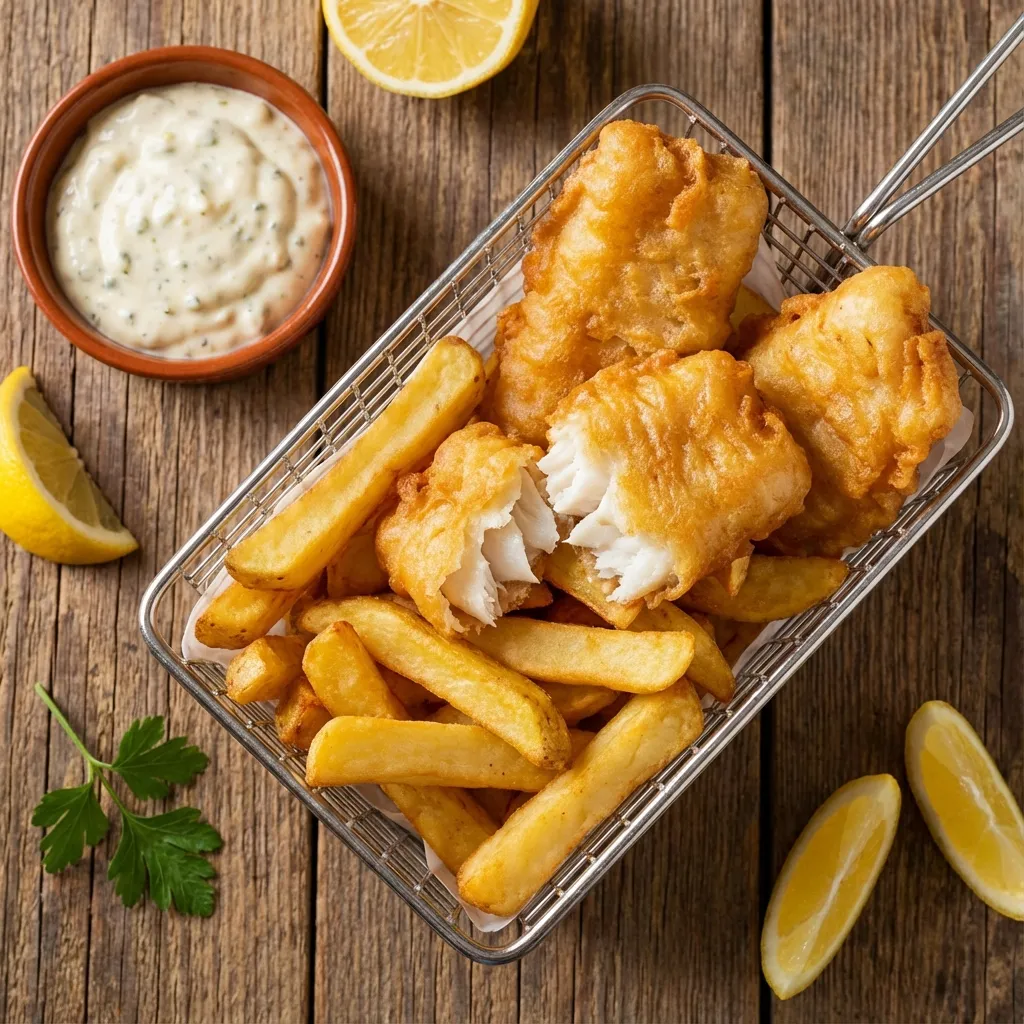
Fish and chips is the dish that built Britain's appetite for fast food, and it earned that place honestly. By the 1860s, the marriage of fried fish brought over by Jewish immigrants and fried potatoes from the industrial north had spread through working towns from London to Lancashire, sold from marble counters and wrapped in newspaper to be eaten on the walk home. What makes this version work is the cold beer batter. The carbon dioxide in the beer and the bubbles whipped in by whisking give the coating its shattering lightness, while the alcohol flashes off in the hot oil so the crust crisps rather than steams. The double-fry on the chips is the other secret most home cooks skip: a low first fry at 325 degrees cooks the potato through to a fluffy center, and a hot second fry at 375 degrees seals a glassy, golden exterior. Use a firm white fish like cod or haddock so the fillet holds together, keep the batter ice-cold until the moment it hits the oil, and serve everything the second it drains. Eaten hot with a squeeze of lemon and a spoonful of tartar sauce, it is honest comfort food that has never needed reinventing.
Ingredients
Serves 4Instructions
- 1
Peel the potatoes and cut them into thick strips/chips. Rinse under cold water and pat completely dry with paper towels.
- 2
Heat vegetable oil in a deep fryer or large heavy-bottomed pot to 325°F (160°C).
- 3
Fry the potatoes in batches for 3-4 minutes until cooked through but not browned. Remove and drain on a wire rack.
- 4
Increase oil temperature to 375°F (190°C).
- 5
In a mixing bowl, whisk together the flour, baking powder, and a pinch of salt. Gradually whisk in the cold beer until a smooth batter forms.
- 6
Dredge the fish fillets lightly in flour, shake off excess, then dip into the batter to coat.
- 7
Carefully lower fish into the hot oil and fry for 4-5 minutes until golden brown and crispy. Drain on wire rack.
- 8
Finally, fry the chips again in the hot oil for 2-3 minutes until golden and crisp. Drain and season with salt.
- 9
Serve the hot fish and chips with lemon wedges and tartar sauce.
Chef's Tips
- ✦ Keep the batter ice-cold and mix it only when the oil is already hot; the temperature shock against the fryer is what makes the crust shatter.
- ✦ Dredge each fillet in dry flour and shake off the excess before dipping, so the wet batter has something to grip and won't slide off in the oil.
- ✦ Fry in small batches; crowding the pot drops the oil temperature and gives you greasy, pale results instead of crisp golden ones.
- ✦ Double-fry the chips: a gentle 325 degree blanch cooks them through, then a 375 degree finish locks in the crunch.
- ✦ Pat the cut potatoes bone-dry before frying; surface moisture causes dangerous spattering and soft, soggy chips.
- ✦ Rest fried fish on a wire rack rather than paper towels so steam escapes from underneath and the bottom stays crisp.
Ingredient Substitutions
-
white fish fillets → haddock or pollock
Haddock is the traditional northern choice; pollock is cheaper and more sustainable but just as flaky.
-
beer → cold sparkling water
Use chilled club soda for an alcohol-free batter; the carbonation still delivers a crisp, light coating.
-
flour → rice flour or gluten-free blend
Rice flour fries up extra crisp and keeps the batter gluten-free for sensitive guests.
-
potatoes → Maris Piper or russet potatoes
Choose a high-starch, low-moisture variety so the chips turn fluffy inside and crisp outside.
-
vegetable oil → peanut or sunflower oil
Any neutral oil with a high smoke point works; peanut oil gives a clean, classic chip-shop flavor.
-
baking powder → 1/4 tsp baking soda plus the beer's fizz
If you are out of baking powder, the carbonation in cold beer alone will still lift the batter.
Tags
Frequently Asked Questions
What is the best fish for fish and chips? ▼
A firm, mild white fish holds up best; cod and haddock are the traditional choices, while pollock is a budget-friendly and more sustainable swap.
Why use beer in the batter? ▼
The carbonation and a small amount of alcohol create a light, airy crust that crisps quickly and stays crunchy. Cold sparkling water works as a non-alcoholic substitute.
Can I make this gluten-free? ▼
Yes. Swap the wheat flour for rice flour or a gluten-free blend and use a gluten-free beer or sparkling water, and the batter still fries up crisp.
How do I keep the chips from going soggy? ▼
Dry the cut potatoes thoroughly, double-fry them, and season only after the final fry. Salting too early draws out moisture and softens the crust.
Can I make fish and chips ahead of time? ▼
Fried fish is best eaten immediately, but you can blanch the chips ahead and refrigerate them, then do the final hot fry just before serving.
What oil temperature should I use? ▼
Blanch the chips at 325°F (160°C), then fry the fish and finish the chips at 375°F (190°C). A thermometer is the single best tool for reliable results.
How do I scale this for a crowd? ▼
The recipe serves four; you can double the batter and fish, but fry in the same small batches and hold finished pieces in a low 200°F oven on a wire rack.