American Cuisine
Homemade Doughnuts
By Priya Anand
Rate this recipe
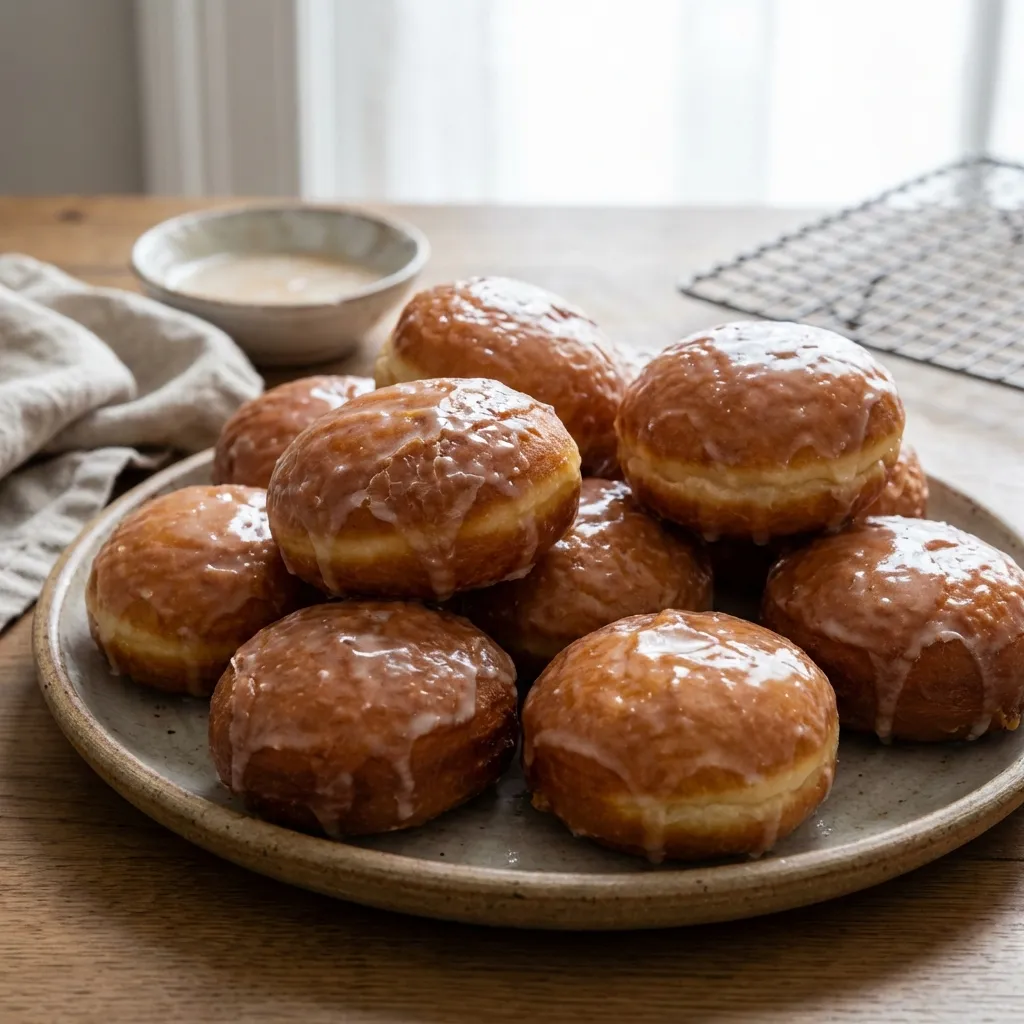
Few smells say weekend morning like fresh doughnuts frying in hot oil. The yeast-raised doughnut, light and airy with a fine, almost bready crumb, descends from the Dutch olykoeks (oil cakes) that early settlers brought to America, later refined into the ring shape that fries evenly and cooks through in minutes. Unlike dense cake doughnuts leavened with baking powder, this version relies on active dry yeast and two patient rises to build its pillowy structure, which is exactly why a homemade batch can beat the bakery: you control the freshness, and nothing rivals a doughnut eaten still warm from the fryer. The method is straightforward but rewards attention. Proofing the yeast in milk warmed to 110°F (45°C) wakes the yeast without killing it; a too-hot liquid is the most common reason doughnuts come out flat and dense. The dough should be soft and slightly sticky, not stiff, and the second rise after cutting is what gives the fried rings their signature lift. Frying at a steady 375°F (190°C) sets the crust quickly so the doughnuts brown beautifully without soaking up grease. A simple powdered-sugar glaze, dipped on while the doughnuts are still warm, sets to a thin, glossy shell. Make a batch for a holiday brunch or a lazy Sunday and watch them disappear.
Ingredients
Serves 12Instructions
- 1
In a small bowl, dissolve yeast and 1 teaspoon of sugar in warm milk. Let stand for 5-10 minutes until frothy.
- 2
In a large mixer bowl, combine the yeast mixture, remaining sugar, melted butter, eggs, and salt. Gradually add the flour, mixing until a soft, sticky dough forms.
- 3
Knead the dough on a floured surface for 5 minutes until smooth and elastic. Place in a greased bowl, cover, and let rise in a warm place for 1 hour or until doubled in size.
- 4
Roll out the dough to 1/2 inch (1.3 cm) thickness. Cut with a doughnut cutter. Place doughnuts on a floured baking sheet and let rise for another 30-45 minutes.
- 5
Heat oil in a deep fryer or dutch oven to 375°F (190°C). Fry doughnuts 2-3 at a time for about 1-2 minutes per side until golden brown. Drain on a wire rack.
- 6
For the glaze: Whisk together powdered sugar, milk, and vanilla (optional) until smooth. Dip warn doughnuts into the glaze and return to the rack to set.
Chef's Tips
- ✦ Warm the milk to 110°F (45°C), no hotter; liquid above 120°F (49°C) can kill the yeast and leave you with dense, flat doughnuts.
- ✦ Keep the dough soft and slightly sticky rather than adding too much flour, which is the key to a light, airy crumb.
- ✦ Don't rush the second rise after cutting; properly proofed rings puff up dramatically the moment they hit the oil.
- ✦ Hold the oil at a steady 375°F (190°C) with a thermometer and fry only 2 to 3 at a time so the temperature doesn't crash and the doughnuts absorb grease.
- ✦ Glaze the doughnuts while still warm so the powdered-sugar glaze melts slightly and sets into a thin, glossy shell.
Ingredient Substitutions
-
all-purpose flour → bread flour
Bread flour's higher protein yields a slightly chewier, sturdier doughnut that holds its shape well during frying.
-
active dry yeast → instant (rapid-rise) yeast
Use the same amount but skip the proofing step and mix it straight into the dry ingredients to save time.
-
warm milk → warm buttermilk or a plant-based milk
Buttermilk adds a subtle tang and tender crumb; warm any substitute to about 110°F (45°C) to wake the yeast.
-
oil for frying (vegetable or canola) → peanut oil or refined sunflower oil
Any neutral oil with a high smoke point works; peanut oil is especially stable at 375°F (190°C) frying temperatures.
-
powdered sugar (for glaze) → cinnamon sugar coating
Skip the wet glaze and toss the warm doughnuts in a mix of granulated sugar and cinnamon for a classic finish.
Tags
Frequently Asked Questions
Can I make the doughnut dough ahead of time? ▼
Yes. After the first rise, you can cover the dough and refrigerate it overnight; let it come back to room temperature, then roll, cut, and do the second rise before frying. This slow cold rise also deepens the flavor.
What oil temperature is best for frying doughnuts? ▼
Fry at a steady 375°F (190°C). Use a thermometer and adjust the heat between batches, since the oil cools when doughnuts go in. Too cool and they absorb grease; too hot and they brown before the center cooks.
How do I store homemade doughnuts and how long do they last? ▼
Yeast doughnuts are best the day they're made. Store leftovers in an airtight container at room temperature for up to 2 days; a few seconds in the microwave revives them. Avoid refrigerating, which dries them out.
Why did my doughnuts turn out dense and flat? ▼
The most common causes are milk that was too hot and killed the yeast, dead or expired yeast, or under-proofing. Make sure your milk is around 110°F (45°C), proof the yeast until frothy, and let the dough fully double before cutting.
Can I bake these doughnuts instead of frying them? ▼
This recipe is formulated for frying, which gives the signature crisp shell and airy interior. You can bake the rings at 375°F (190°C) for about 10 to 12 minutes, but expect a softer, more bread-like result and brush them with butter before glazing.
How can I tell when the doughnuts are fully cooked? ▼
Fry about 1 to 2 minutes per side until deep golden brown on both sides. They cook quickly because the dough is thin; if you're unsure, the center should register about 190°F (88°C) and spring back when pressed.