Irish Cuisine
Irish Stew
By Niamh O'Sullivan, Cork-based home cook and author specializing in traditional Irish farmhouse cooking
Rate this recipe
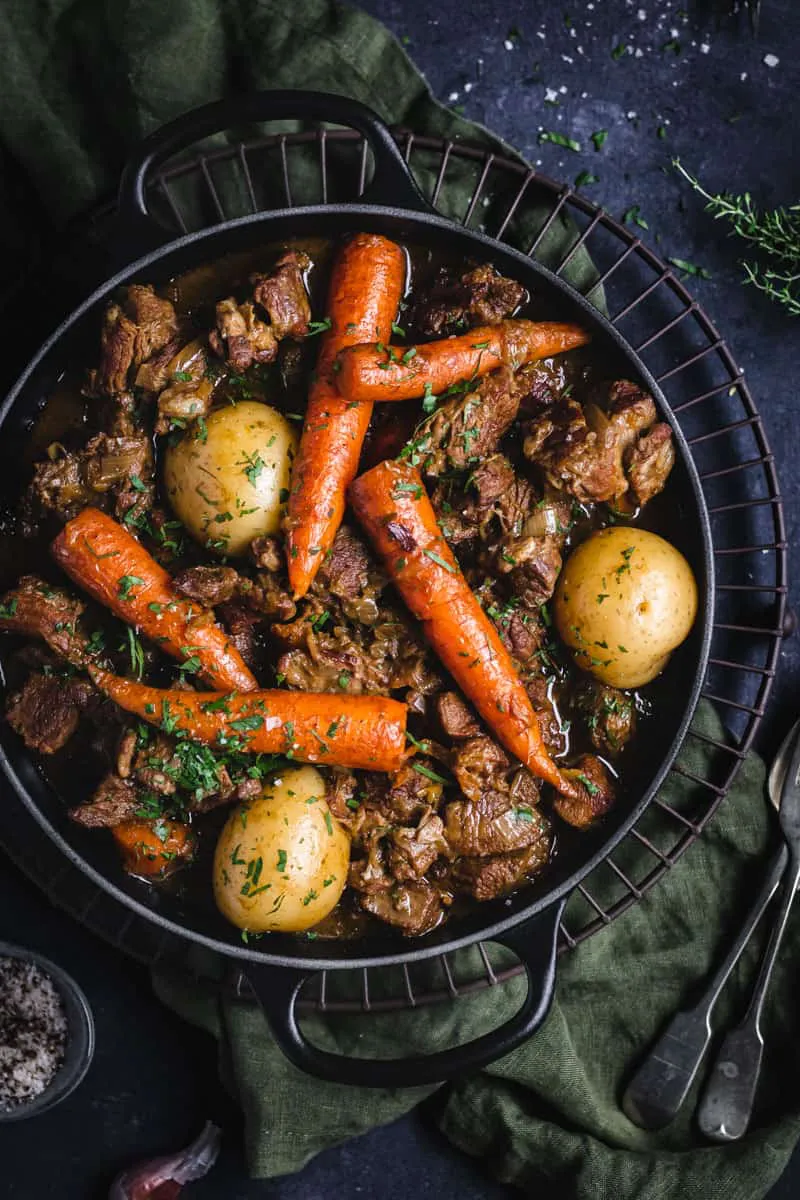
Irish stew is the quiet backbone of Irish home cooking, a dish born of thrift, geography, and the rhythms of rural life. For centuries, sheep were raised across Ireland's hills not primarily for meat but for wool, so mutton from older animals was the cheapest, most plentiful protein a farming family could lay hands on. Paired with the potato, which became Ireland's staple crop in the 18th century, and the humble onion, the stew required nothing more than a single pot hung over a turf fire and several unhurried hours. The earliest versions were deliberately spare: just mutton, potatoes, onions, water, salt, and pepper. Purists in Ireland still argue that anything beyond those ingredients, including carrots, is a modern indulgence, which is why this recipe lists them as optional. The technique is as important as the ingredients. The potatoes are layered rather than stirred, so that some hold their shape while others dissolve into the broth, thickening it naturally without any flour, which is why the dish is gluten free. Today most cooks use lamb shoulder, a more tender and widely available cut than mutton, slow-simmered until it falls apart. Traditionally served with thick slices of Irish soda bread to mop up the broth, Irish stew remains a symbol of comfort, resourcefulness, and the deep connection between the Irish table and the land.
Ingredients
Serves 6Instructions
- 1
Cut lamb, peel/slice veggies.
- 2
Layer potatoes, onions, spices in pot.
- 3
Add lamb layer.
- 4
Top with remaining veggies.
- 5
Add stock, bring to boil.
- 6
Simmer covered 1.5-2 hours.
- 7
Serve when tender.
Chef's Tips
- ✦ Layer the potatoes and onions instead of stirring; the bottom layer melts into the broth to thicken it naturally while the top layer stays intact for texture.
- ✦ For deeper flavor, brown the lamb chunks in the pot first, then build the layers; classic versions skip this, but a good sear adds savory depth.
- ✦ Resist stirring during the simmer. Frequent stirring breaks the potatoes apart too soon and muddies the stew into mush.
- ✦ Cook the lamb until it is fork-tender and the meat is at least 145°F (63°C) internal with a rest, though slow-simmered shoulder is best taken well past that, around 195°F (90°C), so the connective tissue breaks down.
- ✦ Make it a day ahead; like most stews, Irish stew tastes noticeably better after a night in the fridge, when the flavors meld and the broth thickens.
Ingredient Substitutions
-
lamb shoulder → mutton, or bone-in lamb neck
Mutton is the most traditional choice and gives a deeper flavor but needs longer cooking. Lamb neck on the bone adds extra richness; either way choose a fatty, collagen-rich cut, not lean leg, so it turns meltingly tender.
-
lamb shoulder → beef chuck
For a non-lamb version, use well-marbled beef chuck cut into chunks. It is technically a beef stew rather than authentic Irish stew, but the layering method and timing stay the same.
-
potatoes → Yukon Gold or other waxy-to-floury potatoes
Use a mix: some floury potatoes like Russet to break down and thicken the broth, and some waxy ones to hold their shape. A mix gives the best traditional texture.
-
lamb or beef stock → vegetable stock or water
Traditional cottage versions used only water and let the meat and potatoes flavor the broth. Vegetable stock keeps it lighter; if you need it gluten free, confirm your stock is certified gluten free.
-
fresh thyme → 1 teaspoon dried thyme, or a bay leaf
Dried thyme works fine; use about a third the amount since it is more concentrated. A bay leaf added with the stock deepens the savory background; remove it before serving.
Tags
Frequently Asked Questions
Can I make Irish stew ahead of time? ▼
Absolutely, and it is even better for it. Cool the stew, refrigerate up to 3 days, and reheat gently; the flavors deepen and the broth thickens overnight. It also freezes well for up to 3 months. Thaw in the fridge before reheating slowly on the stovetop.
How do I know when the lamb is done? ▼
The lamb is ready when it is fork-tender and pulls apart easily, typically after 1.5 to 2 hours of gentle simmering. For food safety lamb must reach at least 145°F (63°C) internal, but for this braise you want it well beyond that, around 195°F (90°C), so the collagen melts and the meat becomes meltingly soft.
Can I scale this recipe up for a crowd? ▼
Yes. The recipe serves 6 and doubles cleanly; keep the same ratios and use a larger heavy pot or Dutch oven so the ingredients still layer evenly. A bigger pot may need an extra 20 to 30 minutes to come up to a simmer and tenderize the meat, so judge doneness by the lamb, not the clock.
Can I make Irish stew in a slow cooker? ▼
Yes. Layer everything as directed in the slow cooker, add the stock until almost covered, and cook on low for 7 to 8 hours or high for 4 to 5 hours, until the lamb is tender. Browning the meat first on the stovetop is optional but adds extra flavor.
How should I store leftovers? ▼
Cool the stew quickly, then refrigerate in an airtight container for up to 3 days, or freeze for up to 3 months. Because the potatoes continue to absorb liquid, you may want to add a splash of stock or water when reheating to loosen the broth.
What is the best way to reheat Irish stew? ▼
Reheat gently on the stovetop over low to medium heat, stirring occasionally and adding a little stock or water if it has thickened too much, until piping hot throughout (165°F/74°C). Avoid a hard boil, which can break the potatoes down further. Thaw frozen stew in the fridge first.