American Cuisine
Lemon Bars with Shortbread Crust
By Dana Whitfield
Rate this recipe
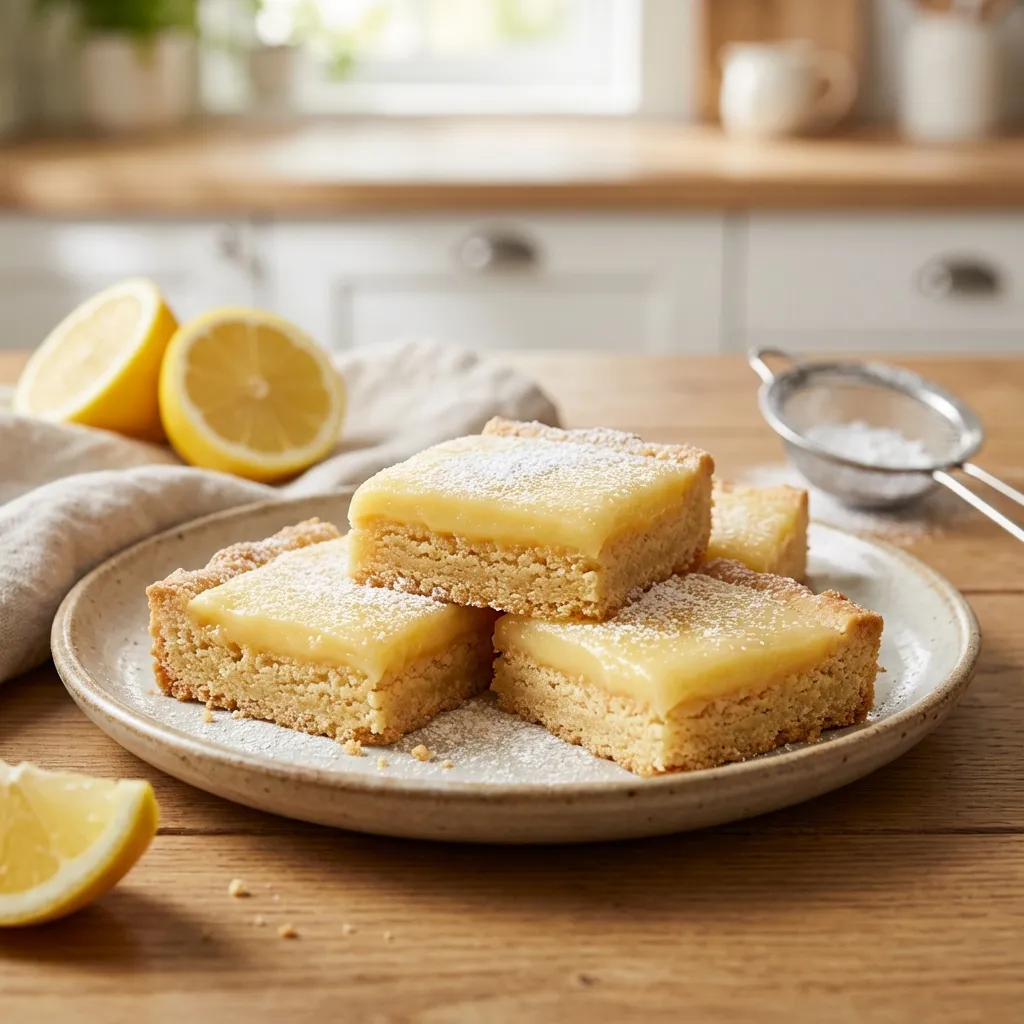
The lemon bar is a mid-twentieth-century American invention, a clever marriage of two older ideas: buttery Scottish shortbread and the bright lemon curd of British baking. It rose to fame through community cookbooks and church-supper recipe cards in the United States, where its make-and-cut-many format made it ideal for crowds. The appeal is in the contrast. A short, sandy crust bakes firm enough to hold a layer of tangy custard that sets into something between curd and a soft, sliceable jelly. Fresh lemon juice keeps the topping sharp and clean rather than cloying, cutting the richness of all that butter and sugar. Because a single 9-by-13 pan yields two dozen squares, lemon bars are a workhorse of bake sales, holiday cookie trays, and summer gatherings alike. They travel well, look cheerful under a dusting of powdered sugar, and taste even better the day after baking, once the custard has fully chilled and the flavors have settled. Few desserts deliver this much brightness for so little effort, which explains their permanent place in the American home-baking repertoire.
Ingredients
Serves 24Instructions
- 1
Preheat oven to 350°F (175°C).
- 2
In a medium bowl, blend together softened butter, 2 cups flour, and 1/2 cup sugar.
- 3
Press into the bottom of an ungreased 9x13 inch pan.
- 4
Bake for 15 to 20 minutes (350°F / 175°C) in the preheated oven, or until firm and golden.
- 5
In another bowl, whisk together the remaining 1 1/2 cups sugar and 1/4 cup flour. Whisk in the eggs and lemon juice.
- 6
Pour over the baked crust. Bake for an additional 20 minutes (350°F / 175°C) in the preheated oven. Bake until the lemon filling is set and reaches an internal temperature of at least 160°F (71°C), fully cooking the eggs.
- 7
The bars will firm up as they cool.
Chef's Tips
- ✦ Whisk the flour into the sugar before adding the eggs and lemon juice; this disperses the starch so the custard sets evenly without lumps.
- ✦ Pour the filling over the crust while the crust is still warm from the oven. The two layers bond better and the custard starts setting from the bottom.
- ✦ Bake until the center is just set with only a faint jiggle; an overbaked filling can crack or weep, while underbaking leaves it runny.
- ✦ Chill the bars completely, at least 2 hours, before cutting. Cold custard slices into clean, sharp squares instead of smearing.
- ✦ Wipe your knife between cuts and dust with powdered sugar only after slicing, since the sugar dissolves quickly on the moist surface.
Ingredient Substitutions
-
butter (for the crust) → plant-based baking butter
Use a firm stick-style vegan butter 1:1 for a dairy-free crust. Chill the pressed crust 10 minutes before baking so it holds its shape.
-
all-purpose flour → 1:1 gluten-free baking blend
A blend with xanthan gum works in both the crust and the custard thickener. Press the crust a touch more firmly, as gluten-free dough is more crumbly.
-
lemons, juiced → bottled lemon juice plus zest
Use about 1/3 cup bottled juice for two lemons; stir in a little fresh zest for aroma the bottle lacks. Lime juice also makes excellent key-lime-style bars.
-
white sugar (in the filling) → superfine sugar
Swap 1:1. The finer crystals dissolve quickly into the eggs and juice for a smoother custard with no grit.
Tags
Frequently Asked Questions
Can I make lemon bars ahead of time? ▼
Yes, and they often taste better the next day. Bake and chill the bars completely, then keep them covered in the refrigerator for up to 3 days. Cut and dust with powdered sugar just before serving so the topping stays fresh and snowy.
How long do lemon bars keep and how should I store them? ▼
Because lemon bars contain a fresh egg custard, store them covered in the refrigerator and enjoy within 3 to 4 days. Keep them chilled until serving, especially in warm weather, and discard any left at room temperature for more than 2 hours for food safety.
Can I freeze lemon bars? ▼
Yes. Freeze fully cooled, uncut or cut bars in a single layer, then transfer to an airtight container with parchment between layers for up to 3 months. Thaw in the refrigerator overnight and add powdered sugar after thawing.
Why is my lemon filling runny or not set? ▼
A runny filling usually means it was underbaked or short on the flour that thickens it. Bake until the center is just set with a slight jiggle, then chill the bars fully, as the custard firms considerably as it cools in the refrigerator.
Can I scale this recipe up or down? ▼
Yes. This 9-by-13 pan recipe yields about 24 bars. Halve everything for an 8-inch square pan and roughly half the bars, keeping bake times similar but checking a few minutes early. To double, use two pans rather than crowding one, which would leave the custard undercooked in the center.