American Cuisine
Lemon Garlic Butter Salmon
By Marcus Delgado
Rate this recipe
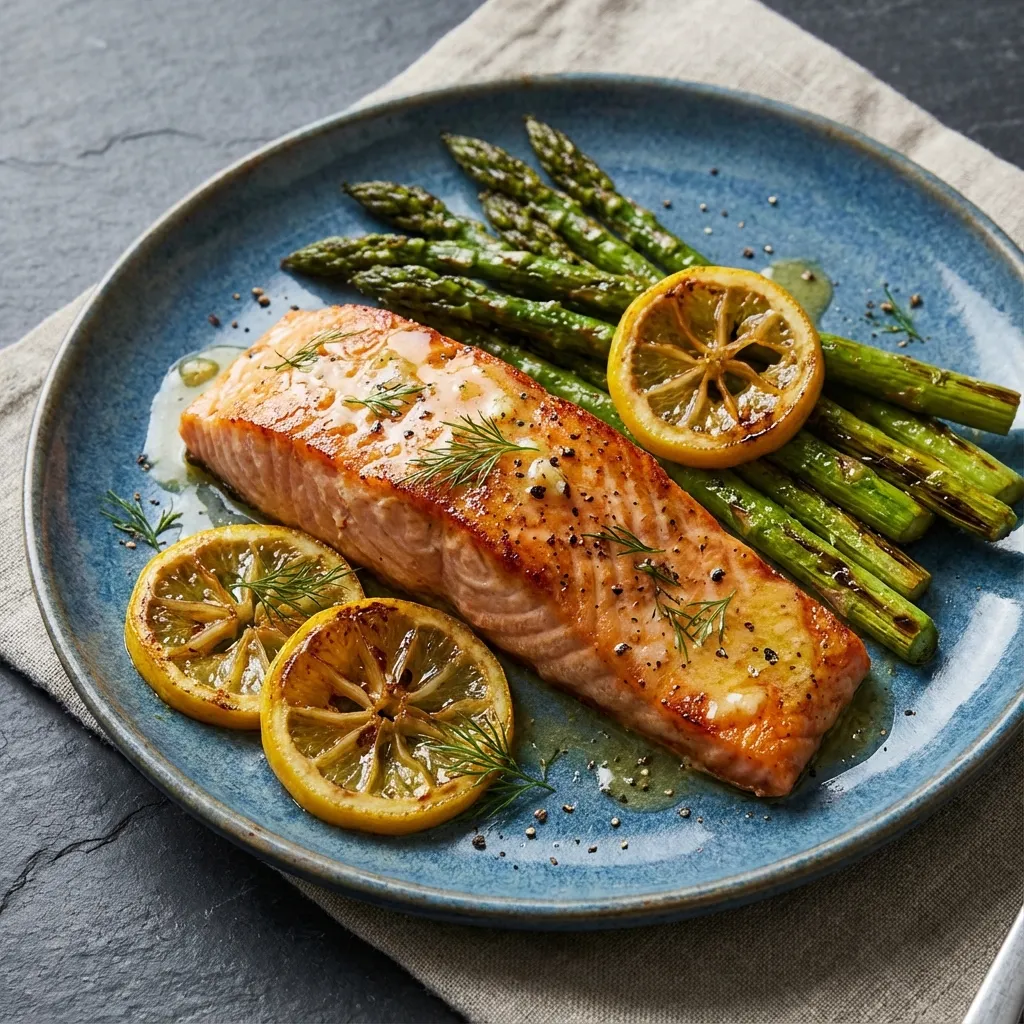
There is a particular kind of weeknight magic in a single skillet of salmon basting in foaming garlic butter, and this is the dish I reach for when I want restaurant polish without the restaurant production. The technique here is borrowed straight from a fine-dining line cook's playbook: sear the fillets hard to build a golden crust, then drop in cold butter, garlic, and lemon slices and tilt the pan so a pool of nutty brown butter collects at the lip. Spooning that sauce back over the fish again and again is what turns an ordinary fillet into something glossy and self-saucing. Salmon and lemon are a classic pairing for a reason; the acid cuts the richness of both the fish and the butter, while the garlic perfumes everything around it. I cook the asparagus right in the same pan so the spears soak up every drop of flavor and pick up a little char. It is keto-friendly, naturally gluten free, and on the plate in about 25 minutes, which makes it equally suited to a quiet Tuesday or a low-key date night.
Ingredients
Serves 2Instructions
- 1
Gather and prepare all ingredients as specified in the ingredient list.
- 2
Season salmon fillets with salt and pepper.
- 3
Sear salmon in a hot skillet for 4 minutes per side.
- 4
Add butter, minced garlic, and lemon slices to the pan with the salmon.
- 5
Tilt the pan and use a spoon to continuously baste the salmon with the melted garlic butter for 1-2 minutes.
- 6
Add the trimmed asparagus spears to the pan alongside the salmon.
- 7
Cook the asparagus for 3-5 minutes, turning occasionally, until tender-crisp and lightly charred.
- 8
Plate the salmon and asparagus, drizzle with the garlic butter sauce from the pan, and serve immediately.
Chef's Tips
- ✦ Pat the salmon bone-dry with paper towels before seasoning; surface moisture is the enemy of a crisp, golden sear.
- ✦ Let the skillet get genuinely hot and don't move the fillets for the full 4 minutes per side, that patience is what builds the crust.
- ✦ Add the butter only after the fish is seared, then tilt the pan and baste continuously so the garlic flavors the fat without burning.
- ✦ Cook to an internal temperature of 145°F (63°C) at the thickest part; the fish should flake but still look just-opaque in the center.
- ✦ Slide a thin fish spatula fully under the fillet before flipping so the crust stays on the salmon, not stuck to the pan.
- ✦ Pull the salmon a touch early and let it rest two minutes; carryover heat finishes it perfectly without drying it out.
Ingredient Substitutions
-
salmon fillets → steelhead trout or arctic char fillets
Both have a similar fat content and cook in the same time; keep the skin on for easier flipping.
-
butter → ghee
Ghee has a higher smoke point and stays nutty rather than browning to bitter, ideal if you sear over high heat.
-
asparagus → green beans or broccolini
Swap one-for-one; add sturdier greens a minute or two earlier so they finish tender-crisp alongside the fish.
-
garlic → 1/2 teaspoon garlic powder or 2 minced shallots
Add powder off the heat to avoid scorching; shallots bring a softer, sweeter aromatic note.
-
lemon → lime or a splash of dry white wine
Lime keeps it bright and citrusy; a tablespoon of wine deglazes the pan and deepens the sauce.
Tags
Frequently Asked Questions
What internal temperature should salmon reach to be safe? ▼
Cook salmon to an internal temperature of 145°F (63°C) measured at the thickest part with an instant-read thermometer. The flesh should flake easily and turn opaque.
How do I know when the salmon is done without a thermometer? ▼
Press the top of the fillet gently; it should flake along its natural lines and look just opaque in the center. If it still feels mushy and translucent, give it another minute.
Can I make this recipe dairy free? ▼
Yes. Swap the butter for ghee if you tolerate it, or use a quality plant-based butter or olive oil. The sauce will be slightly less rich but still bright and garlicky.
Can I cook this with skin-on salmon? ▼
Absolutely. Sear skin-side down first for a crisp skin, then flip to finish. Skin-on fillets also hold together better when you baste and plate them.
How should I store and reheat leftovers? ▼
Refrigerate cooked salmon in an airtight container for up to 3 days. Reheat gently in a covered skillet over low heat or in a 275°F (135°C) oven to avoid drying it out.
How do I scale this for a crowd? ▼
The recipe serves 2; multiply the ingredients as needed but sear the fillets in batches so the pan stays hot. Crowding the skillet steams the fish instead of searing it.
Is this dish keto and gluten free? ▼
Yes. With salmon, butter, garlic, lemon, and asparagus, it is naturally low carb, keto-friendly, and gluten free as written, with about 5g of carbs per serving.