American Cuisine
Lemon Meringue Pie
By Dana Whitfield
Rate this recipe
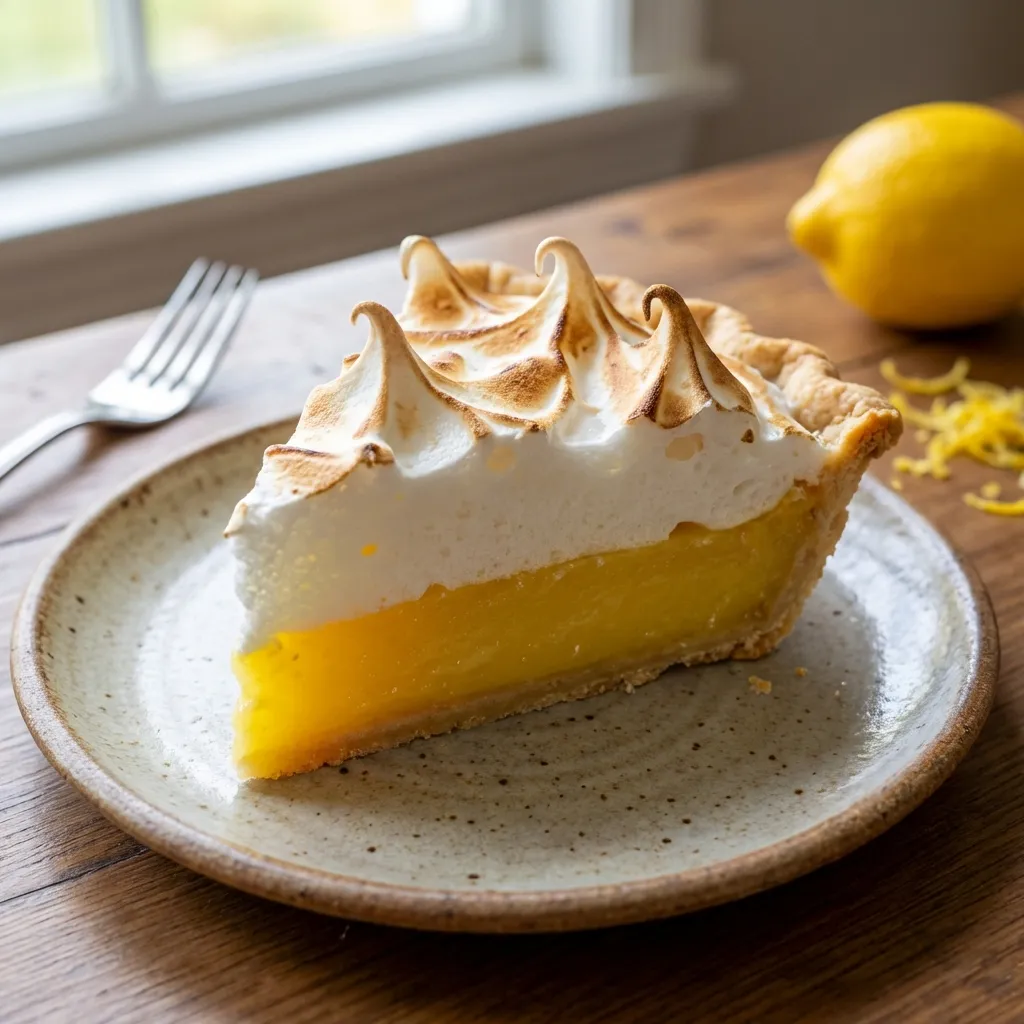
Lemon meringue pie is a transatlantic classic, born from the nineteenth-century marriage of two older ideas: tart lemon custards favored in English and early American kitchens and the airy baked meringue perfected by French and Swiss pastry cooks. Its modern form, a crisp pastry shell holding a glossy cornstarch-thickened lemon curd beneath billows of toasted egg-white meringue, became a fixture of diner counters and Sunday tables on both sides of the ocean. The pleasure of the pie is in its contrasts: bracing citrus against sweet meringue, a snappy crust against a silky filling. It is a showpiece for warm-weather entertaining and dinner parties, where its pale gold peaks look as impressive as they taste. Success hinges on technique rather than exotic ingredients; fresh lemon juice and zest do the heavy lifting, while tempering the yolks and sealing the meringue to the crust prevent the two most common pitfalls, a curdled filling and weeping meringue. Chilled until set, each slice should cut cleanly to reveal three distinct layers. It rewards patience and a careful hand, and it remains one of the most satisfying desserts a home baker can master.
Ingredients
Serves 8Instructions
- 1
Preheat oven to 375°F (190°C). Prick the bottom and sides of the pie crust with a fork. Bake blindly for 10-12 minutes until golden brown. Cool on a wire rack.
- 2
Reduce oven temperature to 325°F (165°C).
- 3
To make the filling: In a medium saucepan, whisk together 1 cup of sugar and cornstarch. Stir in water, lemon juice, and lemon zest.
- 4
Cook over medium heat, stirring constantly, until the mixture boils and thickens. Remove from heat.
- 5
Stir in the butter. Gradually whisk about half a cup of the hot mixture into the beaten egg yolks to temper them.
- 6
Whisk the egg yolk mixture back into the saucepan. Return to heat and cook for 2 minutes longer, stirring constantly. Pour filling into the baked pie crust.
- 7
For the meringue: In a large glass or metal bowl, beat egg whites and cream of tartar on medium speed until soft peaks form.
- 8
Gradually add the remaining 1/2 cup sugar, 1 tablespoon at a time, beating on high speed until stiff, glossy peaks form and sugar is dissolved.
- 9
Spread meringue over hot pie filling, sealing the edges to the crust. Bake for 12-15 minutes at 325°F (165°C), or until meringue is golden brown. Cook the filling until thickened and bake the meringue; the custard should reach an internal temperature of at least 160°F (71°C) to fully cook the eggs.
- 10
Cool on a wire rack for 1 hour, then refrigerate for at least 3 hours before serving.
Chef's Tips
- ✦ Temper the yolks by whisking in hot filling gradually, which prevents them from scrambling and keeps the curd silky.
- ✦ Spread the meringue over hot, not cooled, filling and seal it all the way to the crust edge to stop it from weeping and shrinking.
- ✦ Beat the egg whites only until stiff, glossy peaks form; overbeaten whites turn grainy and break down in the oven.
- ✦ Use a clean, grease-free bowl for the whites, since any fat or stray yolk prevents them from whipping to full volume.
- ✦ Chill the finished pie at least 3 hours so the filling fully sets and slices cleanly without running.
Ingredient Substitutions
-
1/2 cup fresh lemon juice → fresh lime juice or Meyer lemon juice
Use the same 1/2 cup; lime gives a sharper tang and Meyer lemon a softer, sweeter profile, so taste and adjust sugar.
-
1/3 cup cornstarch → tapioca starch or arrowroot
Swap 1:1 for a gluten-free thickener; arrowroot sets slightly softer, so chill the pie a bit longer before slicing.
-
3 tablespoons butter → vegan butter or refined coconut oil
Use the same amount of dairy-free butter for a comparable glossy finish; refined coconut oil avoids a coconut flavor.
-
1 unbaked 9-inch pie crust → graham cracker crumb crust
A pressed graham crust skips blind baking; pre-bake it 8 minutes at 350 degrees F (175 degrees C) so it firms up under the filling.
-
1/4 teaspoon cream of tartar → 1/2 teaspoon white vinegar or lemon juice
If you have no cream of tartar, this acid still stabilizes the egg whites for stiff, glossy peaks.
Tags
Frequently Asked Questions
Can I make lemon meringue pie ahead of time? ▼
Lemon meringue pie is best made the day you plan to serve it, as the meringue can begin to weep and soften after about a day. You can bake the crust and even the lemon filling a day ahead, then add and bake the meringue a few hours before serving.
How do I store lemon meringue pie and how long does it last? ▼
Store the pie loosely covered in the refrigerator for up to 2-3 days. Because it contains eggs and dairy, do not leave it at room temperature for more than 2 hours; refrigerate promptly to keep the filling and meringue food-safe.
Why does my meringue weep or shrink? ▼
Weeping (liquid pooling under the meringue) and shrinking usually happen when the meringue is spread over cooled filling or not sealed to the crust. Spread it over hot filling and anchor it to the pastry edges, and make sure the sugar is fully dissolved when beating.
Can I make this pie gluten-free? ▼
Yes. Use a gluten-free pie crust or a pressed gluten-free graham crust, and substitute the cornstarch with tapioca or arrowroot starch. The lemon filling and meringue themselves contain no wheat.
What can I use instead of cream of tartar? ▼
Substitute 1/2 teaspoon of white vinegar or lemon juice for the 1/4 teaspoon of cream of tartar. Both are mild acids that stabilize the egg whites so they whip into stiff, glossy peaks.