American Cuisine
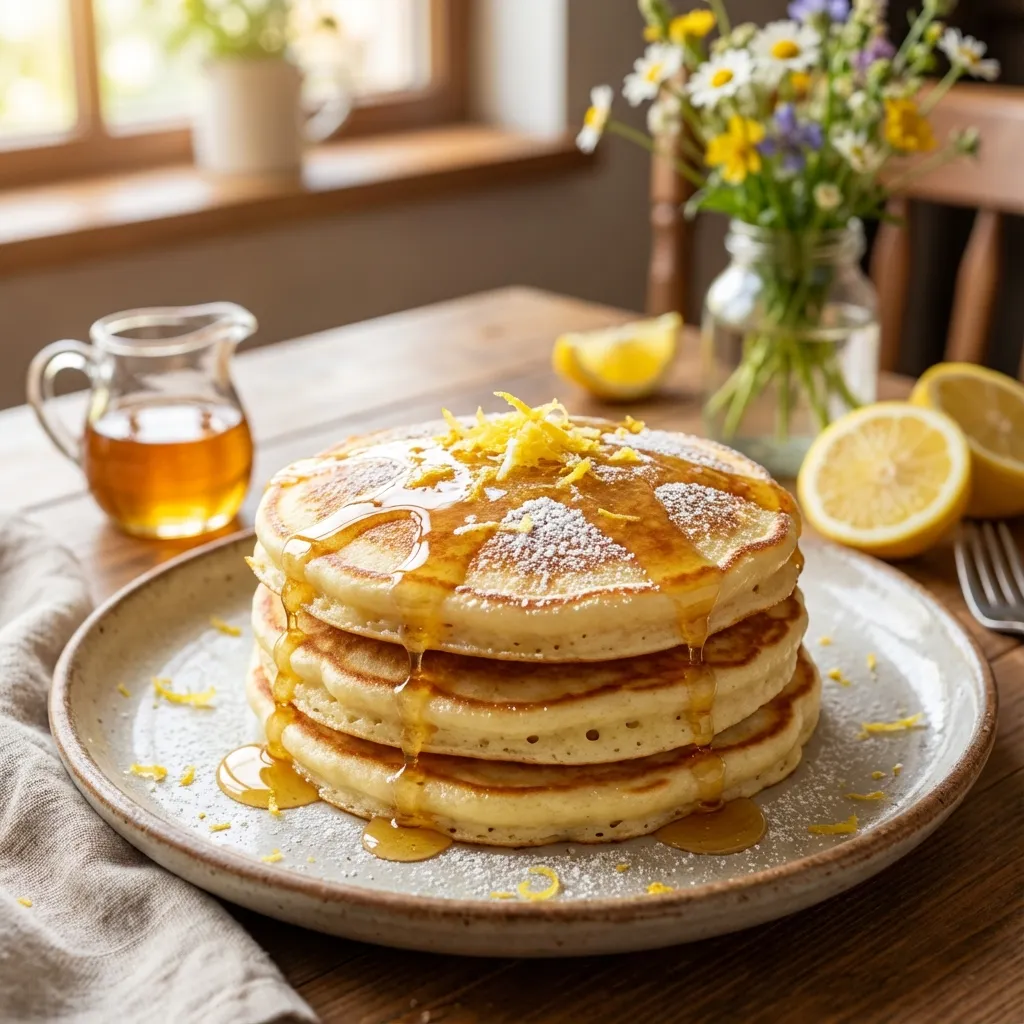
Lemon Ricotta Pancakes with Honey
By Marisa Bellanca
Rate this recipe
Ricotta pancakes occupy a quiet crossroads between the American diner stack and the Italian breakfast table, and that hybrid lineage is exactly what makes them so forgiving. Where buttermilk pancakes lean on acid and a long rest to build tenderness, ricotta does the work structurally: its soft curds trap moisture and steam, so the interior stays custardy long after the edges crisp. Folding the cheese in whole rather than blending it smooth is deliberate. You want little molten pockets, not a uniform batter, which is why this version keeps the mixing brief and the curds intact. The lemon is not decoration. Zest carries the aromatic oils that survive heat, while a squeeze of juice sharpens the dairy and keeps the sweetness from turning flat. Honey, warmed just enough to pour, ties it together with a floral note that ordinary maple syrup overpowers. Cooks often blame dense ricotta pancakes on the cheese when the real culprit is overmixing or a griddle run too hot, which sets the outside before the steam can lift the center. Treat the batter gently, give the pan a moderate medium heat, and you get the airy, soufflé-edged result that turned this dish into a weekend brunch fixture on both sides of the Atlantic.
Ingredients
Serves 4Instructions
- 1
Whisk together flour, sugar, baking powder, and salt in a bowl.
- 2
In a separate bowl, whisk together ricotta, milk, eggs, lemon zest, and lemon juice.
- 3
Combine wet and dry ingredients gently; do not overmix.
- 1
Heat a lightly oiled griddle or frying pan over medium heat.
- 2
Pour or scoop the batter onto the griddle, using approximately 1/4 cup for each pancake.
- 3
Brown on both sides and serve hot with honey.
Chef's Tips
- ✦ Fold the ricotta in last and stop the moment streaks disappear; visible curds are the whole point and overmixing deflates them.
- ✦ Whip the egg whites separately and fold them in if you want true soufflé-style height; it takes three extra minutes and transforms the texture.
- ✦ Cook on a steady medium, not medium-high. Ricotta pancakes brown faster than they cook through, so a lower temperature lets the centers set.
- ✦ Flip only once, and only when the edges look dry and bubbles hold their shape; these are more fragile than standard pancakes.
- ✦ Warm the honey for 10 seconds before serving so it pours into the pockets instead of sitting on top.
- ✦ Wipe the griddle with a paper towel between batches to remove burnt butter solids that would speckle and bitter the next round.
Ingredient Substitutions
-
ricotta cheese → well-drained cottage cheese, briefly blended
Closest match for moisture and curd; pulse just to break large lumps, then drain so the batter is not soupy.
-
all-purpose flour → 1:1 gluten-free baking blend with xanthan gum
Works directly here; let the batter rest 5 minutes so the starches hydrate and the curds bind.
-
milk → unsweetened almond or oat milk
Swap one-for-one; oat milk browns slightly faster, so drop the heat a notch.
-
honey → pure maple syrup or agave
Use the same volume; maple is bolder, so start with less and add to taste.
-
lemon zest → orange or Meyer lemon zest
Meyer lemon is sweeter and rounder; orange shifts it toward a brunchy citrus note.
-
eggs → 2 tbsp aquafaba whipped per egg
Adds lift without dairy-free conflict; expect a slightly less rich crumb.
Tags
Frequently Asked Questions
Why are my ricotta pancakes dense or gummy? ▼
Almost always overmixing or too-high heat. Stir only until the flour disappears, leave the curds intact, and cook on a moderate medium so the inside sets before the outside hardens.
Can I make the batter ahead of time? ▼
Mix the dry and wet components separately the night before and refrigerate, then combine just before cooking. A fully mixed batter loses lift after about 30 minutes as the baking powder spends itself.
Can I freeze cooked ricotta pancakes? ▼
Yes. Cool them completely, stack with parchment between each, and freeze in a zip bag for up to 2 months. Reheat in a 350°F (175°C) oven or a toaster, not the microwave, to keep the edges from going soft.
How do I know when they are done? ▼
The edges look set and matte, bubbles rise and stay open, and the underside is golden brown. The center should spring back lightly when touched; a wet, sunken middle means more time on lower heat.
How do I make these gluten-free? ▼
Use a 1:1 gluten-free baking blend that contains xanthan gum and let the batter rest 5 minutes before cooking so it hydrates. The ricotta keeps the crumb moist, which masks the usual gluten-free dryness.
Can I double the recipe? ▼
Yes, it scales cleanly. Keep the leavening and salt proportional, and cook in batches rather than crowding the griddle so the heat stays even and each pancake browns properly.
What ricotta works best? ▼
Whole-milk ricotta gives the richest, most tender result. If yours is very wet, drain it in a sieve for 10 minutes so the batter is not too loose to hold its shape on the griddle.