American Cuisine
Lobster Roll with Butter
By Dana Whitfield
Rate this recipe
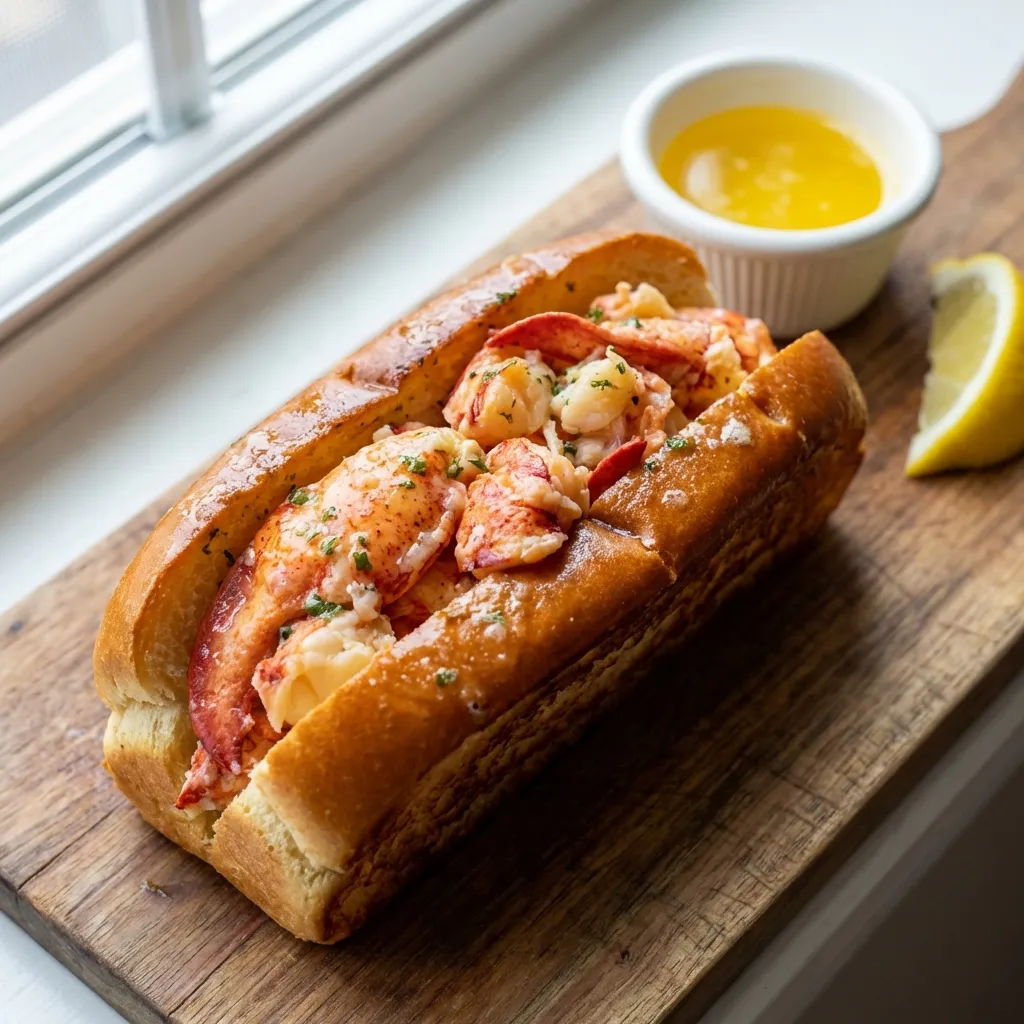
The lobster roll is New England summer in a bun, and it splits into two camps. The Maine style dresses cold lobster in mayonnaise, while the Connecticut style, the one made here, serves the meat warm and bathed in butter. Connecticut lays claim to inventing the hot lobster roll in the late 1920s, and many purists still consider warm butter the superior treatment because it lets the sweet, briny lobster taste of itself rather than of dressing. The split-top bun is essential: its flat sides toast in butter into golden, crisp planks that frame the filling without overwhelming it. The whole dish lives or dies on restraint. Gently warming the lobster, never boiling it again, keeps the meat tender instead of rubbery, and a squeeze of lemon plus a pinch of salt sharpens the butter just enough. Chives add a delicate onion note and a fleck of green. It is a special-occasion treat, the kind of thing you eat at a clam shack on the coast or recreate at home when good lobster meat is in season, ideally late summer.
Ingredients
Serves 2Instructions
- 1
Melt 1 tbsp of butter in a skillet over medium heat.
- 2
Toast the split-top buns in the butter on both sides until golden brown.
- 3
In a small saucepan, melt the remaining 3 tbsp butter over low heat. Stir in the lemon juice and a pinch of salt. The lobster should be fully cooked; if starting from raw, boil or steam it until opaque and it reaches an internal temperature of 145°F (63°C).
- 4
Add the lobster meat to the butter just to warm it through gently (do not overcook).
- 5
Fill the toasted buns with the warm, buttery lobster.
- 6
Garnish with fresh chives and serve immediately.
Chef's Tips
- ✦ Warm the lobster just until heated through; cooked seafood should reach 145°F (63°C), but since this meat is already cooked, gentle warming for a minute keeps it from turning rubbery.
- ✦ Toast the buttered bun sides over medium heat until deep golden; that crisp wall is what keeps the roll from going soggy.
- ✦ Pat the lobster meat dry before it hits the butter so the butter coats rather than dilutes and the roll is not watery.
- ✦ Cut the lobster into large, bite-size chunks rather than shredding it; you want meaty, luxurious bites in every mouthful.
- ✦ Add the lemon and chives at the very end off the heat so the acid and herbs stay fresh and the butter does not separate.
Ingredient Substitutions
-
cooked lobster meat → cooked langostino or large shrimp
Use the same 8 oz; langostino tastes closest, while shrimp is sweeter and firmer but a great budget swap.
-
split-top hot dog buns → brioche hot dog buns or top-split rolls
Two buns; if you only have side-split, slice the crust off the sides so you can toast them flat in butter.
-
unsalted butter → salted butter
Use the same 4 tbsp but skip the added pinch of salt, then taste before adding any more.
-
fresh chives → thinly sliced scallion greens or tarragon
Use 1 tbsp; tarragon adds a classic anise note that pairs beautifully with warm butter and lobster.
-
fresh lemon juice → a few drops of white wine vinegar
Use about 1/2 tsp vinegar for 1 tsp lemon; it brightens the butter without the citrus aroma.
Tags
Frequently Asked Questions
Can I make lobster rolls ahead of time? ▼
The butter-warmed Connecticut style is best assembled and eaten immediately, since the lobster and toasted bun are at their peak when hot. You can pick and refrigerate the cooked lobster meat up to a day ahead, then warm it gently in butter and toast the buns just before serving.
How should I store leftover cooked lobster? ▼
Refrigerate cooked lobster meat in an airtight container at or below 40°F (4°C) and use it within 2 days for best quality and safety. Do not leave it at room temperature for more than 2 hours, and never refreeze lobster that has already been cooked and thawed.
What is the difference between Connecticut and Maine lobster rolls? ▼
A Connecticut lobster roll, like this one, serves warm lobster tossed in melted butter, letting the lobster flavor shine. A Maine lobster roll serves chilled lobster bound with mayonnaise and often celery. Both use a toasted split-top bun; the choice comes down to warm-and-buttery versus cold-and-creamy.
Can I use frozen lobster meat? ▼
Yes. Thaw frozen cooked lobster overnight in the refrigerator, then pat it very dry before warming it in butter, since excess water makes the roll soggy. Frozen claw and knuckle meat works especially well and is more affordable than buying whole live lobsters.
How do I scale this recipe for more servings? ▼
The recipe makes 2 rolls, so plan on about 4 oz of lobster meat and 1 bun per person and multiply every ingredient accordingly. For a crowd, warm the lobster in batches so it heats evenly, and toast buns in a wide skillet two or three at a time.