American Cuisine
New York Cheesecake
By Nora Bennett
Rate this recipe
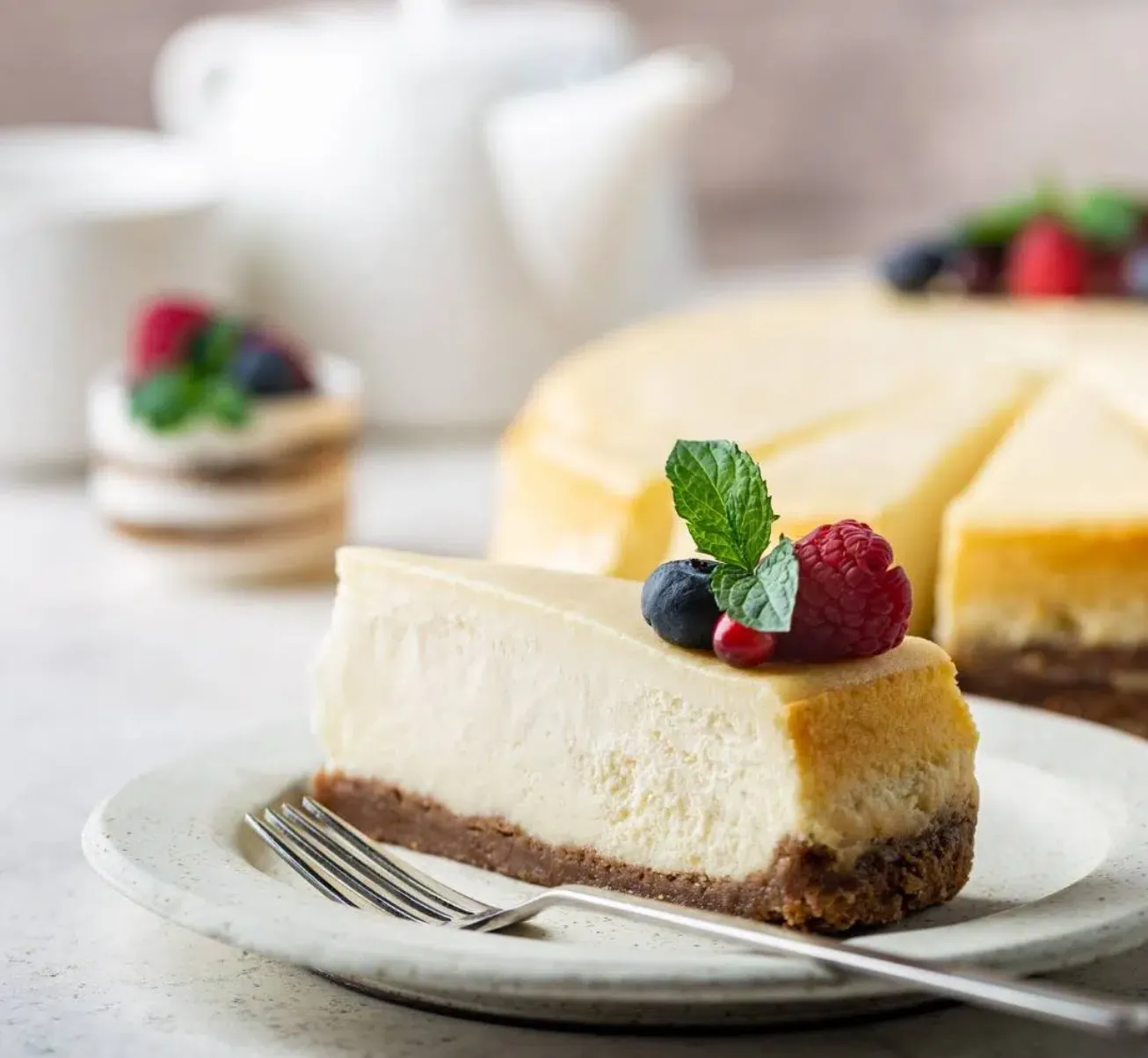
New York cheesecake is the dense, tall, ultra-creamy benchmark against which all other cheesecakes are measured. What sets it apart from lighter styles is the sheer quantity of cream cheese, two full pounds, plus sour cream for tang and just enough egg to set it into a sliceable, velvety brick. The two rules that make or break it are both about gentleness. First, every dairy ingredient must be fully room temperature before you start, or you will fight lumps you can never fully beat out. Second, low and slow: bake at 325 degrees and stop while the center still has a slight jiggle, because it firms as it cools and an overbaked cheesecake cracks and dries. The long, gradual cool-down, oven off and door cracked, prevents the temperature shock that splits the top. Then comes the hardest part, a four-hour chill that you cannot rush. Do it right and you get clean, dense, impossibly creamy slices worthy of any deli case.
Ingredients
Serves 12Instructions
- 1
Preheat oven to 325°F (165°C). Mix graham cracker crumbs and melted butter.
- 2
Press mixture into the bottom of a 9-inch springform pan. Bake for 10 minutes.
- 1
Beat softened cream cheese with sugar until smooth. Add eggs one at a time.
- 2
Stir in sour cream and vanilla.
- 3
Pour batter over crust and bake for 60-70 minutes until center is almost set.
- 4
Turn off oven, open door slightly, and let cool for 1 hour. Chill in fridge for 4 hours before serving.
Chef's Tips
- ✦ Bring the cream cheese, eggs, and sour cream fully to room temperature before mixing; cold ingredients cause lumps you cannot beat out.
- ✦ Mix on low and scrape the bowl often. Beating too much air into the batter causes the cheesecake to puff, then crack as it cools.
- ✦ Bake until the center still jiggles slightly; it sets as it cools, and an overbaked cheesecake dries out and cracks.
- ✦ Cool gradually with the oven off and the door cracked, then chill at least 4 hours (overnight is better) before slicing.
Ingredient Substitutions
-
graham cracker crumbs → digestive biscuits, vanilla wafers, or gingersnaps
Digestives are the British equivalent; gingersnaps add a spiced crust that plays well with the tang.
-
sour cream → full-fat Greek yogurt or creme fraiche
Greek yogurt keeps the tang; creme fraiche makes it even richer. Use full-fat for a proper set.
-
granulated sugar → superfine sugar
Superfine dissolves faster into the batter for the smoothest texture; do not substitute brown sugar here.
-
cream cheese → full-fat block cream cheese only
Use blocks, never whipped or spreadable tub cream cheese, which has added air and water and will not set firmly.
Tags
Frequently Asked Questions
How do I keep my cheesecake from cracking? ▼
Cracks come from too much air in the batter, overbaking, or cooling too fast. Mix on low to limit air, pull the cheesecake while the center still jiggles, and cool it gradually with the oven off and door ajar. A water bath also helps by keeping the heat gentle and even.
Do I need a water bath for New York cheesecake? ▼
A water bath is not strictly required but it produces the creamiest texture and the fewest cracks by surrounding the pan with gentle, even heat. Wrap the springform in foil to keep water out, or place a pan of water on the rack below if you prefer not to wrap.
Why is my cheesecake lumpy? ▼
Lumps almost always mean the cream cheese was too cold when you started. Let it and the eggs sit at room temperature for an hour first, then beat the cream cheese smooth before adding anything else. Once eggs and liquids go in, mix gently to avoid adding air.
How long does cheesecake need to chill? ▼
Chill it at least 4 hours, but overnight is ideal. The cheesecake needs this time to fully set and for the flavor and texture to develop. Slicing it warm gives a soft, loose center; a fully chilled cake cuts into clean, dense slices.