American Cuisine
Oatmeal with Brown Sugar and Cinnamon
By Calvin Brewster
Rate this recipe
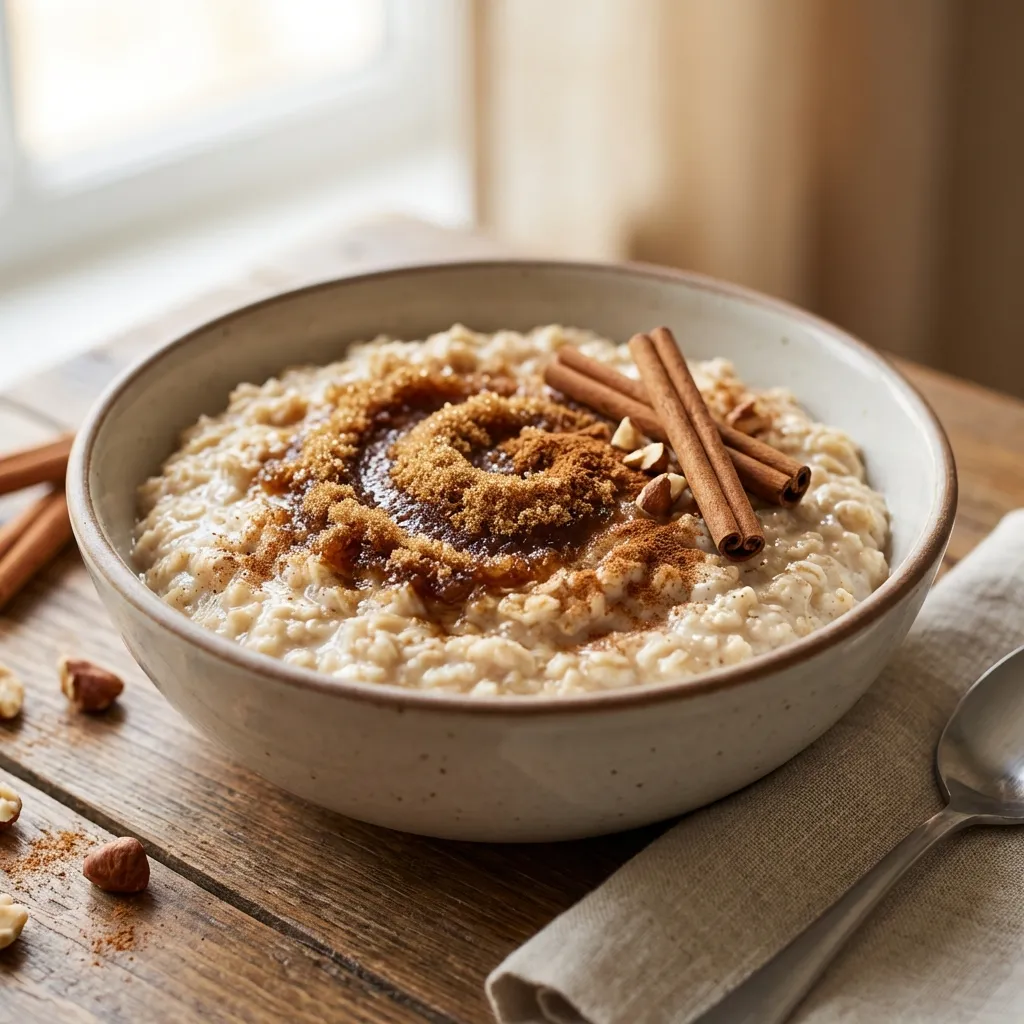
Oatmeal is one of humanity's oldest cooked breakfasts, a staple of Scottish and Northern European kitchens for centuries before it became the all-American bowl topped with brown sugar and cinnamon. The version here uses old-fashioned rolled oats, and that choice matters more than people realize. Rolled oats are steamed and pressed flat, so they cook in about five minutes while keeping enough structure to stay creamy rather than gluey, the fate of overcooked quick oats. The brown sugar and cinnamon are not just sweeteners; they are a flavor strategy. Brown sugar carries molasses, which adds a caramel depth that white sugar cannot, while cinnamon brings warmth and the perception of sweetness, letting you use less sugar overall. The single most important technique is timing the additions: stir the sugar and cinnamon in off the heat, after the oats have finished cooking, so the cinnamon stays aromatic and the sugar does not scorch on the pan bottom. A pinch of salt, easy to skip but essential, sharpens every other flavor. Heart-healthy beta-glucan fiber is the quiet bonus that has kept oatmeal on the breakfast table for generations.
Ingredients
Serves 2Instructions
- 1
Gather and prepare all ingredients as specified in the ingredient list.
- 2
In a medium saucepan, bring water and a pinch of salt to a boil over high heat.
- 3
Stir in the old-fashioned rolled oats and reduce the heat to low.
- 4
Simmer uncovered for 5 minutes, stirring occasionally, until the oats have absorbed most of the liquid and are tender and creamy.
- 5
Remove from heat.
- 6
Stir in the brown sugar and cinnamon.
- 7
Let stand for 1-2 minutes before serving to thicken slightly.
- 8
Divide into bowls and sprinkle with a little extra brown sugar if desired.
Chef's Tips
- ✦ Toast the dry oats in the empty saucepan for a minute before adding liquid; it deepens their nutty flavor and is worth the extra step.
- ✦ Never skip the pinch of salt, because it does not make the oatmeal salty, it makes the oats taste like oats and the sweetness taste fuller.
- ✦ Stir the brown sugar and cinnamon in off the heat so the cinnamon keeps its aroma and the sugar dissolves without scorching the pan.
- ✦ Let the cooked oatmeal rest one to two minutes before serving; it thickens as it sits, so a slightly loose pot becomes a perfect bowl.
- ✦ For extra creaminess without milk, stir vigorously near the end to release the oats' starch, which thickens the porridge naturally.
- ✦ Adjust the liquid to taste: less for a thick, spoon-standing bowl, more for a looser, pourable porridge, then top with extra brown sugar at the table.
Ingredient Substitutions
-
rolled oats → steel-cut oats or quick oats
Steel-cut need more water and 25 to 30 minutes; quick oats cook in 2 to 3.
-
water → milk or half water, half milk
Milk makes it richer and creamier; plant milks keep it vegan.
-
brown sugar → maple syrup, honey, or mashed banana
Liquid sweeteners stir in easily; banana sweetens with no added sugar.
-
ground cinnamon → pumpkin pie spice or cardamom
Swap in warm spice blends for a different cozy profile.
-
brown sugar → coconut sugar or date paste
Lower-glycemic options that keep the caramel-like depth.
-
rolled oats → certified gluten-free rolled oats
Use certified GF oats to avoid cross-contamination with wheat.
Tags
Frequently Asked Questions
Can I make oatmeal ahead of time for the week? ▼
Yes. Cook a big batch, cool it, and refrigerate in portions for up to five days. Reheat with a splash of water or milk to loosen it, since it thickens in the fridge. Overnight oats and baked oatmeal are also great make-ahead formats.
What's the difference between rolled, quick, and steel-cut oats? ▼
Steel-cut oats are whole groats cut into pieces; they are chewiest and take 25 to 30 minutes. Rolled (old-fashioned) oats are steamed and pressed, cooking in about 5 minutes with a creamy-but-textured result. Quick oats are thinner and cook in 2 to 3 minutes but turn softer.
How do I make oatmeal creamier? ▼
Cook it in milk or a half-water, half-milk blend instead of all water, stir often to release the oats' starch, and let it rest a couple of minutes off the heat. A pat of butter or spoon of nut butter at the end adds richness too.
Is this oatmeal gluten-free? ▼
Oats are naturally gluten-free, but most are processed in facilities that also handle wheat, so this recipe is not gluten-free as written. To make it safe for those with celiac disease or sensitivity, use oats labeled certified gluten-free.
How can I make this vegan or add more protein? ▼
The recipe is already vegan when made with water or plant milk and brown sugar. To boost protein, cook the oats in soy milk, stir in a scoop of protein powder or a spoon of nut butter, or top with chopped nuts and seeds.
Can I scale this recipe up or down? ▼
Yes. The reliable ratio is one part oats to two parts liquid, so just keep that proportion as you adjust. For a single serving use half a cup of oats to one cup of liquid; for a crowd, scale up and add a couple minutes of cook time.
Why is salt important in sweet oatmeal? ▼
A pinch of salt does not make oatmeal taste salty; it balances and amplifies the other flavors, making the oats taste richer and the brown sugar and cinnamon taste sweeter. Leaving it out is the most common reason homemade oatmeal tastes flat.