American Cuisine
Oyster Po' Boy
By Antoine Fontenot, RecipeOK Test Kitchen
Rate this recipe
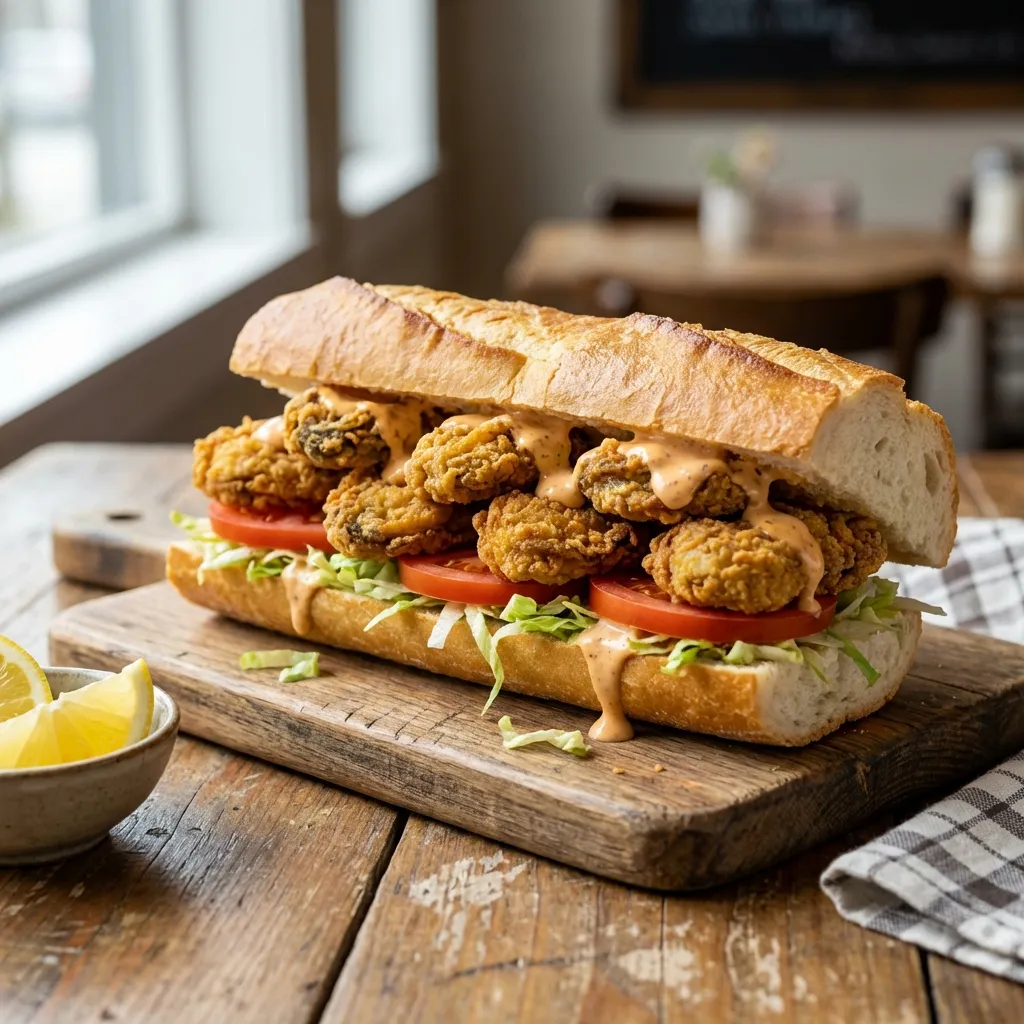
The po' boy traces its name to a 1929 New Orleans streetcar workers' strike, when former streetcar conductors Bennie and Clovis Martin, who ran a French Quarter restaurant, fed striking workers for free and reportedly called out 'here comes another poor boy' whenever one walked in needing a meal. The sandwich they served — cheap cuts of meat or fried seafood stuffed into a length of crackly-crusted New Orleans French bread — became a working-class staple across Louisiana, and the oyster po' boy in particular grew out of the Gulf Coast's enormous oyster harvests, once so abundant that oysters were considered poor man's food rather than a luxury. Fried oysters dredged in a seasoned cornmeal crust are the classic filling, piled onto a split baguette that's been dressed with shredded lettuce, sliced tomato, and a tangy remoulade or spiced mayo. The contrast is everything here: a crisp, almost shattering cornmeal crust giving way to a plump, briny oyster, set against the cool crunch of lettuce and the bright acidity of tomato and remoulade. Dressed 'all the way' — with lettuce, tomato, mayo, and pickles — is the traditional New Orleans order, and the oyster version remains one of the most requested po' boys in the city, especially during the cooler months when Gulf oysters are at their best.
Ingredients
Serves 4Instructions
- 1
Heat 1-2 inches of oil in a deep fryer or heavy pot to 375°F (190°C).
- 2
In a bowl, combine the cornmeal, flour, and Cajun seasoning.
- 3
Dredge damp oysters in the cornmeal mixture, pressing gently to adhere.
- 4
Fry oysters in small batches for 2-3 minutes, until golden, crispy, and floating. Drain on paper towels.
- 5
Spread remoulade sauce generously on the baguette slices.
- 6
Assemble the sandwiches with shredded lettuce, tomato slices, and the hot fried oysters.
- 7
Serve immediately with hot sauce on the side if desired.
Chef's Tips
- ✦ Pat the shucked oysters dry before dredging — excess moisture makes the cornmeal coating clump and fall off during frying instead of forming a crisp, even crust.
- ✦ Fry oysters in small batches of 4-5 at a time; overcrowding the oil drops the temperature and results in greasy, soggy breading instead of a crisp fry.
- ✦ Use a thermometer to keep the oil steady at 375°F (190°C) — oysters cook fast, so oil that's too cool leaves them soggy before they're done, while oil that's too hot burns the crust before the oyster inside is heated through.
- ✦ Assemble the sandwich immediately after frying; a po' boy loses its signature crunch fast, so have the bread dressed and ready before the oysters come out of the oil.
Ingredient Substitutions
-
shucked oysters → shrimp or fried catfish strips
makes it a shrimp po' boy or catfish po' boy — both classic Gulf Coast variations
-
French baguette → New Orleans-style po' boy bread or a soft hoagie roll
look for bread with a thin, crackly crust and airy interior; avoid dense, chewy baguettes
-
remoulade or spicy mayo → tartar sauce mixed with a dash of hot sauce
quick approximation if you don't have remoulade ingredients on hand
-
cornmeal → fine cornmeal mixed with panko
adds extra crunch while keeping the traditional cornmeal flavor
Tags
Frequently Asked Questions
What does it mean to order a po' boy 'dressed'? ▼
In New Orleans, ordering a po' boy 'dressed' means with lettuce, tomato, mayonnaise, and usually pickles — essentially the fully loaded version, as opposed to just the fried filling on bread.
Can I use frozen oysters for a po' boy? ▼
Fresh shucked oysters give the best texture, but thawed frozen oysters work if drained and patted very dry first. Avoid oysters packed in a lot of liquid, since excess moisture prevents the cornmeal coating from crisping properly.
What's the difference between remoulade and regular mayonnaise for a po' boy? ▼
Remoulade is a seasoned, tangy mayonnaise-based sauce built with ingredients like Creole mustard, paprika, hot sauce, garlic, and pickles or capers. It adds much more flavor complexity than plain mayo and is considered the traditional po' boy condiment in Louisiana.
Are oysters safe to eat if they're not fully firm after frying? ▼
Fried oysters should be cooked until the coating is golden and crisp and the oyster itself is opaque and firm throughout, typically about 2-3 minutes per batch at 375°F (190°C). Because raw oysters carry a real risk of Vibrio and other foodborne pathogens, don't serve them undercooked — if you're unsure, cut one open to confirm it's opaque all the way through, not translucent or glossy.