American Cuisine
Snickerdoodles (Cinnamon Sugar Cookies)
By Eleanor Brightwood
Rate this recipe
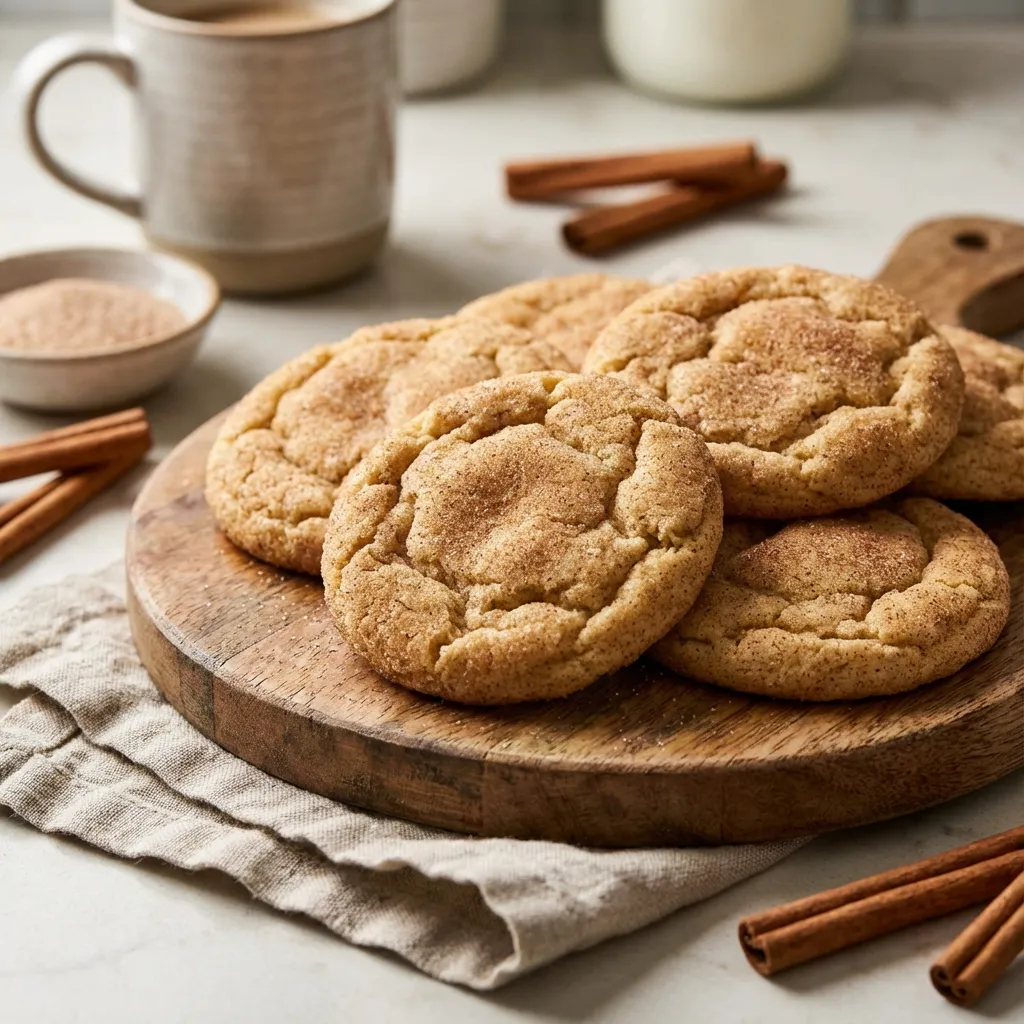
Snickerdoodles are an American bakery classic with a whimsical name and an unmistakable tang. The cookies likely arose in New England among Dutch and German immigrant communities in the late nineteenth century, and food historians still debate whether the name is a playful nonsense word or a corruption of the German Schneckennudeln, a cinnamon roll. Whatever its origin, the snickerdoodle is defined by two things: a soft, chewy crumb and a cinnamon-sugar coating that crackles across a pale, slightly cracked surface. The secret ingredient that sets a true snickerdoodle apart from a plain sugar cookie is cream of tartar. This mild acid reacts with baking soda to give the cookies their signature lift and crackly top, while also lending a subtle, almost sour tang that balances the sweetness. Rolling the dough balls in cinnamon sugar before baking forms a delicate, fragrant crust that shatters into chew with each bite. Quick to mix from pantry staples and beloved by children and adults alike, snickerdoodles are a holiday cookie-tin staple, a bake-sale favorite, and the kind of nostalgic treat that fills a kitchen with the warm scent of cinnamon. They are proof that the simplest cookies are often the most irresistible.
Ingredients
Serves 24Instructions
- 1
Preheat oven to 375°F (190°C).
- 2
Mix butter, 1 cup sugar, and egg thoroughly.
- 3
Blend in flour, cream of tartar, baking soda, and salt.
- 4
Shape dough into balls.
- 5
Mix 2 tablespoons sugar and 1 teaspoon cinnamon. Roll balls in mixture.
- 6
Place 2 inches apart on ungreased baking sheets. Bake 8 to 10 minutes (375°F / 190°C), or until set but not too hard.
Chef's Tips
- ✦ Do not skip the cream of tartar; it provides the tangy flavor and crackly top that distinguish a snickerdoodle from a plain sugar cookie.
- ✦ Make sure the butter is softened but still cool so it creams to a fluffy base rather than melting into a greasy dough.
- ✦ Chill the dough for 20 to 30 minutes if it feels sticky; firmer dough rolls into neater balls and spreads less in the oven.
- ✦ Roll each ball generously and evenly in the cinnamon sugar so every cookie gets a full, fragrant coating.
- ✦ Pull the cookies when the centers still look slightly underset; they finish cooking on the hot sheet and stay soft and chewy as they cool.
Ingredient Substitutions
-
butter → vegan baking stick or margarine
Use a firm, block-style vegan butter at the same weight so the dough creams and holds its shape.
-
cream of tartar → 1/2 teaspoon lemon juice or white vinegar plus baking powder
Swap the cream of tartar and baking soda for 3/4 teaspoon baking powder to keep the lift, though the signature tang will be milder.
-
all-purpose flour → measured gluten-free 1:1 baking flour
A blend with xanthan gum keeps the chew; weigh to 188 grams for accuracy.
-
egg → 1 flax egg (1 tbsp ground flax plus 3 tbsp water)
Let the flax mixture gel for five minutes; the cookies will be slightly denser but still tender.
-
white sugar → organic cane sugar
Cane sugar swaps one-for-one and adds a faint caramel note without changing texture.
Tags
Frequently Asked Questions
What does cream of tartar do in snickerdoodles? ▼
Cream of tartar is a mild acid that reacts with the baking soda to leaven the cookies and create their signature crackly top. It also gives snickerdoodles their characteristic subtle tang, which is what separates them from ordinary sugar cookies.
Can I make snickerdoodles without cream of tartar? ▼
You can substitute baking powder for both the cream of tartar and baking soda, but the cookies will lose some of their signature tang and crackle. For the most authentic flavor, cream of tartar is worth seeking out.
Why did my cookies turn out flat or hard? ▼
Flat cookies usually mean the butter was too warm or the dough too soft, so chill it before baking. Hard cookies are typically overbaked; pull them at 8 to 10 minutes while the centers still look soft, since they firm up as they cool.
How do I keep snickerdoodles soft? ▼
Slightly underbake them and store the cooled cookies in an airtight container, optionally with a slice of bread to keep them moist. Avoid overbaking, which is the main cause of dry, crisp snickerdoodles.
Can I freeze the dough? ▼
Yes. Roll the dough into balls, freeze them solid on a tray, then transfer to a bag for up to three months. Roll in cinnamon sugar and bake from frozen, adding a minute or two to the baking time.
How should I store baked snickerdoodles? ▼
Keep them in an airtight container at room temperature for up to a week. They also freeze well once baked and cooled; thaw at room temperature and they taste freshly made.