British Cuisine
Traditional Beef Wellington
By Edmund Carrow
Rate this recipe
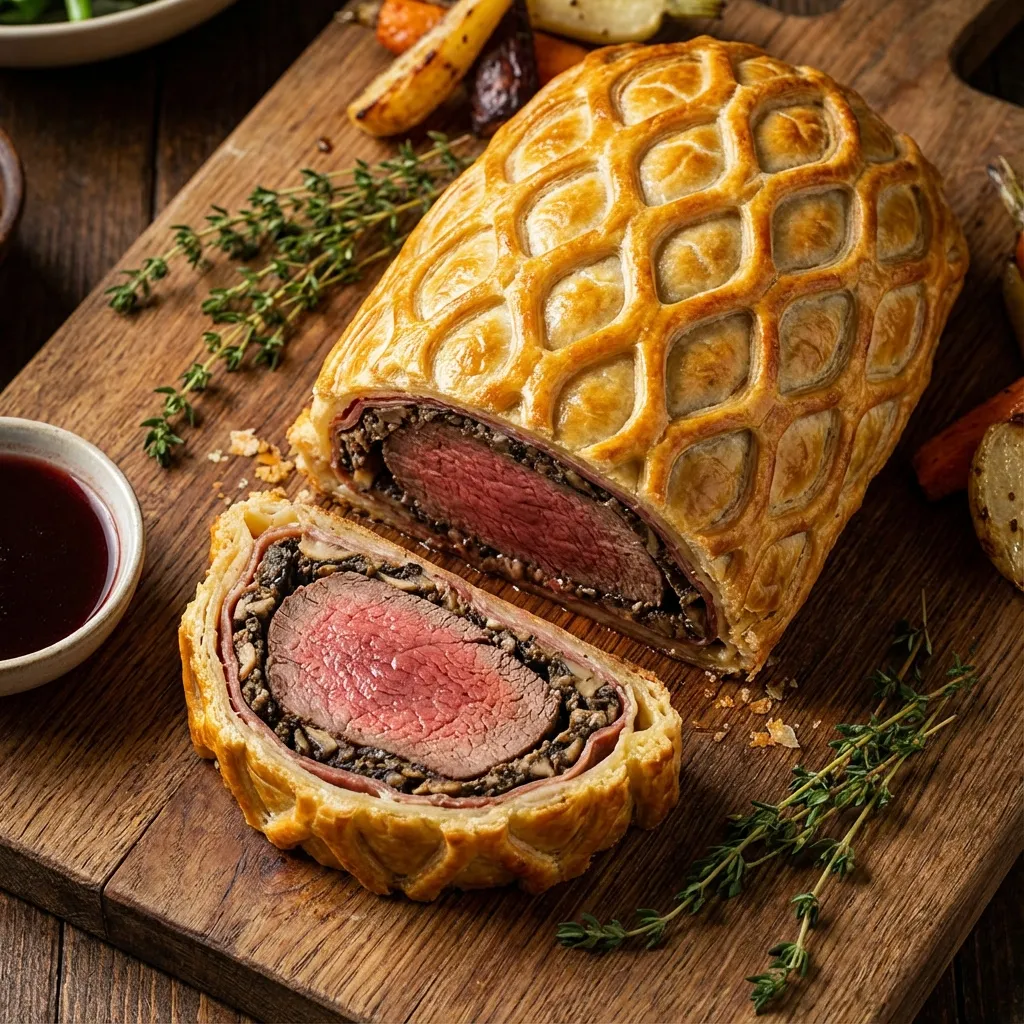
Beef Wellington is the showpiece of the British celebration table, the dish reserved for Christmas, anniversaries, and the kind of dinner where you want to make an entrance. A whole beef tenderloin is seared, brushed with sharp Dijon mustard, cloaked in a layer of finely cooked mushroom duxelles and salty prosciutto, then sealed inside golden puff pastry and roasted until the crust shatters and the beef inside glows rosy pink. Its origins are debated, often tied loosely to the Duke of Wellington, but its reputation as a technical challenge is undisputed. The single greatest enemy of a good Wellington is moisture: pastry meets the soggy bottom if the beef or mushrooms release water during baking. That is why the duxelles must be cooked until completely dry, why the prosciutto forms a protective barrier, and why chilling the wrapped log before it goes into the oven keeps everything tight and intact. Done right, slicing into a Wellington reveals concentric rings of crisp pastry, dark mushroom, pink beef, and a clean line where each layer holds its place. It is a dish that rewards patience and planning over improvisation, and few things at a British table draw quite the same gasp when it reaches the carving board.
Ingredients
Serves 6Instructions
- 1
Sear the beef tenderloin in a hot pan with a little oil until browned on all sides. Remove and immediately brush with Dijon mustard while hot. Let cool.
- 2
Finely chop the mushrooms (or use a food processor). Cook in a dry pan over medium heat until all moisture has evaporated (this is the duxelles). Let cool.
- 3
On a large piece of plastic wrap, lay out slices of prosciutto to form a rectangle large enough to wrap the beef. Spread the mushroom duxelles over the prosciutto.
- 4
Place the cooled beef in the center. Using the plastic wrap, roll the prosciutto tight around the beef. Twist the ends of the plastic wrap to tighten the log. Chill for 15 minutes.
- 5
Preheat oven to 400°F (200°C).
- 6
Roll out the puff pastry. Remove plastic wrap from beef and place it on the pastry. Wrap the pastry around the beef, sealing the edges.
- 7
Place seam-side down on a baking sheet. Brush the pastry with egg wash.
- 8
Bake for 40-45 minutes until the pastry is golden brown and internal temperature of beef reaches 130°F (54°C) for medium-rare.
- 9
Let rest for at least 15 minutes before slicing.
Chef's Tips
- ✦ Sear the tenderloin hard and fast on all sides for color and flavor, then cool it completely before wrapping so it doesn't steam the pastry.
- ✦ Cook the mushroom duxelles in a dry pan until every trace of moisture has evaporated, this is the single most important step against a soggy bottom.
- ✦ Roll the prosciutto-and-duxelles layer tight around the beef in plastic wrap and chill it firm before adding pastry so the log holds its shape.
- ✦ Keep the puff pastry cold; warm pastry tears and leaks, and the butter must stay solid to puff properly in the oven.
- ✦ Place the Wellington seam-side down on the baking sheet so the weight seals the join as it bakes.
- ✦ Use a meat thermometer and pull it at 130°F (54°C) for medium-rare, remembering the temperature climbs a few degrees while it rests.
- ✦ Rest the Wellington at least 15 minutes before slicing so the juices redistribute and the pastry sets enough to carve cleanly.
Ingredient Substitutions
-
prosciutto → thinly sliced Parma ham or crepes
Parma ham behaves identically; thin savory crepes are the classic alternative barrier if you want a pork-free wrap.
-
puff pastry → all-butter puff pastry sheets
All-butter pastry gives the richest flavor and crispest finish; keep it cold right up until it goes in the oven.
-
beef tenderloin → center-cut beef fillet of even thickness
Choose an evenly thick piece and tie it so it cooks uniformly; tapered ends overcook before the center is ready.
-
mushrooms → a mix of cremini and dried porcini
Rehydrated porcini deepen the duxelles' flavor; squeeze them very dry so they don't add moisture.
-
dijon mustard → English mustard or whole-grain mustard
English mustard brings more heat; use a little less since it is sharper than Dijon.
-
egg wash → egg yolk beaten with a splash of cream or milk
Yolk-only wash gives a deeper mahogany glaze; brush two thin coats for the glossiest crust.
Tags
Frequently Asked Questions
What internal temperature should beef Wellington reach? ▼
Pull it from the oven when the center of the beef reaches 130°F (54°C) for medium-rare; carryover heat will take it a few degrees higher as it rests. Use an instant-read thermometer for accuracy.
How do I stop the bottom of my Wellington from going soggy? ▼
Cook the mushroom duxelles until completely dry, let the seared beef cool fully before wrapping, and use the prosciutto as a moisture barrier. Baking seam-side down on a hot tray also helps the base crisp.
Can I assemble beef Wellington ahead of time? ▼
Yes, you can wrap it in pastry and refrigerate it for up to a day before baking, which also helps it hold its shape. Apply the egg wash and bake it fresh just before serving.
How should I store and reheat leftovers? ▼
Refrigerate slices in an airtight container for up to three days. Reheat gently in a 300°F (150°C) oven to re-crisp the pastry; microwaving makes the crust soft and rubbery.
Why did my pastry split or leak during baking? ▼
This usually means the seams weren't sealed firmly, the pastry got too warm, or the log wasn't chilled before baking. Seal edges with egg wash, keep everything cold, and chill the assembled Wellington before it goes in.
How do I scale beef Wellington for a larger crowd? ▼
Rather than making one oversized log, which cooks unevenly, prepare two separate Wellingtons. Keep each tenderloin to an even thickness and bake them with space between for proper airflow.
Can I prepare the duxelles and seared beef in advance? ▼
Yes, both can be made up to a day ahead and refrigerated, which actually helps because they need to be fully cooled before assembly. Bring the duxelles to room temperature before spreading it on the prosciutto.