French Cuisine
French Toast with Maple Syrup
By Eleanor Briggs
Rate this recipe
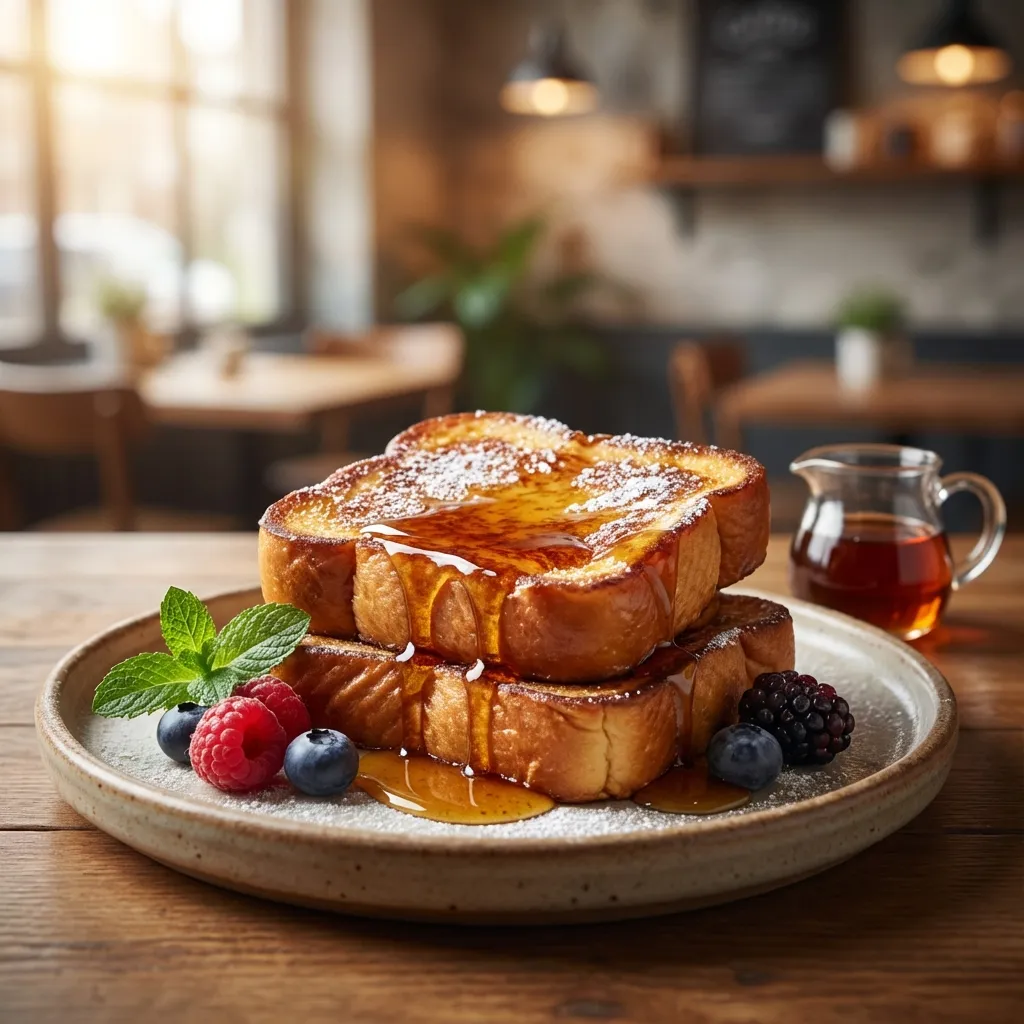
French toast is one of those dishes that exists in nearly every cuisine because it solves a universal problem: what to do with bread past its prime. The Romans soaked bread in milk and egg; medieval Europe called it pain perdu, or lost bread, reclaiming stale loaves with a custard bath and a hot pan. The American breakfast version leans sweet and indulgent, and using brioche elevates it further. Enriched with butter and egg, brioche drinks up the cinnamon-vanilla custard without collapsing, frying into slices that are caramelized and crackly outside yet soft and almost pudding-like within. The secret most home cooks miss is that slightly stale bread works better than fresh; a dried-out crumb soaks up custard like a sponge instead of turning to mush. Cooking over steady medium heat lets the egg set and the sugars brown without scorching. Finished with a flood of real maple syrup, ideally Grade A from the forests of Vermont, Quebec, or New England, it becomes the platonic weekend breakfast. Simple, forgiving, and endlessly adaptable, French toast rewards good bread and a little patience at the stove.
Ingredients
Serves 4Instructions
- 1
Gather and prepare all ingredients as specified in the ingredient list.
- 2
Whisk eggs, milk, cinnamon.
- 3
Splash of vanilla in a shallow dish.
- 4
Dip each slice of bread into the mixture, soaking both sides.
- 5
Serve french toast with maple syrup immediately while hot.
- 6
Plate the dish attractively and garnish as desired.
- 1
Melt butter in a large skillet over medium heat.
- 2
Cook bread slices until golden brown on both sides, about 2-3 minutes per side.
- 3
Serve warm with maple syrup.
Chef's Tips
- ✦ Use bread that is a day or two old; a slightly dry crumb absorbs the custard far better than fresh, fluffy slices.
- ✦ Soak each slice just long enough to saturate without falling apart, usually 20 to 30 seconds per side for brioche.
- ✦ Cook over steady medium heat; too hot and the outside burns before the custard inside sets.
- ✦ Wipe the pan and add fresh butter between batches so browned milk solids do not turn bitter.
- ✦ Warm the maple syrup before serving so it pours easily and does not cool the toast on contact.
- ✦ Finish thick slices in a 350°F (175°C) oven for a few minutes if the centers are still wet after pan-frying.
Ingredient Substitutions
-
brioche bread → challah, Texas toast, or gluten-free bread
Challah behaves almost identically; use thick slices and slightly stale bread for the best soak.
-
milk → half-and-half or oat milk
Half-and-half makes a richer custard; oat milk keeps it dairy free with good body.
-
eggs → egg-free custard of mashed banana and plant milk
For an egg-free version; add a pinch of chickpea flour to help it set.
-
maple syrup → honey, fruit compote, or warmed berry sauce
All add sweetness and moisture; compote brings tartness to balance the rich bread.
-
cinnamon → pumpkin pie spice or cardamom
Cardamom lends a fragrant, slightly floral twist on the classic warm spice.
-
brioche bread → day-old French baguette, sliced thick on the bias
A sturdier, chewier option that holds up to a long custard soak.
Tags
Frequently Asked Questions
Why does my French toast come out soggy in the middle? ▼
Either the bread soaked too long, the slices were too thick for the heat, or the pan was too hot so the outside set before the inside cooked. Use day-old bread, cook over medium heat, and finish thick slices in a warm oven.
What is the best bread for French toast? ▼
Enriched breads like brioche and challah are ideal because they are sturdy and slightly sweet, soaking up custard without disintegrating. Slightly stale slices work best of all.
Can I make French toast ahead of time? ▼
Yes. Cooked slices reheat well in a 350°F (175°C) oven or toaster and also freeze flat for up to a month. You can also whisk the custard the night before and refrigerate it.
Are the eggs in French toast fully cooked? ▼
When cooked through, the custard reaches a safe temperature; the toast is done when the center is set and no longer wet. For safety the egg mixture should reach 160°F (71°C), so cook until the interior is no longer custardy-raw.
What allergens does this recipe contain? ▼
It contains wheat, egg, and milk. Use gluten-free bread, an egg-free custard, and a plant milk to address each, adjusting cooking time as needed.
How do I scale this for a brunch? ▼
Multiply the custard proportionally and cook in batches, holding finished slices in a single layer on a rack in a 200°F (95°C) oven so they stay warm and crisp rather than soggy.